
2026
-

Southward Spread of Buddhism, Jainism, and Hinduism
Traditionally, Arya-varta or the land of the Aryan people was triangulated by the Himalayas, the Ganga and the Yamuna. We know this from the early Dharma-shastra texts, composed around the time of Ashoka.
-

Did Greeks Influence Indian Theatre?
The history of theatre is often told through two great classical traditions: the theatre of ancient Greece and the theatre of ancient India. Both developed sophisticated ideas about storytelling, performance, music, and human emotions.
-

The Selective Sanctity of the Ganga
In Ayodhya Kanda, verse 52.89, Sita stands before the Ganga before crossing into exile and makes a vow. The Sanskrit is unambiguous. “Sura-ghata-sahasrena”: a thousand pots of wine. “Mamsa-bhuta-odanena”: cooked rice mixed with meat (the original Vedic biryani?).
-

How the Bhagavad Gita Invented Sattvic Food
The Vedas gave us Purusha. Tantra and Yoga gave us Prakriti and the gunas. Only the Bhagavad Gita welded these to food and caste, creating the “sattvic” framework popularly invoked today.
-

Did Proto-Naxals fight the East India Company?
Today, the word Naxal is used casually by politicians and businessmen to demonise anyone protesting against exploitation as anti-national. This does not bode well for a country where a large proportion of the youth are unemployed and risk a bleak…
-

The Chandala in the Vedas
The term Chandala, referring to the “lowest of the low” in Brahmin lore, appears a few times in the Vedic literature itself. It is essentially absent from the Rigveda Samhita and emerges only in the later strata of the corpus…
-

Who Is Baal?
The name Baal has been appearing a lot lately, especially in Western media, in the context of war between Iran and Israel. Known as a false god in the Bible, his images are being burnt in public. Western capitalists are…
-

The Convenient Politics of “Later Additions” in the Ramayana
When Sita is banished to the forest while pregnant, on the basis of nothing more than public gossip, modern readers recoil. Many quickly reach for a comforting explanation: this episode, they say, is a ‘later addition’, an interpolation, not really…
-

Secrets of Bihar’s Mirrored Caves
One of the most striking experiences near Rajgir in Bihar lies inside the Barabar Caves. The walls are polished to such perfection that they are like mirrors. These surfaces were carved and finished over 2,300 years ago, yet they still…
-

How Vagdevi Merged Into Saraswati
The goddess we call Saraswati today begins as Vagdevi, the Goddess of Speech, identified primarily with the Vedic deity Vac. Her earliest stories foreground the immense power, and sometimes the deceptive nature, of the spoken word. These are found in…
-
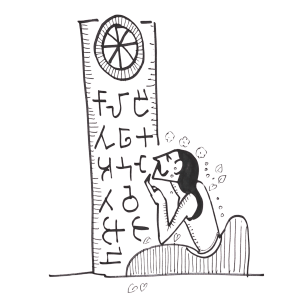
Historical Reality of Pre-colonial Learning in India
Dharampal’s book, The Beautiful Tree: Indigenous Indian Education in the Eighteenth Century (1983), is a groundbreaking historical work that used official British colonial archives to challenge the narrative that pre-colonial India was uneducated.
-

How Southeast Asia Adapted Indian Ideas to Local Needs
Across Southeast Asia, from the Mekong Delta (in present-day Vietnam and Cambodia) to Java island of Indonesia, major archaeological sites reveal how Indian ideas travelled not through conquest but through trade, pilgrimage, and court patronage between 500 AD and 1500…
-

Upanishads As Against Dharma-shastra
In the Upanishads, the word brahmin is about inner realisation. In Dharma-shastra, the word brahmin is about birth status and purity.
-
Upanishads As Against Dharma-shastra
In the Upanishads, the word brahmin is about inner realisation. In Dharma-shastra, the word brahmin is about birth status and purity. The early Upanishads were composed between 600 BC and 200 BC, while the early Dharma-shastra were composed between 200…
-

Sanatan Dharma: A Hinduism That Defines Itself Through Food ‘Purity’
Notably, the term “satvik” food does not appear in Ayurveda, yet it has become central to the Sanatan Dharma movement. North Indian temples now demand that no meat-serving establishments operate within 15 km of their premises. This dietary politics points…