
Culture
-

Dharma of the Shudra
Dharma claims to be eternal. Eternal things are not supposed to change. But a Shudra landowner living better than a starving Brahmin priest is a fact that eternal texts cannot simply ignore. So Sanskrit scholars did what they always do…
-

How Food Practices Created a Network of Trust
Have you ever been curious as to why Jews keep Kosher, Muslims keep Halal, or why Hindu and Jain Banias are strictly vegetarian? All these are trading communities. All have, for centuries, used food practices to establish a network of…
-

When Women Told the Story Backwards
Teej means the third day of the lunar fortnightly cycle — Tritiya. What made the monsoon cycle interesting was that three important Teej festivals occurred on three different Tritiya tithis: Hariyali Teej on Shravana Shukla Tritiya (waxing half), Kajari Teej…
-

Prithu’s Cow, Ashoka’s Lion
Dharma is being equated with development, with the destruction of forests and rivers. The literal cow is honoured with melodramatic sentimentality while the earth-cow is plundered for minerals and timber, her air and water poisoned. She is crying, and there…
-

The Areca Nut in The Betel Leaf
After meals, a quid of betel leaf wrapped around some areca nut and lime, perfumed with cardamom, clove, nutmeg, mace, and camphor — the five aromatics known collectively as pancha-sugandha — served to aid digestion and sweeten the breath.
-

Taxing Varuni, the Goddess of Intoxication
Varuni, the goddess of wine, churned out of the ocean of milk, joined Indra and transformed Swarga into paradise. So say the Puranas. However, very little is mentioned about Varuni in popular lore. Scholars believe this was grape wine imported…
-

The Rise of Marble Temples
Marble has never been a traditional material in Hindu sacred architecture. In Tamil Nadu, the great storied temples were built in granite. In Odisha, the material was khondalite. In Karnataka, soapstone. Across North India, red and yellow sandstone. Marble was,…
-

How Hinduism Transformed in the Vedic land
Punjab, watered by the tributaries of the Indus, was the original Vedic land. Yet today, the Veda is more closely associated with the Yamuna-Ganga doab, while Punjab is better known as the fountainhead of Sikhism. The western part of historic…
-

From Gulamgiri to The Immortals of Meluha
Phule’s work is insurgent literature that anticipates evidence from below. Tripathi’s 21st century civilisational literature evades it from above.
-

Civilisations, Time and the Turning Wheel
Financial crises, endless wars, political polarisation, demographic decline, climate anxiety and the rise of new global powers have made many wonder whether civilisations can also decline.
-

The Rise of Nava-grahas
In Vedic times, graha meant malevolent spirits who hurt mothers and babies. It had nothing to do with planets. The 3000-year-old Vedic Jyotisha had nothing to do with predicting the future. It was a practical science of timekeeping — fixing…
-

Did Indra Eat Buffaloes?
We live in times, where people want to ban goat sacrifice during the Muslim observance of Bakra Eid, on grounds of compassion. This overt attack on Islamic rituals is also a covert attack on subaltern Hindu practices — where goddesses…
-

The Selective Sanctity of the Ganga
In Ayodhya Kanda, verse 52.89, Sita stands before the Ganga before crossing into exile and makes a vow. The Sanskrit is unambiguous. “Sura-ghata-sahasrena”: a thousand pots of wine. “Mamsa-bhuta-odanena”: cooked rice mixed with meat (the original Vedic biryani?).
-

Secrets of Bihar’s Mirrored Caves
One of the most striking experiences near Rajgir in Bihar lies inside the Barabar Caves. The walls are polished to such perfection that they are like mirrors. These surfaces were carved and finished over 2,300 years ago, yet they still…
-
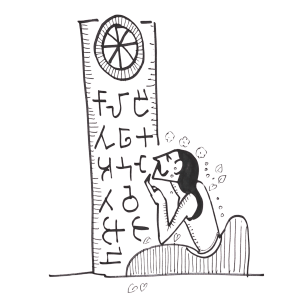
Historical Reality of Pre-colonial Learning in India
Dharampal’s book, The Beautiful Tree: Indigenous Indian Education in the Eighteenth Century (1983), is a groundbreaking historical work that used official British colonial archives to challenge the narrative that pre-colonial India was uneducated.