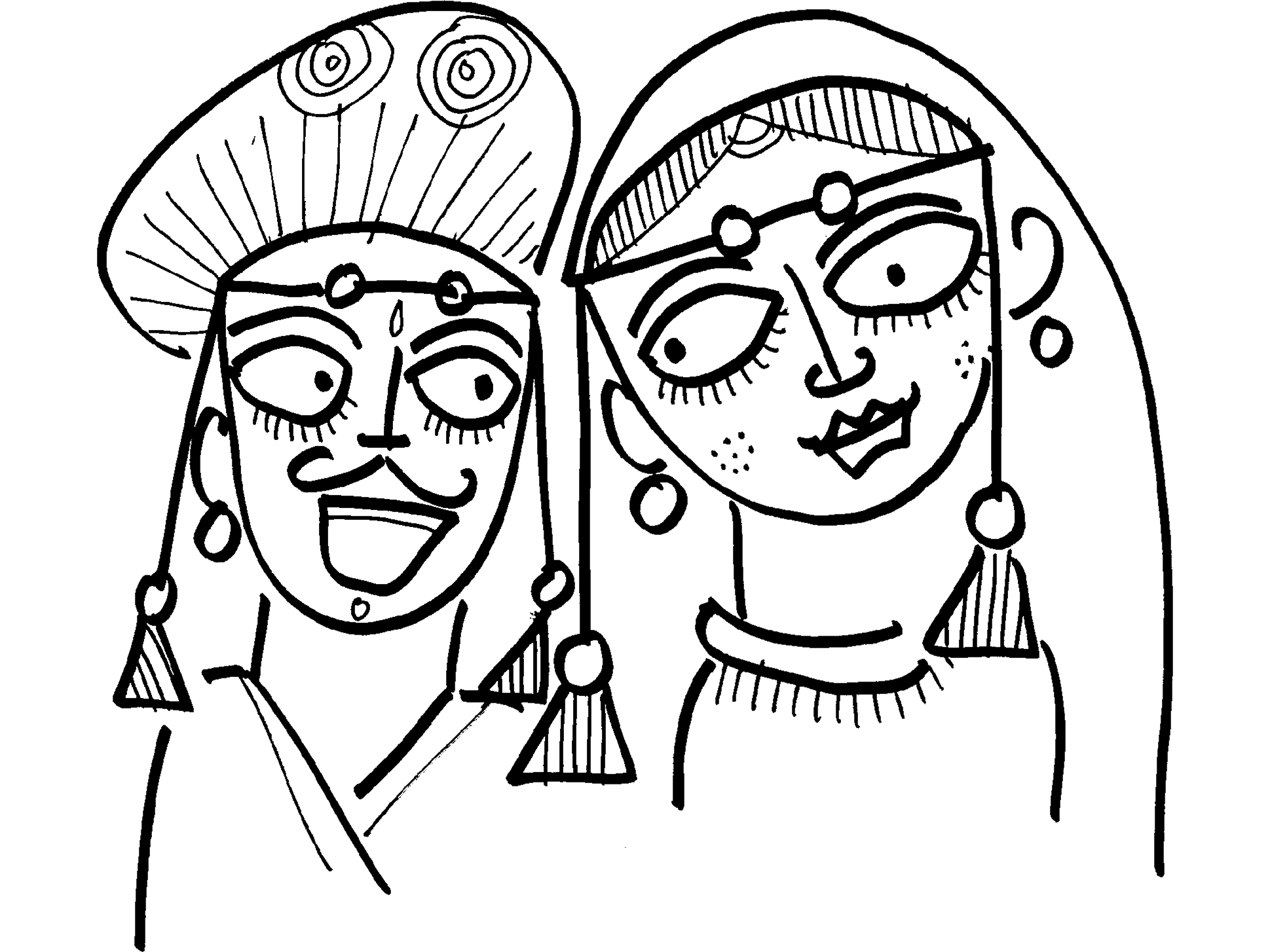
When one watches films of the most successful Bollywood directors, one observes a pattern in the sets and the costumes. You realise that there’s a conflation of royal palaces and brothels. Queens, brides and prostitutes all look alike, dress alike, live in the same spaces, dance and sing for the pleasure of men.
A celebrity wedding looks no different – same sets, same costumes, the same desire for glamour. This is what relationships should look like in social media discourse – instagrammable, with friends, girlfriends, wives, mistresses, ex-lovers, secret lovers and escorts. The look matters. The same look in almost all cases.
The Kama Sutra draws attention to the tension between the monogamous housewife and the polygamous courtesan. The former has access to status, power, dignity and nobility while the latter has freedom, agency and enterprise. The two belong to very different worlds. This was part of Indian culture for over 2,000 years. This system was broken down brutally by the British with the support of nationalists, who saw the courtesan culture as a sign of corruption and debauchery. In this one aspect, the nationalists and the colonialists agreed.
In the Kama Sutra, the text proceeds dramatically, from the virgin to the wife to adultery to the courtesan to eventually to use of aphrodisiacs. It is a mature work on human sexual desire composed in 300 AD, when sex and sexuality were relatively out of the moral and ethical gaze. It speaks of being sensitive to the virgin and preparing them to enjoy intimacy. It warns against violence that can put people off intimacy. Then it speaks about wives, and their duties. Followed by stories of men who cheat on wives and women who cheat on husbands. Followed by the marketplace where sex is commodity. Then comes the use of various tools to arouse the unwilling body of a willing mind. It feels like most relationships: the movement from initiation, to mutual attraction, to boredom, from seduction of lovers to just purchase of pleasure.
We are told different people write different chapters of the Kama Sutra, which was finally written by one Vatsyayana. Each of the authors is inspired by the gods, Shiva and Parvati who share their love-play with Nandi. The chapter on courtesans is written by a bisexual man, Dattaka, because ‘he knows to make men and women’ happy. It feels as if without the marketplace, the courtyard would not know the joy of intimacy. The housewives need the courtesan to bring bliss into their lives.
Long before the Brhamanical Sanskrit texts, Tamil Sangam poetry and ancient Prakrit poetry (Gatha Saptasati), we see all kinds of women coexisting in society, the girl waiting to be married, the bored housewife flirting with the traveller, the heartbroken lover, the impatient lover. There is even the wandering nun, who shuns all men. But two types of women stand out. The faithful wife, who had to be content in her courtyard with her husband and all the wealth and power he provided. The courtesan, who provided sex services in the market in exchange for wealth, belonged to the public square. Both had separate spaces. Both were given respect.
Both envied each other, for the housewife knew that the love and lust in the husband’s eyes was reserved for the public woman. Rich men competed with each other to get the attention of the courtesan. The housewife had to be content with the bored look of her husband, who came to her only so that she would bear heirs who would inherit his property. If she failed to bear that heir, she lost whatever little status she had and would be sidelined.
Bollywood is the only space where there are glimmers and glimpses of Kama Sutra and the old world of romance and pleasure, that once thrived before the malevolent puritanical gaze. Bollywood glamour is ravenous. It wants the wealth and status of the housewife, but it also wants the agency and the enterprise of the courtesan. Therefore, there exists a conflation of the two. And therefore, Bollywood encourages housewives to dance in public and courtesans to pine for lovers. This conflation now has made its way to wedding altars.
As the diaspora and urban Indians youth India seek to reclaim their ‘ancient culture’ from social media, and social media extracts knowledge from Bollywood, they fail to realise how the bride and the courtesan, the courtyard and the brothel, have been conflated mischievously by Bollywood directors, who use the same jewellery, set, emotions and dance moves for the bride and the courtesan. If the one has to deal with an authoritarian yet loving mother-in-law, the other has to deal with a strict but affectionate madam of the same mould. Such is life in the spotlight, we are told.