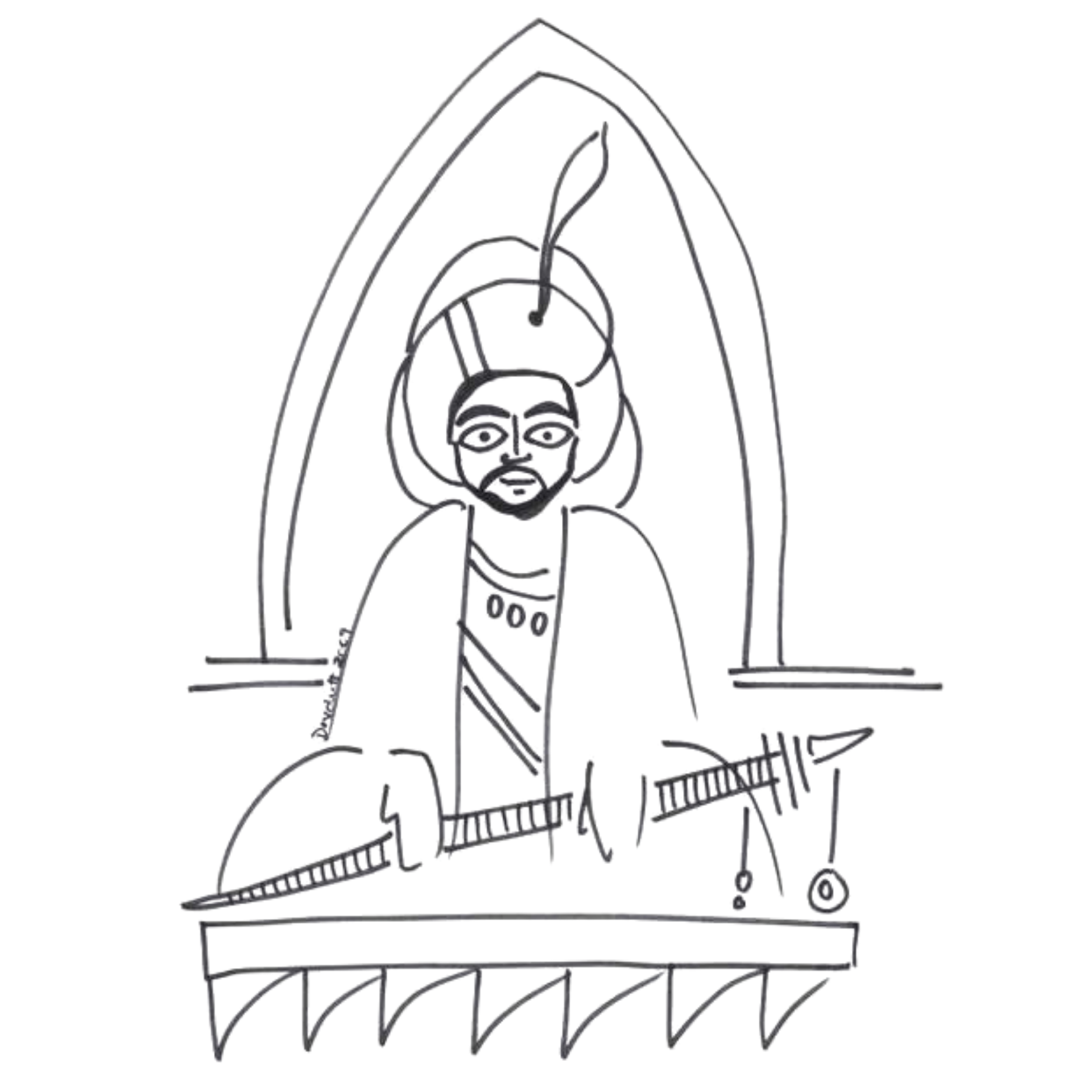
Punjab, watered by the tributaries of the Indus, was the original Vedic land. Yet today, the Veda is more closely associated with the Yamuna-Ganga doab, while Punjab is better known as the fountainhead of Sikhism. The western part of historic Punjab is now in Pakistan and is overwhelmingly Muslim. The eastern part, in India, is divided between Sikhs and Hindus.
Although Brahmins have never played a central role in the social management of Punjab, and although both Sikhism and Islam preach caste equality, the state has the highest proportion of Dalits in India, around 30%. A study of Punjab’s history shows that Hinduism here developed along a path quite different from the rest of the subcontinent.
Punjab was a major hub of the Harappan civilisation; the city of Harappa itself stands on the Rabi. The region lies between the Indus and the Sutlej, with the northern hills opening towards the Swat Valley, where the Buddhist Gandhara civilisation later flourished, and towards Jammu, Kashmir, and the hill states from which the five rivers descend. The northern hills and the southern flatlands together have shaped Punjab’s history.
Harappa traded with cities in Sindh, Gujarat, Haryana, and Rajasthan over four and a half thousand years ago. Around 3,500 years ago, the Aryans entered India through this region, bringing horses. On its eastern edge, between the Sutlej and the Ganga, earlier Aryan migrants clashed with later ones, and it was here that the Rig Veda was composed. Even so, when Vedic civilisation matured, Punjab was treated as a frontier, the land from which horses came. This is why Kekeya of the Ramayana is ruled by Ashwapati, lord of horses, and why Madra of the Mahabharata is also a land of horses.
The eastern edge later fell to the Persians and Greeks, resisted by the Punjabi king Pururava. The Mauryans, 2,300 years ago, opened trade routes through the region, and along these routes Buddhism reached Punjab. Trade flourished under the Mauryans and Kushans, who controlled the passes of the Hindu Kush leading to Persia and Central Asia. The Yaudheya tribes minted coins bearing Kartikeya, then seen as the son of Agni rather than of Shiva. Gandhara prospered as a major Buddhist centre until the Huns destroyed it 1,500 years ago.
Then Buddhism declined, and Shaivism took its place. The Siddhas arrived, Shiva lingas were said to spring up across the land, and goddess worship spread, especially in the hills. Today, we distinguish Himachal and Jammu from Punjab, but traditionally, these hill states were its extensions. Around the 8th century, temple complexes such as Masroor, Bharmour, and Chamba were built mostly to honour Shiva. This is when Puranic Hinduism appeared. Brahmins were invited to manage these temples and granted land, but this pattern is largely confined to the hills. In Kashmir, images of Vishnu Vaikuntha appeared with heads of the boar and the lion, but this was replaced by Kashmir Shaivism 1,000 years ago.
The lowland river valleys had neither temples nor Brahmins. They were the lands of mystics, of the Deras and Gaddis of various Nath jogis such as Goraknath, Jalandhar Nath, and Chaurangi Nath – wandering sages with magical powers. There were no major kingdoms in Punjab itself, because cultivable land was concentrated in the north. The economy ran on trade, and most people were settled pastoralists whose principal wealth was cattle and who often offered military service.
The arrival of the Sufis brought mystical Islam into this milieu. Sufis and Nath Panthis mingled, exchanged ideas, and shared an indifference to image worship. The Nath jogis revered Alakh Niranjan, the formless one; the Sufis, drawing on Central Asian Islamic thought, also rejected a god with form. This ecosystem welcomed the Nirguna Bhakti poetsaints who celebrated a formless divine.
Sikhism emerged from this soil, especially among the Khatri trading communities to which Guru Nanak belonged. He rejected caste, saw God as formless, and held that everyone had equal access to the divine. Ten Gurus followed during a turbulent age of Delhi sultans and Mughals. Persian rulers introduced canals and water wheels, and Jatt pastoralists, especially in the east, became settled cultivators. This produced the dense Muslim concentration that would become Pakistan.
Hindus and Sikhs were not initially distinct; both followed Bhakti. To break the hereditary Dera-and-Gaddi pattern, the Sikhs enthroned the Granth Sahib, a book of devotional poetry in many languages, including verses by Namdev, Ramanand, Ravidas, and the Sufi Baba Farid, as the ultimate Guru. Conflict with the Mughals pushed Sikhism towards arms; Jatts joined in numbers, and the Khalsa rose, founding kingdoms that resisted the empire. Sikhism today still bears the imprint of its three streams: Khatri traders, Jatt warrior-peasants, and the Dalits who, despite egalitarian ideals, remain at the bottom.