The square on the longest side of a right-angled triangle equals the sum of the squares on the other two sides. Known as the Pythagorean theorem, we are usually told that a Greek philosopher named Pythagoras discovered it around 500 BCE. But the real history is far more interesting and far more complicated than that.
This geometric truth was discovered independently by several ancient civilizations, each arriving at the same insight through their own practical needs. India’s contribution, recorded in a set of ancient texts called the Sulvasutras, is genuine and impressive. But it was not the first.
To understand the history of this geometry, we need to place the contribution of Baudhayana, the author of Sulvasutras, alongside the achievements of Mesopotamia, Egypt, China, and Greece, rather than simply declaring India to be the first or the greatest.
The oldest recorded evidence from Mesopotamia
The oldest recorded evidence of the Pythagorean relationship does not come from Greece or India. It comes from Mesopotamia, the land between the rivers Tigris and Euphrates in modern-day Iraq, where a highly organised civilisation of scribes and accountants left behind thousands of clay tablets.
Two of these tablets are especially important for historians of mathematics. The Plimpton 322 tablet, dated to around 1800 BCE, contains columns of numbers that are systematically organised Pythagorean triples. The YBC 7289 tablet goes even further, showing an accurate calculation of the square root of two by drawing diagonals across a tilted square.
These are not accidental results. They show that Babylonian mathematicians had a deep and working knowledge of the geometric relationship that we call the Pythagorean theorem, more than a thousand years before Pythagoras was even born.
The contribution of Egypt
Egypt’s contribution is less thoroughly documented, partly because Egyptians wrote on papyrus, a material far more perishable than clay. The two most important early Egyptian mathematical papyri do not explicitly state the theorem. However, the Cairo Mathematical Papyrus, dating to around 300 BCE, contains nine problems directly involving the Pythagorean relationship.
It is also widely believed, though difficult to prove conclusively, that the builders of the pyramids used the 3-4-5 rule — a simple Pythagorean triple — to ensure that the massive square bases of their structures had perfectly right-angled corners. The practical demands of monumental architecture seem to have driven mathematical discovery here, as they did in several other ancient cultures.
The equally remarkable contribution of China
China’s contribution is equally remarkable and is often overlooked in Western accounts of mathematical history. In China, the theorem is known as the Kou-ku theorem, and it appears in an ancient text called the Chou Pei Suan Ching, which was compiled around the sixth century BCE.
What makes the Chinese case particularly striking is the Hsuan-thu, a visual proof of the theorem that is regarded by historians as one of the earliest and most elegant demonstrations of the relationship anywhere in the ancient world. The Chinese arrived at this independently and used it for similar practical purposes involving surveying, construction, and measurement.
Did Pythagoras discover the theorem?
As for Pythagoras himself, historians are frank about the fact that he almost certainly did not discover the theorem that bears his name. Greek records suggest he travelled extensively in Egypt and Mesopotamia, where he would have encountered these mathematical ideas.
The first formal and rigorous Greek proof of the theorem was recorded by Euclid, the most prominent mathematician of Greco-Roman antiquity, in his best known treatise on geometry the Elements, nearly three centuries after Pythagoras died.
The theorem was named after him partly because of the prestige of Greek learning in later European scholarship, and partly because his school did important work in developing a mathematical and philosophical framework around these ideas.
India’s contribution and the Sulvasutras
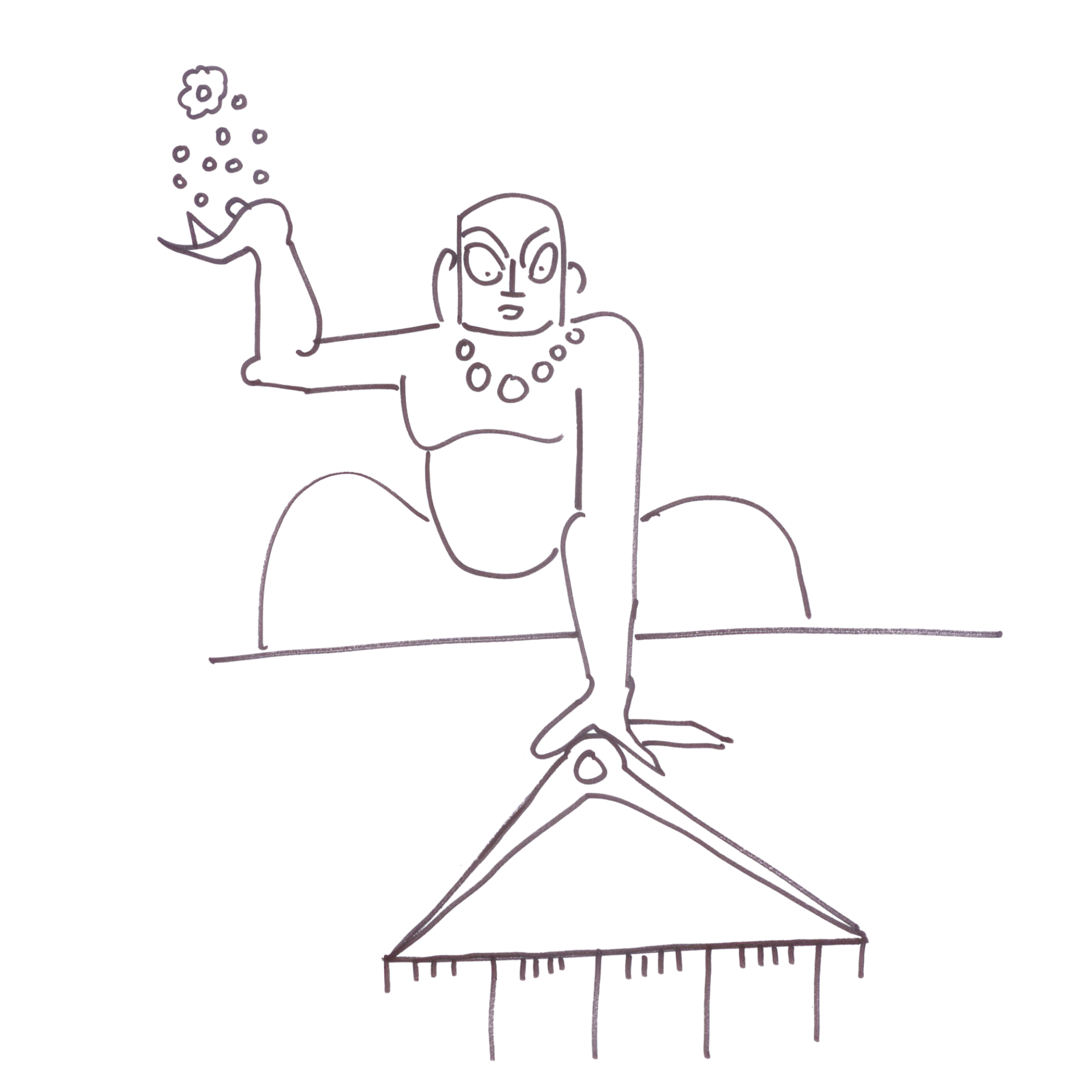
India’s contribution comes through the Sulvasutras, a set of ancient texts composed between roughly 800 and 500 BCE. The name means “sutras of the cord”, and these texts were written by priest-craftsmen who needed precise geometry to construct complex Vedic fire altars of specific shapes — falcons, tortoises, and other sacred forms.
The author Baudhayana gave what historians regard as the first clear and unambiguous verbal statement of the theorem, explaining that a cord stretched along the diagonal of an oblong produces an area equal to the combined areas produced by the two sides.
The Sulvasutras also enumerate several Pythagorean triples, including 3-4-5 and 5-12-13, and provide a procedure for calculating square roots, accurate to the fifth decimal place. This is sophisticated mathematical work by any standard.
What the historical evidence shows, taken together, is that the Pythagorean theorem belongs to no single civilisation. It emerged independently, in different forms and for different purposes, across the ancient world. India was neither a leader nor a laggard in this story. Placing India among peers, rather than above them, is not a demotion. It is the beginning of real history.