
Mythologist | Author | Speaker | Illustrator

-
Articles

The Sage Under the Berry Tree
The name Badrinath carries a quiet ecological memory. Badri means the berry (Ziziphus mauritiana), or jujube tree. Nath means lord. …
-
Articles

Lakshmi’s Elephants
Across India, the most familiar image of prosperity is Lakshmi flanked by two elephants pouring water over her. We see this in homes, shops, banks, and even in modern advertising. But few pause to ask why elephants stand beside the goddess of wealth. Why not cows, horses, lions or birds? …
-
Articles

Jain Saraswati On Goose or Peacock
Sarasvati, goddess of knowledge and speech, has ancient roots in the Vedic river Sarasvati, the cradle of learning and ritual. Over time she evolved from river to goddess, depicted with manuscript, rosary, and water pot — symbols of wisdom. …
-
Articles
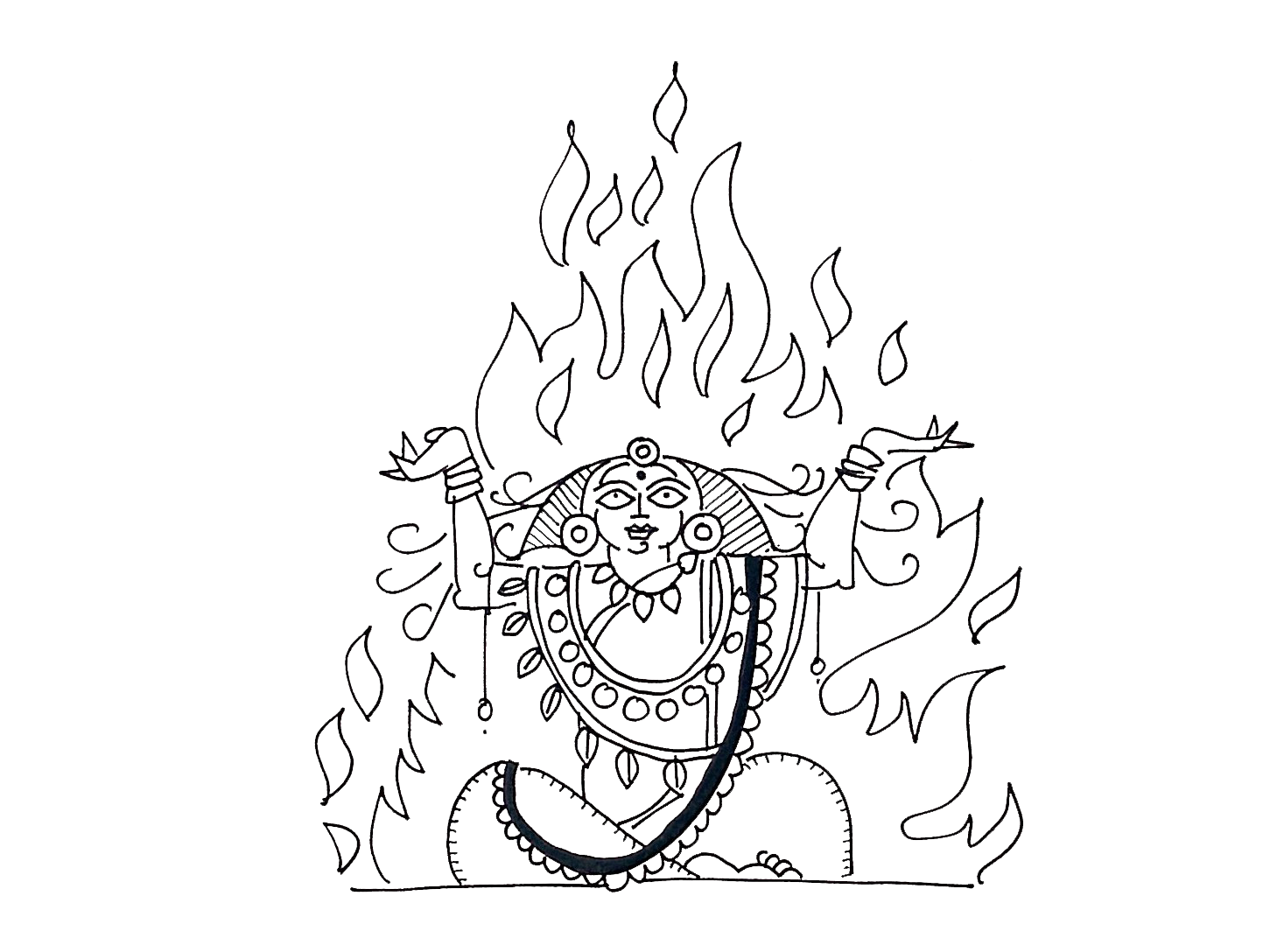
Hail the Fire Goddesses
While some have argued that these sati practices were a means by which women protected themselves from being violated by invaders, the fact remains that sati stones began to appear in almost every corner of India, at least five centuries before the rise of the Islamic period of India…
-
Articles

Secrets of Goddesses and Trees
Jamboo Savari is the great elephant procession of Mysore kings during the post-monsoon festival of Dussehra. Many people think Jamboo or Jambi comes from the word “jumbo” which means “extra large” and was the name of a large African elephant imported to Victorian England…
-
Articles
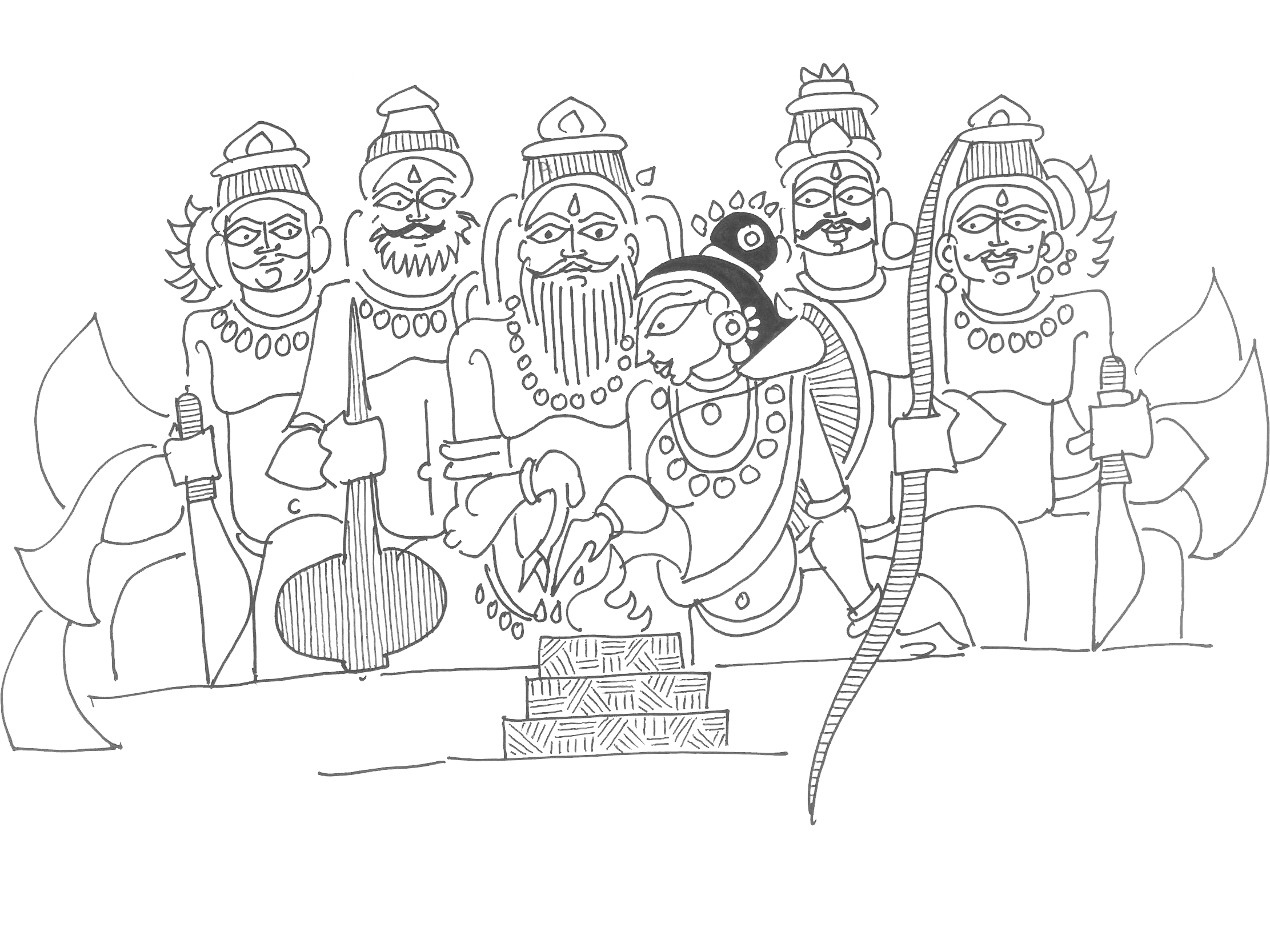
Who Did Draupadi Love?
The story of Draupadi fascinates many because she had five husbands. She did not choose to marry five men—she was instructed to do so. In mythology, no one demands explanations when men have multiple wives. …
-
Articles

War Magic of Wild Tantra
In the east, Diwali is linked to the worship of ghosts, ancestors and the goddess Kali. This has its roots in Tantra, which in many ways a counterpoint to India’s masculine Vedic traditions that were gradually turning ascetic and creating the divide between purity and pollution…
-
Articles

Replacing Goddess Culture
In Hindu mythology, the four months of the rainy season is when Vishnu sleeps. Who protects the world then? It is the Goddess, identified as Yogamaya. And so traditionally, women’s festivals, involving Goddesses, are found in the latter half of the rainy season after the autumn equinox…
-
Articles
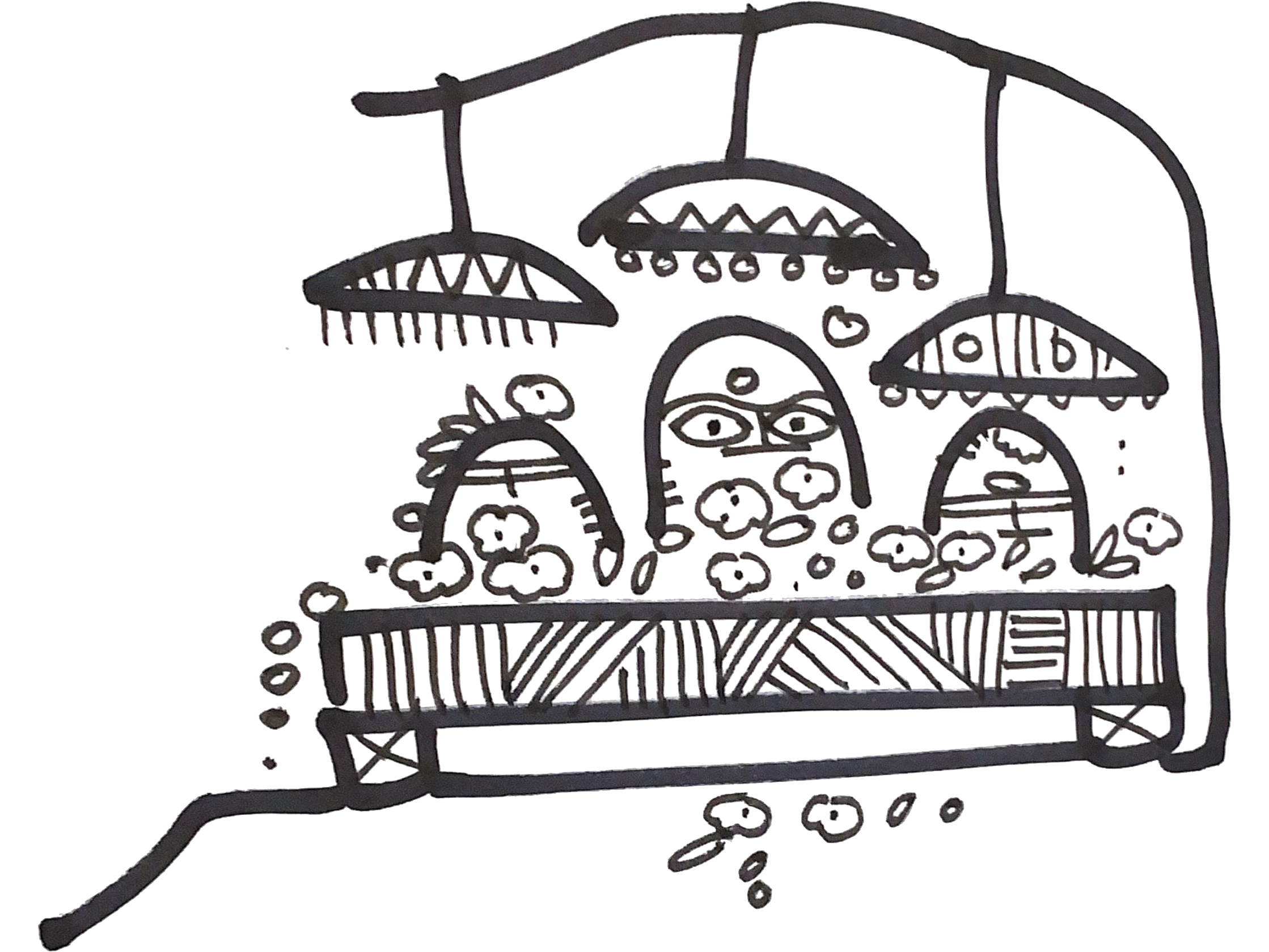
From Mythological Deities to Management Jargons
In the business world, people talk about fixed assets and movable assets. In ancient times, merchants referred to the same concept using mythological characters. For example, fixed assets would be called Bhudevi or the earth goddess, and movable assets like coins would be Sridevi…
-
Articles

How Saraswati Reached Japan
One of the most popular goddesses in Japan is visualised holding a guitar-like instrument. She is called Benzaiten and she has been linked to the goddess Saraswati…
-
Articles

Diwali for Ram, Krishna, Lakshmi, Yama, Asuras and Ancestors
Diwali celebrations vary across India: In north India, it commemorates the return of Ram, while south India celebrates the defeat of Narakasura. Western Diwali involves a business-related renewal and in eastern India, the focus shifts to ancestor worship and paying off karmic debts. These varying traditions underscore the diversity of Hinduism across the different regions…
-
Articles

Decoding Ganesha’s Parenthood
Ganesha’s arrival, in the latter half of the monsoon, marks the transformation of Shiva, the hermit, into Shankara, the householder. …
-
Articles

When the Rising Sun in the South Was Auspicious
The South has been the home of Sugriva, king of monkeys (vanara) and Ravana, king of demons (rakshasa). …
-
Articles

The Goddess Came Later
We can argue that goddesses have been integral to Hinduism since Vedic times. But of the 1,000 hymns of the Rig Veda only the maximum number of hymns dedicated to a goddess as the 21 hymns for Usha, the dawn-goddess…
-
Articles

Not Blood Or Bones, But Sweets
Published on 14th May, 2023, in Mid-day. There is one temple of Sachi, wife of …
-
Articles
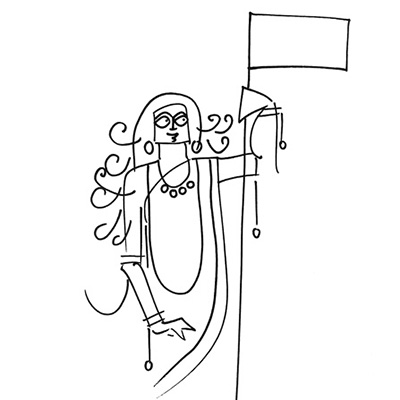
The Rise of the Indian Goddess
Published on 14th July, 2022, in The Hindu. How old are the goddesses of India? …