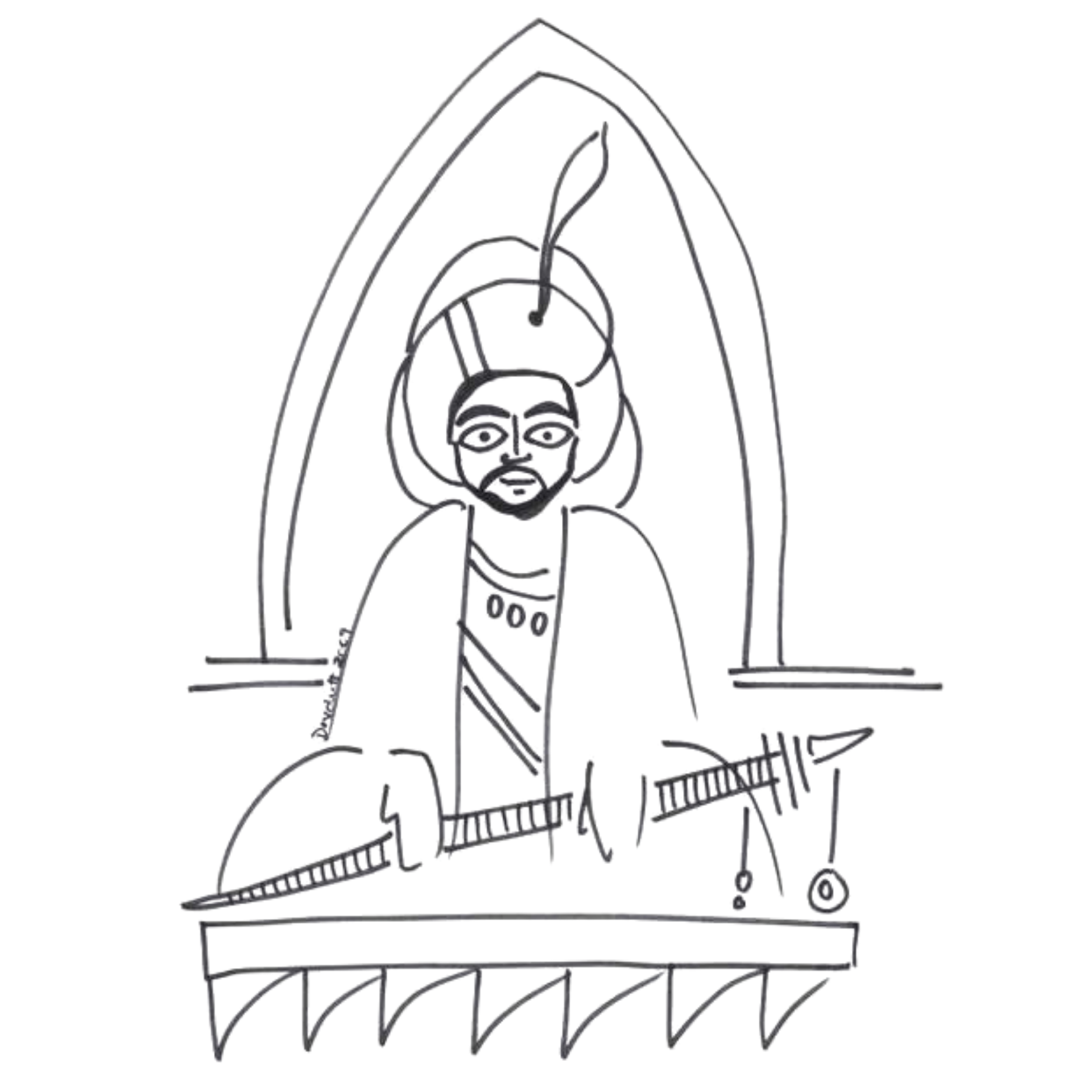
One of the most popular goddesses in Japan is visualised holding a guitar-like instrument. She is called Benzaiten and she has been linked to the goddess Saraswati. Naturally, many Hindus get excited about how Hindu deities reached Japan and are venerated there even today.
The Saraswati of Japan is worshipped for knowledge or music, and the ability to discourse eloquently or argue brilliantly. Furthermore, she is linked with wealth, prosperity, fertility and beauty like Lakshmi. She is also visualised with multiple arms holding swords in her hands, like Durga. It was in this warrior form that she was worshipped by the Samurai. The Hindu Saraswati in Japan has many secrets that are yet to be unravelled.
Origins of Saraswati
It is important we appreciate that in their oldest forms, the Vedic, Buddhist and Jain religions were primarily masculine and patriarchal. The most dominant deities were male, addressing male concerns. Female deities were on the fringes, usually in servile positions. While there are hymns addressed to Ushas (dawn), Aranyani (forest), Sri (wealth) and Vach (speech), these are less than 1% of the Vedic corpus. These were chanted 3,000 years ago.
In Buddhist stupas, we find the earliest images of goddesses. A twoarmed Lakshmi or Sri is shown seated in a lotus pond, being bathed by elephants. These are about 2,100 years old. Around this time, the first image of Saraswati appears. In Kushan coins, which are 1800 years old, we find images of goddesses holding the horn of plenty and goddesses seated on lions. These are mostly Central Asian goddesses Ardoksho and Nana, which merged with Lakshmi and Durga images.
The idea of a clear Hindu goddess emerges only after the 5th century CE with the rise of Tantra. We can even argue that Tantra introduced women to the Buddhist, Jain and Hindu pantheons. It is this tantric idea which travelled across the world, through Buddhist roots and reached faraway places like China and Japan.
We trace the word ‘Saraswati’ to the Vedas, where it is just a river and has nothing to do with knowledge. The idea of the three goddesses, Lakshmi, Durga and Saraswati embodying resources, power, and knowledge, respectively, to complement the male trinity of Brahma, Vishnu, and Shiva, consolidated itself by the 8th century. The goddesses embodied all things that can be exchanged between human beings. We can give and take knowledge, power, and wealth. These were personified in female forms.
As Buddhist monks travelled along with sailors to Southeast Asia and beyond to China, they took with them many images. The most popular was the Buddha. But after the 7th century, one sees images of Avlokiteshwara, the god who rescues sailors, visualised holding a lotus with an image of a Buddha on his head. This is when Saraswati starts her journey from India to the Far East.
Japanese Transformation of Benzaiten
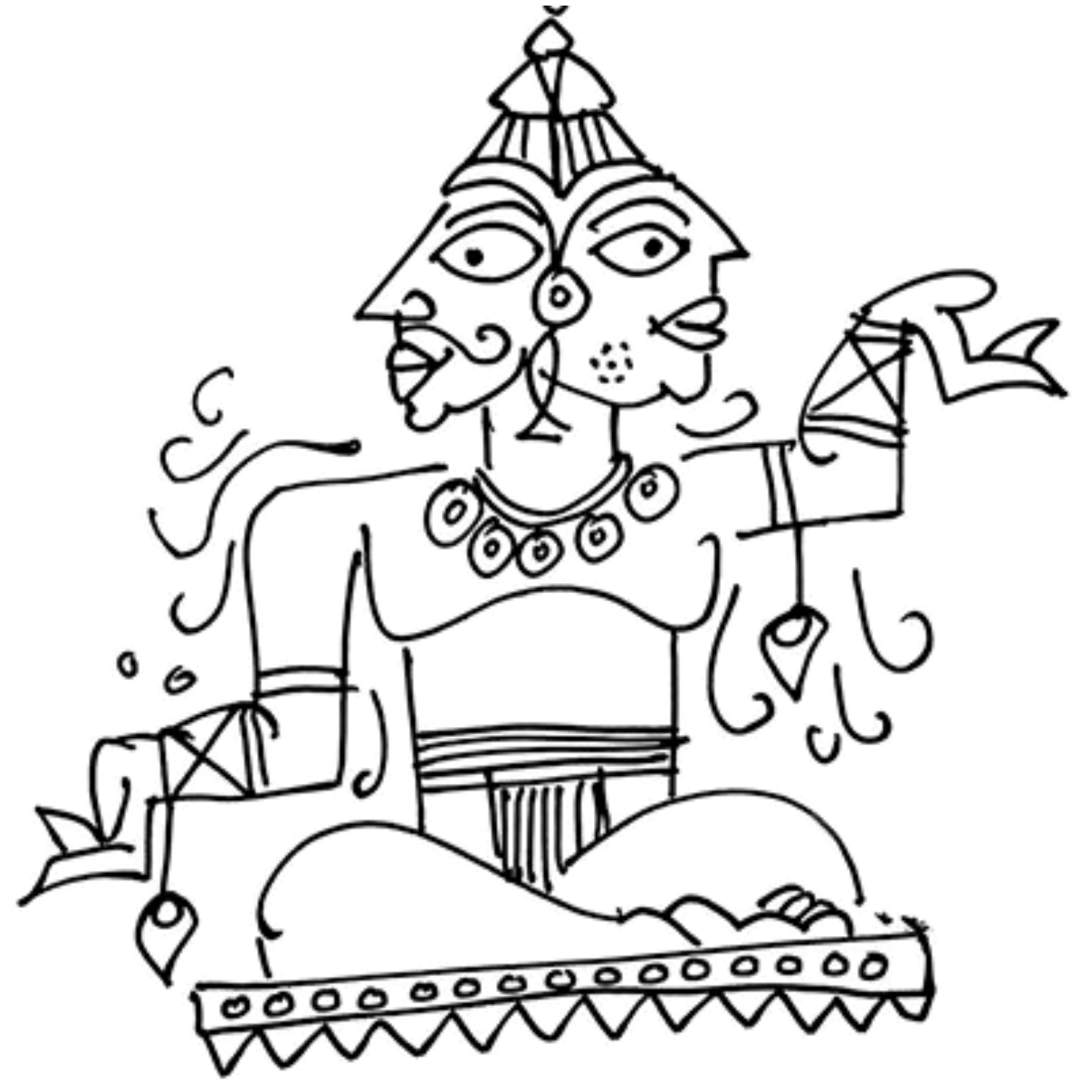
In Japan, Saraswati transforms. In the early 8th century, she was visualised as Durga with multiple arms bearing multiple weapons becoming the protector of the Buddhist faith. By the 9th century, her role as patron of music dominates and she is visualised with a lute. By the 12th century, this goddess came to be linked to an ancient, Japanese Shinto deity or Kami, called Ugagin. Ugagin is a bearded, human-headed serpent, which extends its coils atop the goddess. Then something dramatic happened in the 14th century.
Originally, Benzaiten was separated from the goddess of wealth (Kissohoten). But later the two merged — and it has to do with the way their names are written in the Chinese script. The word Zai (depending on how you write it using the Chinese or Japanese script) can mean both talent and wealth. Thus, by replacing the alphabet, it is easy to transform the goddess of knowledge into the goddess who gives both knowledge and wealth. This link of the goddess not just to knowledge, music and the arts but also to fertility made her the only female deity to be included in the seven gods of fortune.
It must be kept in mind that in tantric Buddhism, all the things offered to the Bodhisattva are visualised as female. In the Vajradhatu Mandala, the male Bodhisattvas are given offerings in the form of eight females. They are visualised as manifestations of Music (Rasya), Dance (Nritya), Song (Geeta), Light (Deepa), Incense (Dhupa), Perfume (Gandha), Flowers (Pushpa) and Garlands (Mala). So the meaning of the word goddess is not necessarily what we assume it to be.
Be that as it may, the idea of a Hindu goddess holding a lute in her hand and being venerated in Japan shows us how cultural ideas are transported and transformed over time. Benzaiten remains one of the most popular goddesses in Japan, revered as the muse of artists, poets, and musicians.