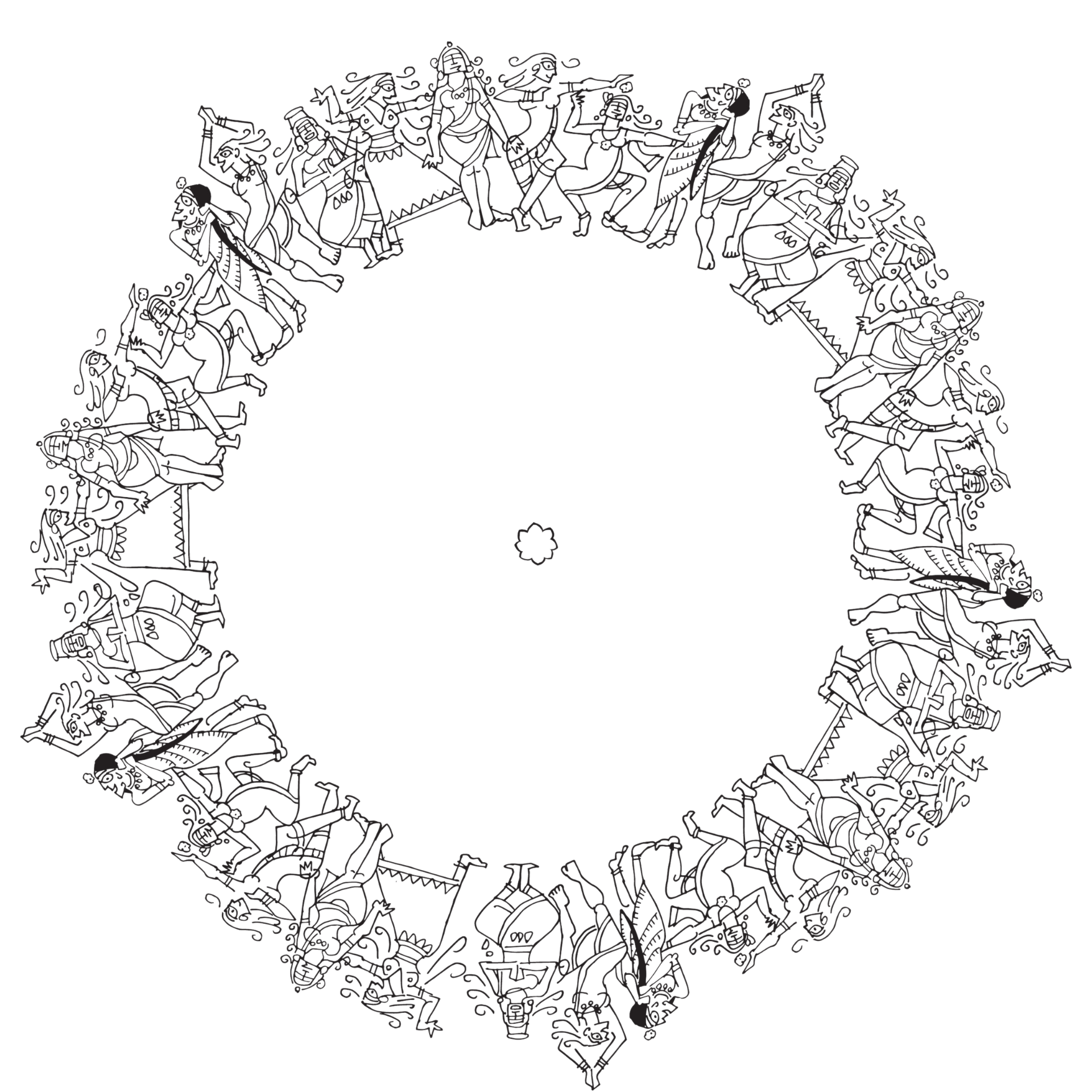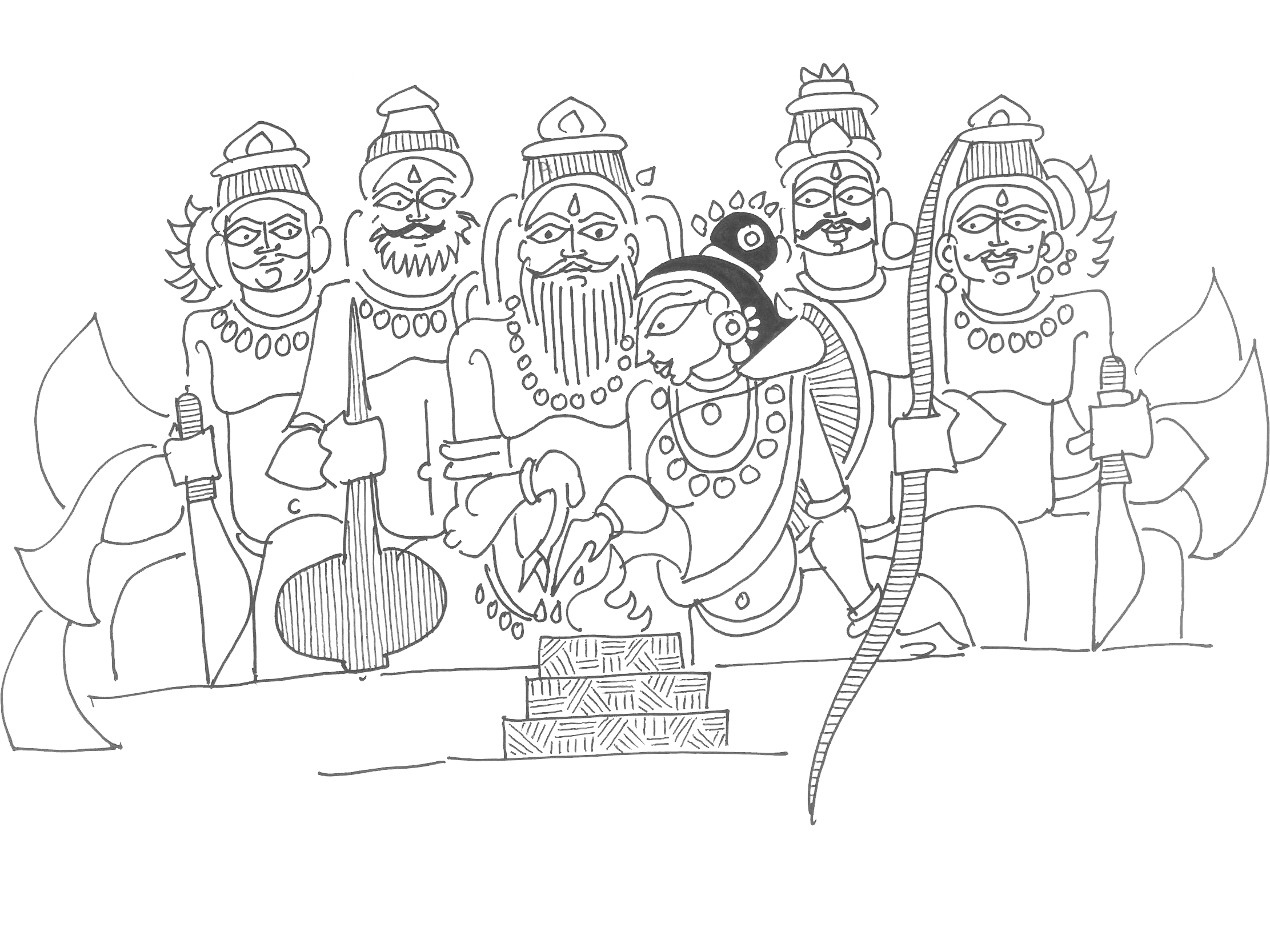
Draupadi was born of fire. She was a woman without a mother or a sister or daughter. She had a father, a brother and five sons, all of whom died when fighting for her against the Kauravas. In Tamil folklore, she is a goddess, and her husbands are those who failed to protect her.
The story of Draupadi fascinates many because she had five husbands. She did not choose to marry five men—she was instructed to do so. In mythology, no one demands explanations when men have multiple wives. Kings often have two, three, or even more wives, as do gods. But when it comes to a woman having multiple husbands, it is always seen as a problem. Thus, explanations are sought for why Draupadi had five husbands.
Interestingly, even when feminists retell Draupadi’s story, they rarely focus on its sexual aspects or the potential jealousy between her husbands. Instead, they highlight romantic notions, her emotional needs, and her frustrations with the men in her life.
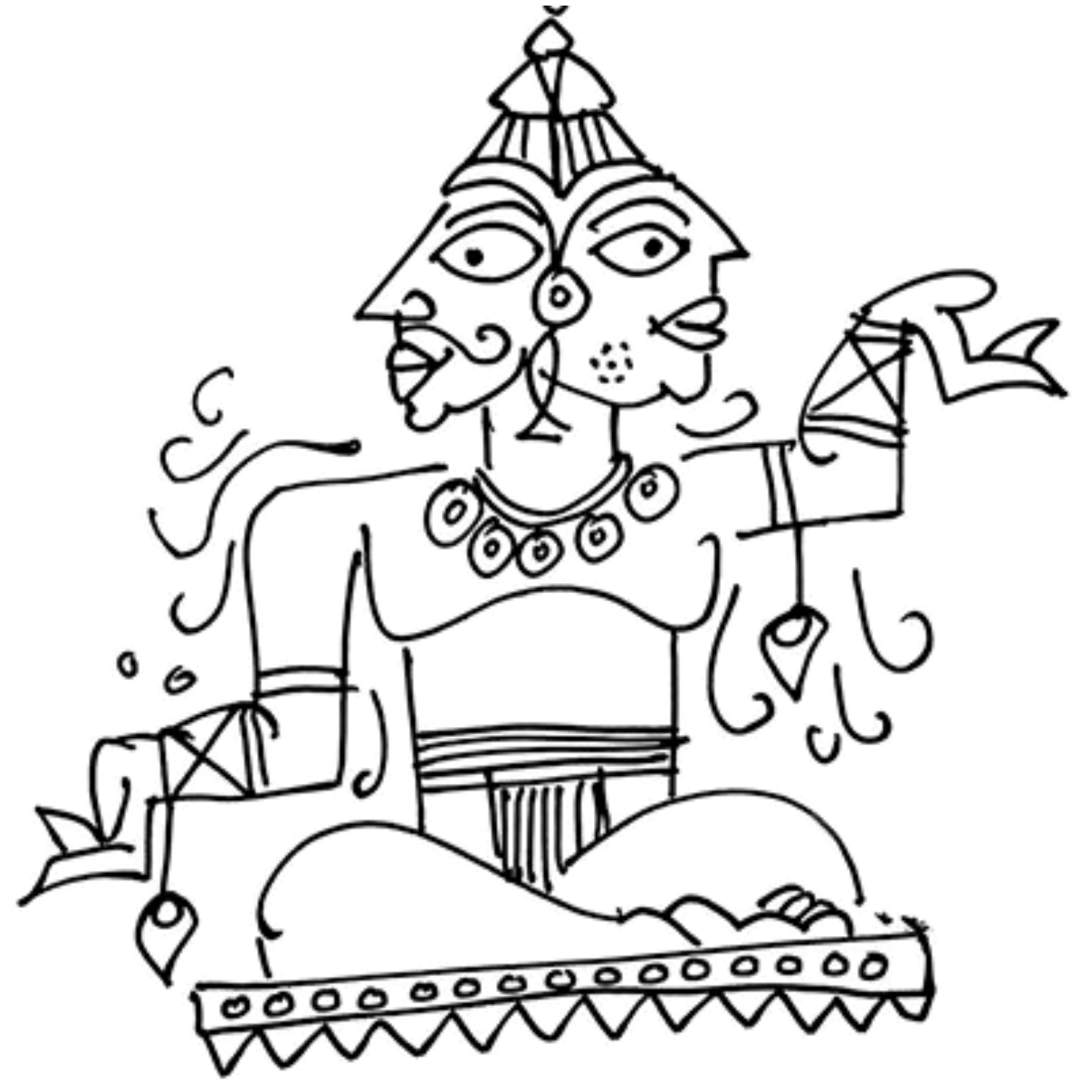
One story suggests that in her previous life, she prayed to Shiva for a husband with five qualities. Shiva responded that no such man existed, so he granted her five husbands, each possessing one of the desired traits. Yudhishthira would be a king, Bhima would be strong, Arjuna would be skilled, Nakula would be handsome, and Sahadeva would be intelligent.
Another version claims that in a past life, Draupadi demanded so much sexual attention from her husband that he cursed her, saying that in her next life, she would have five husbands who would satisfy her in every way she desired.
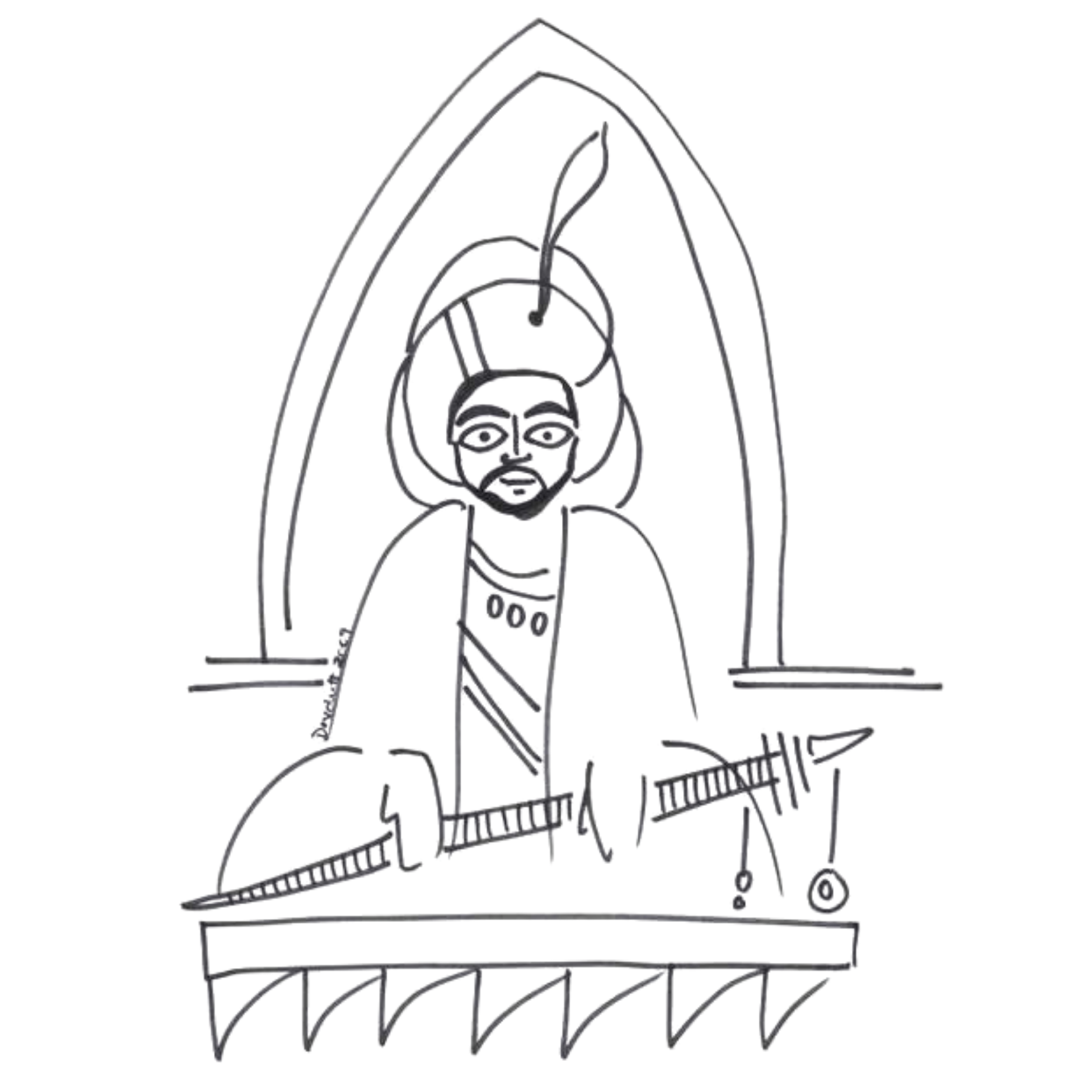
According to folklore, Draupadi once admitted that although she had five husbands, she secretly desired Karna. In another folk tale, she weeps before Krishna, asking why she deserved the terrible fate of being publicly humiliated. Krishna replies, “I gave you the man you deserved, but you rejected him because you considered him to be of a lower caste.” Thus, in many folk traditions, Karna is portrayed as Draupadi’s ideal husband—the one she rejected.
However, in the Mahabharata, when Draupadi slips and falls to her death, Yudhishthira tells Bhima that she dies because she loved Arjuna more than the rest of her husbands, and as a result, she goes to hell. Within the epic, it is evident that Bhima craves Draupadi’s love and seeks to be her favourite. He does everything in his power—even breaking laws and crushing his enemies—to make her happy.
But it forms a love triangle: Bhima loves Draupadi, Draupadi loves Arjuna—or is it Karna?
Traditionalists are uncomfortable with the idea of Draupadi having extramarital desires, particularly for a man of lower caste, such as a charioteer’s son. The notion of a woman desiring a man who is not her husband remains unsettling.
Even within marriage, the idea that Draupadi might favour one husband over the others—rather than loving all five equally—is condemned. On one side, there are those who support a woman’s right to choose; on the other, there are those who seek to restrict her autonomy even further.
Ultimately, the way Draupadi’s story is told reveals more about the storyteller than the character herself. Feminists, traditionalists, and liberals all interpret her differently. And perhaps, that is the true purpose of myth—to use storytelling as a mirror that reflects the hidden truths of our hearts.