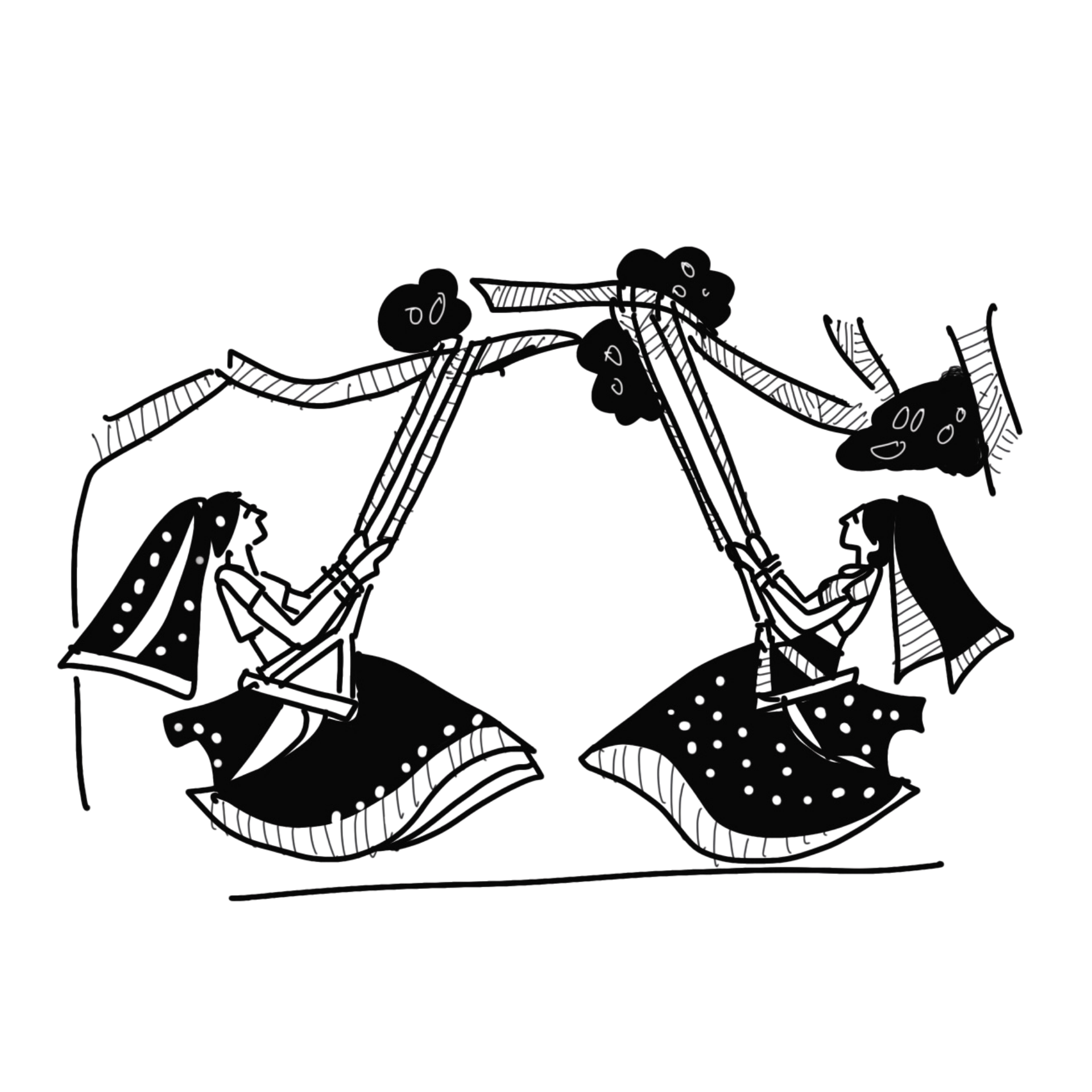
Sarasvati, goddess of knowledge and speech, has ancient roots in the Vedic river Sarasvati, the cradle of learning and ritual. Over time she evolved from river to goddess, depicted with manuscript, rosary, and water pot — symbols of wisdom. In the Hindu Puranas, she became the consort or daughter of Brahma, and later the goddess of music and fine arts. In Buddhism, she was equated with Tara and Mahamayuri, in Mahayana and Tantric traditions. In Jainism, Sarasvati became Shrutadevata, the divine embodiment of sacred knowledge. It is in Jain faith that she came to be associated with geese and peacocks.
Jain scriptures such as Vyakhya-Prajnapti and Paumachariya describe her as personifying the angas (scriptural limbs) and purvas (ancient texts). Her purpose was to dispel ignorance and remove karmic barriers to right understanding. By the 9th century, she was also associated with music and learning. Jain texts show her as the goddess of eloquence.
Many Jain scholars are believed to have received Sarasvati’s blessings. Bappabhatti Suri invoked her to defeat Buddhist debaters and was titled Vadikunjara Kesari. Hemachandra is said to have received inspiration from the goddess of Kashmir while composing his grammar and chronicles. Such stories reflect the belief that divine grace was essential even for intellectual achievement.
The earliest Jain image of Sarasvati, found at Mathura and dated 132 CE, confirms her worship from early times. The broken image is in a seated position with a book and rosary in her hand. Later icons from Deogarh (9th–12th century) place her beside the Jinas as equal to them in wisdom. She always stands next to the Jina, unlike the Yakshis who stand below and carry the Jina image on their head.
Sculptures at Khajuraho, Humcha, Halebid, and Jinanathapura (10th–12th century) portray her with four or six arms holding vina, manuscript, lotus, and water pot. By the 10th–11th centuries, Sarasvati worship in Jainism acquired tantric features. Texts describe her fierce forms as well as rituals using yantras and mantras. Western Indian temples — Osian, Kumbhariya, Mount Abu, Taranga — reveal her many-armed forms, symbolizing growing divine power. The Vimala Vasahi temple (12th century) shows her amidst architects and musicians, affirming her as patron of the arts. Beautiful images from Pallu (11th century) and Ladnun (12th century) depict her in graceful tribhanga posture, surrounded by attendants and crowned by sixteen Mahavidyas. She embodies the different subjects that a Jain acharya sought to master in his quest for kaivalya, omniscience.
There is a sectarian difference in the iconography and ritual worship of Saraswati. Shruta Panchami (in summer) is mainly observed by Digambara Jains and honors the preservation of knowledge after the loss of the original canon. They associate her with the peacock, symbol of dance, music and arts. Gyana Panchami (in autumn) is mainly observed by Shvetambara Jains and commemorates the formal compilation and transmission of the Agamas. They associate her with a goose, symbol of clarity and detachment.
Thus across centuries, Sarasvati evolved from Vedic river to Jain goddess of knowledge. As Shrutadevata, she personified the voice of the Jinas, the pure sound of truth. In Jainism, she symbolized both the intellectual and devotional path — serene, musical, and compassionate, blending philosophy and art. She became the divine embodiment of learning itself, reminding Jains that knowledge, though rational, is still a gift of grace. This is very different from the Hindu belief that connects Saraswati with Brahma.