
Articles
-

How Buddhism Became Navayana
When Dr BR Ambedkar converted to Buddhism on 14 October 1956 in Nagpur, he was not simply changing his religion. He was making a powerful social and political statement. However, the Buddhism he adopted was not exactly the same as…
-

How Irrigation Made Rice Foundation of Indian Civilisation
Rice did not become India’s dominant grain overnight. Its rise took thousands of years of migration, farming innovation, and above all, irrigation. The history of rice is the history of how people learned to control water.
-
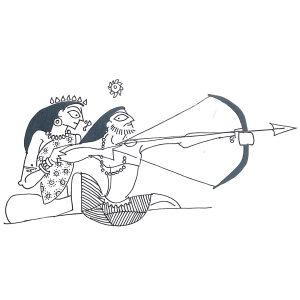
How Vishnu Became a Vegetarian Missionary
Over 90% of the world eats meat. The strictly vegetarian minority of India happens to be the only community that has historically dehumanised humans through untouchability. That is not a coincidence. That is the point.
-

Dharma of the Shudra
Dharma claims to be eternal. Eternal things are not supposed to change. But a Shudra landowner living better than a starving Brahmin priest is a fact that eternal texts cannot simply ignore. So Sanskrit scholars did what they always do…
-

The Tragedy of Nandi and Surabhi
Few animals have shaped Hindu imagination as deeply as the bull and the cow. Shiva’s mount is Nandi, the great humped bull, while the divine cow Surabhi symbolizes nourishment and abundance. Yet the modern story of their descendants is full…
-

How Food Practices Created a Network of Trust
Have you ever been curious as to why Jews keep Kosher, Muslims keep Halal, or why Hindu and Jain Banias are strictly vegetarian? All these are trading communities. All have, for centuries, used food practices to establish a network of…
-

Hindu Temples Within Mughal Gardens
When BAPS Swaminarayan Akshardham opened in Delhi in 2005, it was hailed as a triumph of Hindu civilisation. The sandstone shikhara, the hand-carved pillars, the bronze elephants: all sourced from the iconographic repertoire of classical India. And then, surrounding this…
-

Chanakya’s Temple Economics
The political treatise Arthashastra, attributed to Chanakya (Kautilya), dated to 300 AD, does not romanticise the role of the temple in ancient India. Image of the romantic Hindu temple as a sacred space, untainted by politics and money, does not…
-

When Women Told the Story Backwards
Teej means the third day of the lunar fortnightly cycle — Tritiya. What made the monsoon cycle interesting was that three important Teej festivals occurred on three different Tritiya tithis: Hariyali Teej on Shravana Shukla Tritiya (waxing half), Kajari Teej…
-

Northern Purification of the Southern Murugan
Visakhapatnam probably gets its name from Vishakha, twin of Kartikeya. The Mahabharata tells the story. Kartikeya had defeated Taraka, Indra’s enemy. An insecure Indra, struck Kartikeya with his vajra, viewing him as a potential rival. From the wound emerged Vishakha,…
-

Ballads of Breeze and Breath
In Hindu thought, Vayu, Marut, Vata, and Prana represent different ways in which breeze as well as breath were imagined.
-

The Surgery of Shushurta
Ancient India really did make important contributions to medicine. These achievements are well documented and respected by historians. But the story also has another side.
-

Prithu’s Cow, Ashoka’s Lion
Dharma is being equated with development, with the destruction of forests and rivers. The literal cow is honoured with melodramatic sentimentality while the earth-cow is plundered for minerals and timber, her air and water poisoned. She is crying, and there…
-

The Areca Nut in The Betel Leaf
After meals, a quid of betel leaf wrapped around some areca nut and lime, perfumed with cardamom, clove, nutmeg, mace, and camphor — the five aromatics known collectively as pancha-sugandha — served to aid digestion and sweeten the breath.
-

Taxing Varuni, the Goddess of Intoxication
Varuni, the goddess of wine, churned out of the ocean of milk, joined Indra and transformed Swarga into paradise. So say the Puranas. However, very little is mentioned about Varuni in popular lore. Scholars believe this was grape wine imported…
-

Brahmins In Jain Memory
In the Brahminical tradition, the Brahmin stands at the apex of creation, born from the mouth of Prajapati, custodian of the sacred fire by divine right. Jainism offers a different account entirely. It does not deny the Brahmin’s existence; it…