Kutch, in Gujarat, is one of the driest regions of India. Rain is uncertain. Rivers are seasonal. Wells dry up. Water is always precious. Agriculture never became the main source of wealth here because the land simply does not allow it. Power in Kutch came from trade. Rajput Jadeja kings drew their strength from coastal ports. These ports were run not by warriors but by merchant communities such as Gujarati Lohanas, Jains and Muslim Memons. Ships, customs duties and commerce filled the royal treasury more than crops ever could.
The arid landscape of Aravallis shaped society. This was a pastoral world. Charans managed horses and cattle. Rabaris handled camels. Dungars tended sheep. Movement across dry grasslands mattered more than settled farming. Wealth was counted in herds, not harvests. In such a world, mobility, memory and reputation were more important than land records. These communities managed logistics of armies, controlled the salt trade. Their history has been largely erased since the introduction of railways.
In this region, Brahmins were not always central. Priestly role was often performed by Charans. They were bards, negotiators, ritual specialists, poets, warriors, royal companisons and much more. They preserved memory in the old Dingal language. They recited the lineage of kings and praised their valor in ballads. Through their words, a king became legitimate. Without the Charan voice, royal authority was incomplete.
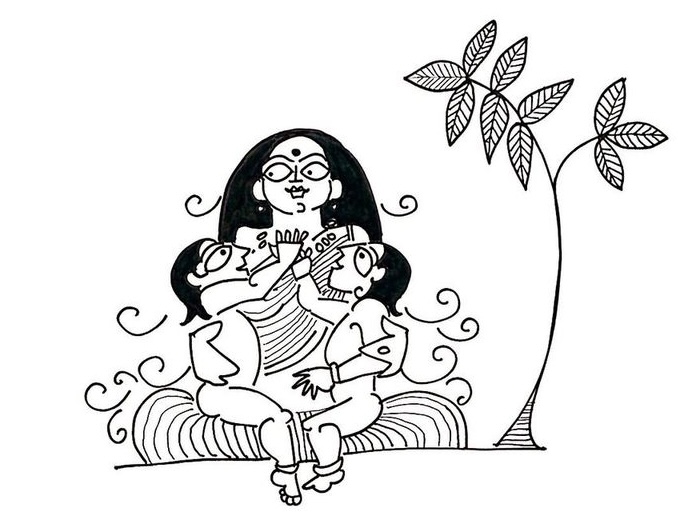
Both Charan men and women held great prestige. They were seen as children of Saraswati, goddess of speech, Devi-putra and Kavi-raj. Their words carried power. They moved between courts and clans, carrying news, oaths and reputations. They invoked blessing and they could invoke curse.
While many Charans served in courts and armies, their greatest power lay in moral authority. In a world without formal courts and legal systems, contracts needed guarantors. Charans performed this role across western India. Agreements were sometimes marked with a dagger sign, showing that a Charan stood surety. If a debtor refused to honor a promise, the Charan could resort to traga. He might pierce his flesh, mutilate himself, or in extreme cases sacrifice a family member. The shedding of sacred blood at the doorstep of the defaulter was believed to bring ruin. A house stained with Charan blood was cursed.
There are recorded cases from the 19th century where a Charan, humiliated by a debtor’s refusal to repay, killed a family member and smeared the blood on the debtor’s house. The debtor was then believed to fall sick or meet misfortune. British administrators themselves observed that people feared a bard’s blood more than any court order.
There was also dharna, where guarantors and their community would sit outside a defaulter’s house, fasting and compelling the household to fast until justice was done. Ritual life reflected this fierce sacred order. During Navaratri, a male buffalo would be offered by the Rajput ruler to the goddess embodied in a Charan woman. In trance, the goddess was believed to speak through her.
Many local goddesses of the Aravalli region were seen as manifestations of historical Charan women such as Karni Mata and Khodiyar Mata. Bahuchara Mata is another example. When attacked, she cut off her limbs and cursed her assailant. Over time, her temple became associated with the transgender community, who seek her blessing and liberation.
Charans wore red and black, colours of blood and power, not saffron. In Kutch, holiness was not defined by dietary purity. It was defined by oath, sacrifice and fierce speech. Their songs inspired warriors, reminded them of integrity and nobility, it celebrated fallen heroes and invoked goddesses.
This world began to change under British rule. Colonial courts and police replaced traditional guarantors. Traga was criminalised along with other forms of self mutilation. Railways reduced the need for caravan protection, another Charan role. Warfare declined. Songs shifted from battle to hunting and courtly themes. Blood rituals and possession were dismissed as superstition. In the new colonial order, their role was being diminished. The old warrior ways were being wiped out.
Gradually, their exalted status faded. Many turned to new professions including agriculture, trade and banking. Yet their story reminds us of something important. In many parts of India, priesthood was not always Brahminical. Sacred authority could belong to pastoral bards who carried daggers and curses. In Kutch, speech was power. Blood was contract. And those who controlled memory and oath shaped kings and kingdoms.