On March 16, 14 Muslim men held an Iftar party on a boat on the Ganga in Varanasi during Ramadan. They ate chicken biryani. They threw the leftover bones and food remains into the river. One of them posted a video on Instagram. The video went viral. The Bharatiya Janata Yuva Morcha filed a complaint. The men were arrested the next day. The Allahabad High Court, hearing their bail application in May, observed that throwing non-vegetarian food waste into the Ganga could hurt the religious sentiments of the Hindu community. Bail was granted, on the condition that they and their families had expressed remorse for the pain caused to society at large. The judges were a Shukla and a Sinha. Do surnames matter in law?
Now consider what is already in the Ganga.
The Central Pollution Control Board has documented for decades that the Ganga receives approximately three billion litres of sewage daily, of which a fraction is treated before entering the river. Tanneries in Kanpur discharge chromium and other heavy metals. Cremation ghats release partially burned human remains. Entire corpses, of those too poor for full cremation or those considered exempt from it by custom, float downstream. Agricultural runoff carries pesticides and fertiliser. Industrial effluent from paper mills, distilleries, and chemical plants enter the river at multiple points along its length. Faecal coliform counts at Varanasi’s bathing ghats routinely exceed safe limits by hundreds of times. Cockroaches are everywhere!
None of this has produced a single FIR for outraging religious feelings. No tannery owner has been arrested for defiling a place of worship. No municipal corporation official has been charged with promoting enmity against Hindus for allowing sewage outfalls to empty into the sacred stream. No cremation authority has been asked to express remorse for the human remains it deposits daily in the goddess’s body.
The Ganga, it appears, can absorb unlimited quantities of sewage, heavy metals, partially burned corpses, and chemical effluent without her sentiments being hurt. It is specifically chicken biryani, consumed by Muslim men during Ramadan, that crosses the threshold.
This distinction is not incidental. It is the point.
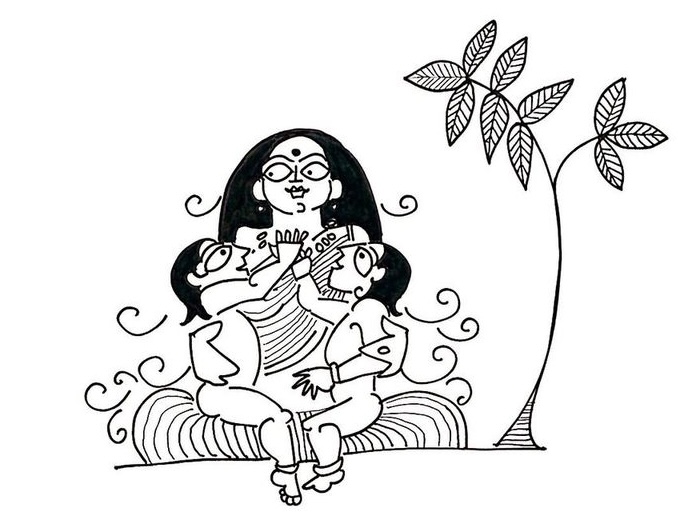
But there is a deeper irony here, one that the court was not equipped to notice because it would have required the judges to open a copy of the Valmiki Ramayana. In Ayodhya Kanda, verse 52.89, Sita stands before the Ganga before crossing into exile and makes a vow. The Sanskrit is unambiguous. “Sura-ghata-sahasrena”: a thousand pots of wine. “Mamsa-bhuta-odanena”: cooked rice mixed with meat (the original Vedic biryani?). These are the offerings Sita promised the river goddess in exchange for a safe return to Ayodhya. Not metaphorical offerings. Not divine substances available only to the gods. Wine and meat, in the plain Sanskrit of Valmiki, offered to the Ganga by the most revered woman in the Hindu tradition.
Traditional Hindi rendering often converts wine into “rare and divine substances” and meat-rice into a “robust grain dish”. The translators are not being dishonest in any crude sense. Sanskrit’s etymological system, the dhatu-path, permits such manoeuvres. Sura can be broken down differently. Mamsa can be read as an adjective meaning pulpy or dense rather than a noun meaning flesh. Devotional hermeneutics has always worked this way: begin with a conclusion about divine purity, and allow grammar to accommodate it.
But this is a theological choice, not a philological finding. Western Indologists and literalist scholars read the same verse and see what the words say: a Kshatriya queen making a conventional vow involving meat and wine, because in the epic era such offerings to river goddesses and yaksha spirits were honourable and routine. Both readings exist. What is not honest is pretending only the traditional version is Hindu and the other is an insult.
The Ganga of Valmiki received such vows without complaint. The Ganga of the Ramayana presided over a world where Kshatriyas hunted and ate what they hunted. The sanitised, vegetarian, teetotal Ganga of contemporary Hindu nationalism is a recent invention, shaped by the reformist sattvik ethos of the 19th and 20th centuries, hardened into political identity in the 21st, who equate meat-eating with Islam and Christianity, and deny Hindu goddess worship and subaltern Tantrik practices which involves meat, fish, and alcohol.
What the Varanasi case actually demonstrates is not that the Ganga is sacred. Everyone agrees she is sacred. What it demonstrates is that her sacredness is now selectively enforced. Industrial polluters are not prosecuted under laws protecting places of worship. Municipal sewage is not charged with promoting enmity. The river can be killed slowly by those with capital and caste standing, and no court will observe that this hurts Hindu sentiments.
But 14 men eating biryani on a boat during Ramadan must express remorse to society at large.
Sita promised the goddess wine and meat. She crossed safely. The exile ended. The goddess, presumably, accepted the offering and was pleased. What the Allahabad High Court, with judges like Shukla and Sinha, would have made of that transaction is best left to the imagination.