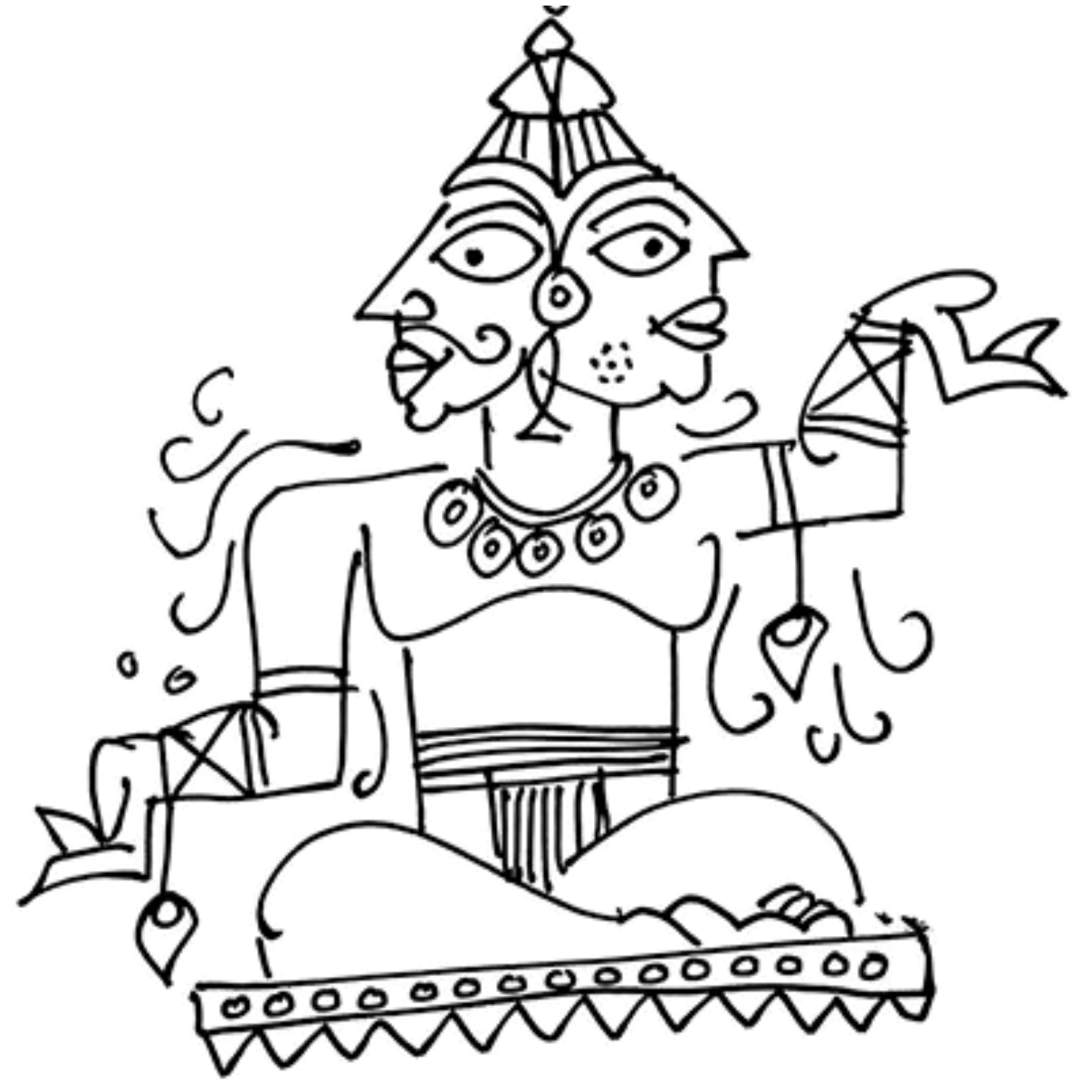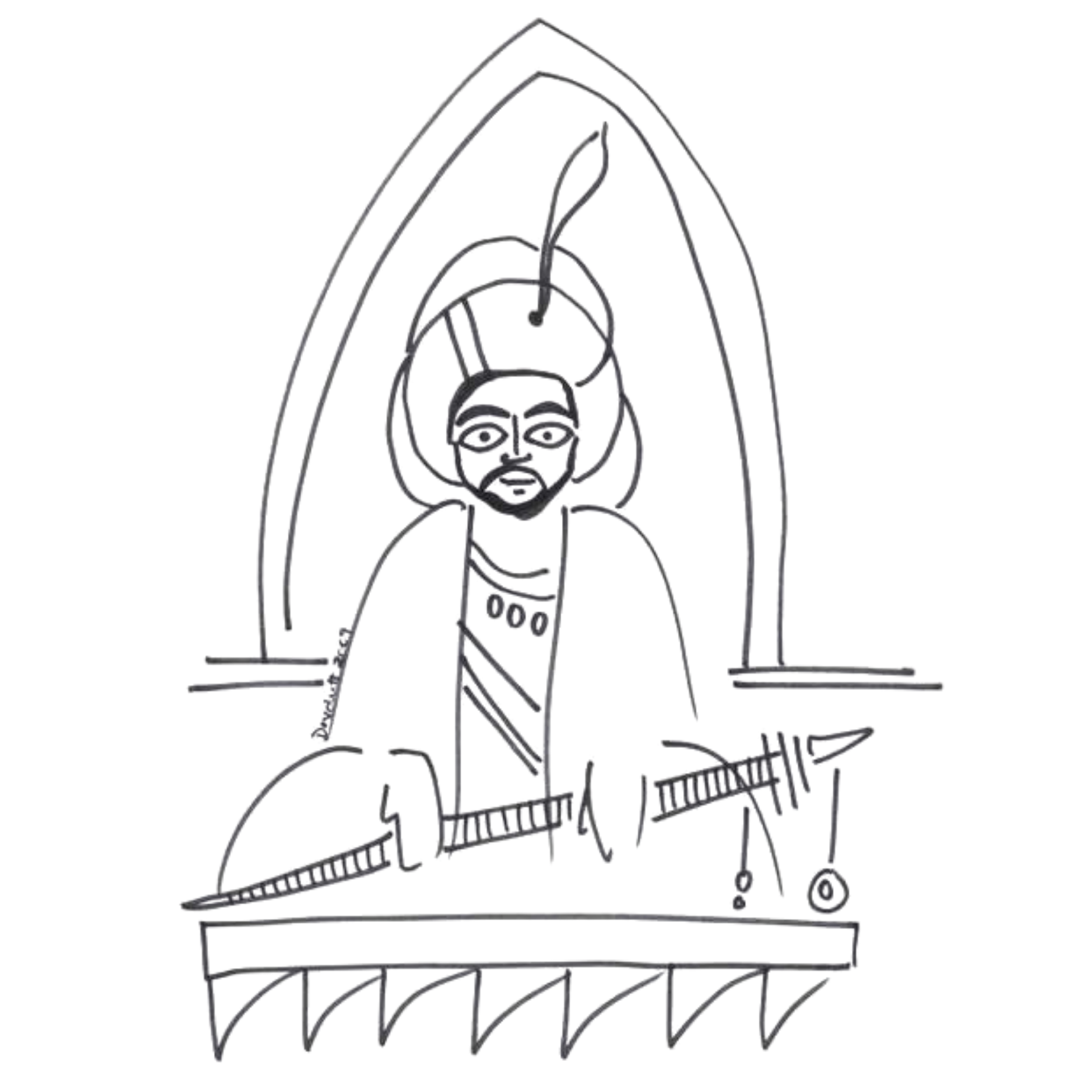
The name Badrinath carries a quiet ecological memory. Badri means the berry (Ziziphus mauritiana), or jujube tree. Nath means lord. Badrinath is the lord who dwells among berry trees. Myth explains this landscape by saying that when Vishnu meditated in the twin form of Nara and Narayana, the goddess Lakshmi transformed herself into a berry tree to shelter him from the cold and to nourish him. Food, shade, and devotion merge, turning vegetation into theology. The shrine that emerges is not merely a temple but a reminder that divinity survives through sustenance.
The physical structure of Badrinath evokes ambiguity. It does not resemble a classical Hindu temple but looks closer to a Buddhist vihara.
Inside the sanctum are three figures: Nara, Narayana, and Uddhava. The Bhagavata Purana identifies Nara with Arjuna, Narayana with Krishna, and Uddhava as their companion and confidant.
But there are competing claims. Many Jains argue that the images are originally Jain icons later appropriated by Brahmin priests. Significantly, Adinath or the first Jain Tirthankar of this era is linked both with the banyan tree as well as the evergreen Rayan berry tree (Manilkara hexandra). Like Shiva, he is linked to the bull. Shiva too is offered ber fruit on Shiv-ratri. Verification is difficult because the images are heavily covered with flowers, ornaments, and sandal paste, making iconographic study nearly impossible. What is clear, however, is that the region was never culturally isolated.
Garhwal lay on an important trade route connecting the plains of India to Tibet. Merchants, monks, and pilgrims passed through Badrinath, carrying goods as well as ideas. Buddhist presence along Himalayan trade routes is well documented, and the vihara-like architecture reflects this. Jain traders too were active across north India and the western Himalayas. Badrinath, thus, functioned as a trading shrine, sustained by movement rather than settlement.
Later political shifts changed these patterns. As trade routes altered, older Buddhist and Jain institutions lost patronage and declined. Local Garhwal kings, aligned with emerging Buddha-Hindu polities, rebuilt or repurposed shrines. Tradition credits figures like Shankaracharya and later Ramanujacharya with rediscovering and re-establishing Badrinath. These stories are less about founding new temples and more about reinterpreting older sacred spaces to suit changing religious ecologies.
The central symbol that ties these traditions together is the berry tree, linked to Shiva, Vishnu and Rishab-devji. Berry trees are also found near Harmandir Sahib (Golden Temple) of Amritsar. Sages sat under the shade of this tree. It is said to be Dukh Bhanjani, or that which removes all suffering, as it provides the basic needs that a hermit needs — shade and food.
The berry tree enabled sages to survive in harsh conditions. The berry tree acknowledges the importance of food without which no life survives. Even the hermit, who gives up the world, needs food to survive. Berries are linked to Ram, Krishna, to the wandering hermits of India. It is the offering of tribal people to their gods and goddesses. It is the food of the traveller, the trader, that which survives in the harshest of conditions.
Badrinath is a layered site where Hindu, Buddhist, and Jain memories overlap, shaped by trade, geography, and changing patronage. When modern politics turns such shrines into rigid property markers, it flattens this complexity. The berry tree reminds us that sacred spaces grow through sharing, not possession.