In the east, Diwali is linked to the worship of ghosts, ancestors and the goddess Kali. This has its roots in Tantra, which in many ways a counterpoint to India’s masculine Vedic traditions that were gradually turning ascetic and creating the divide between purity and pollution.
Tantra celebrated the “impure” worlds of unrestrained and unregulated sex and violence and death, and bodily fluids. It saw the material world not as mirage (maya), but as a source of power (shakti). Those who knew the secrets of material reality could easily manipulate it: create magic to help kings win wars, drive rival armies mad, infest enemy territory with disease. Some of these ideas can be traced to the Atharva Veda (1,000 BC), but these rose to prominence in the centuries of chaos that followed the fall of the Gupta empire (500 AD). It is only in the Age of Tantra that Buddhism mainstreamed the goddess Tara and the female Yakshis were seen bearing the image of the Jain Tirthankaras on the head.
Tantra is closely linked to the body (tanu) and the act of weaving (tanti). It argued that while an individual thread (sutra) has value, it cannot become cloth. To become cloth, you need at least two threads, in different orientations. You need a mind with a body, male with female, the vertical activity of Vishnu and the horizontal passivity of Shiva, the spirit of Purusha and the substance of Prakriti. Nothing in nature exists in isolation: there is no hunger without food, no predator without prey. Those who knew this secret could manipulate space and time.
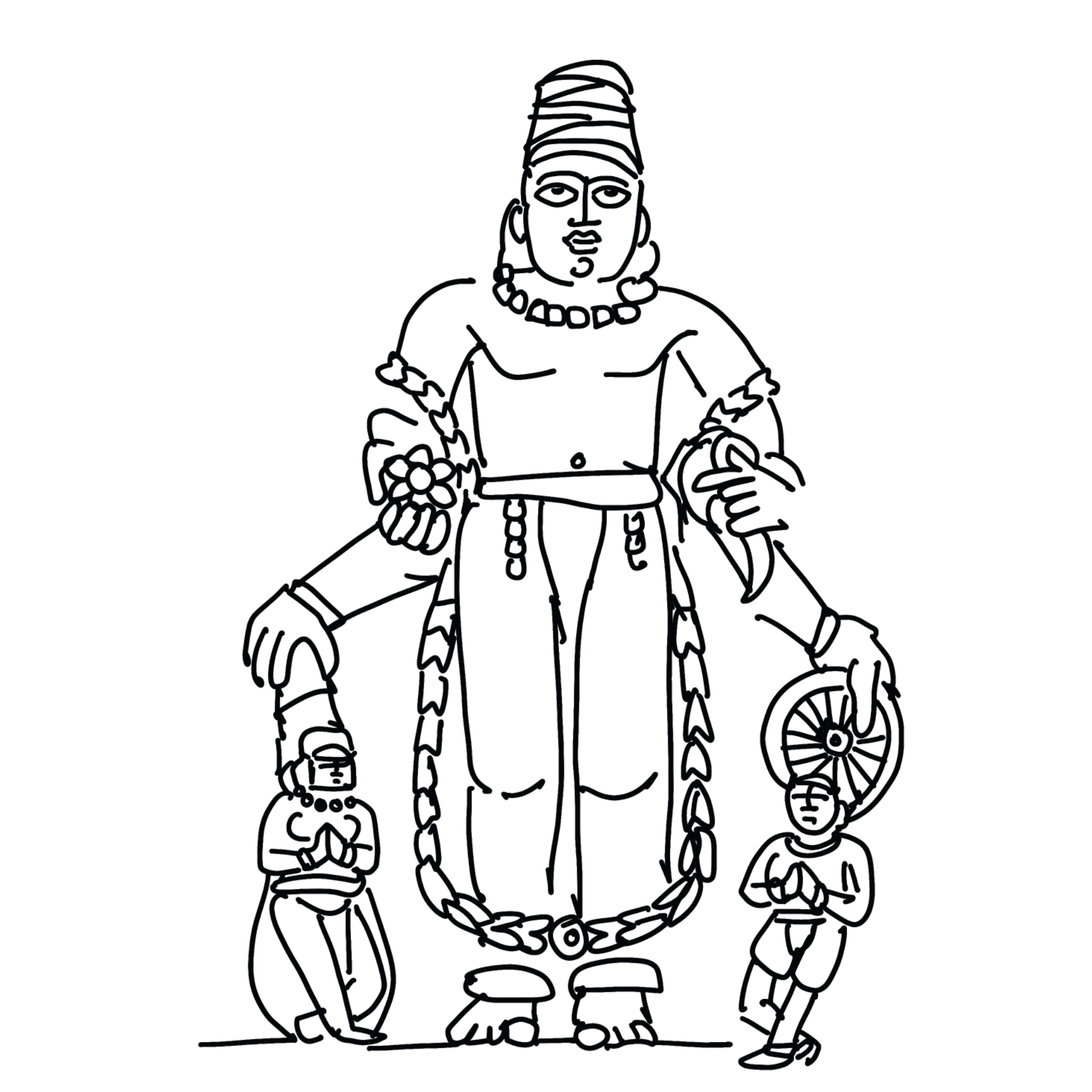
The Tantrik Age saw a proliferation of images that valorised the violent and the sexual. Instead of static images of the meditating Buddha, we have dynamic images of Shiva killing Andhaka and playing dice with Parvati. Vishnu appears as Varaha who carries the earth-goddess on his snout, while as Narasimha he rips apart an asura and drinks his blood. Fearsome images of Bhairava and Chamunda make their appearance, with a string of human heads around their neck. Kings turned the slaughter of their enemies into a ritual offering of blood to these gods who granted them victory. Rajarajeshwari, seated on a seat held by gods, becomes the patron of southern kings, having tamed the wild Shiva.
This is the age when yoginis dance around Shiva and gopikas around Krishna. Matrikas are depicted as female forms of male gods, and Mahavidyas embody women of all stages of her life: from girl to young wife to mature mother to old widow. Chinnamastika cuts her own head and drinks the blood that spurts out, reminding everyone that eating involves violence. She sits atop Rati who lies atop Kama, highlighting pleasure that has nothing to do with reproduction. The power of the body (tanu) is thus acknowledged.
Tantra became popular with kings who saw it as a source of great power. In Odia lore, a Tantrik sorceress called Nitei Dhobini (washerwoman) helped the young Chodaganga defeat the Kesari kings in the 12th century. She caused a rain of blood terrifying the old king’s army into submission. In exchange, the king, who had embraced the Vaishnavism of Ramanuja, promised to venerate the powerful goddesses (Thakuranis) of the countryside. On either side of Jagannath temple are temples of Vimala (mother) and Kamala (consort). In Puri, each year, the Gosani Yatra was held during Navaratrai to honour the most primal of goddesses.