There was a common thesis amongst many feminists of the late 20th century that before the advent of farming, humans worshipped goddesses and human society was matriarchal and matrilineal. This changed with the advent of agriculture, when the male form became privileged. The goddesses were sidelined and eventually replaced by the all-powerful male God of monotheism. However, a study of Indian texts and art suggest that the prevalent popularity of goddesses emerged in India only after 500 CE (1,500 years ago) as Buddhists, Jains and Brahmins migrated and were forced to accommodate subaltern cultures.
In Stone Age cave art, there are no images of goddesses. In Harappan art, there are tantalising images of goddesses linked with trees and tigers. But then these disappear for nearly 1,500 years when Buddhist, Jain and Hindu art finally appears.
In early Buddhist imagery, there is no Tara. In early Jain art, there is no Yakshi. In early Hindu art, there is Krishna but no Radha, there is Shiva but no Parvati. The earliest images of Lakshmi come from Indo-Greek coins and Buddhist stupas. The earliest image of Saraswati comes from a Jain archaeological site in Mathura. These are around 2,000 years old.
A few centuries later we find Kushan art showing early images of a lion-riding buffalo-overpowering goddess. Then we find terracotta plaques showing images of Ramayana in the Gangetic region, around Haryana and eastern Uttar Pradesh. Here we find female characters like Ahalya, Anasuya, Surpanakha and Sita.
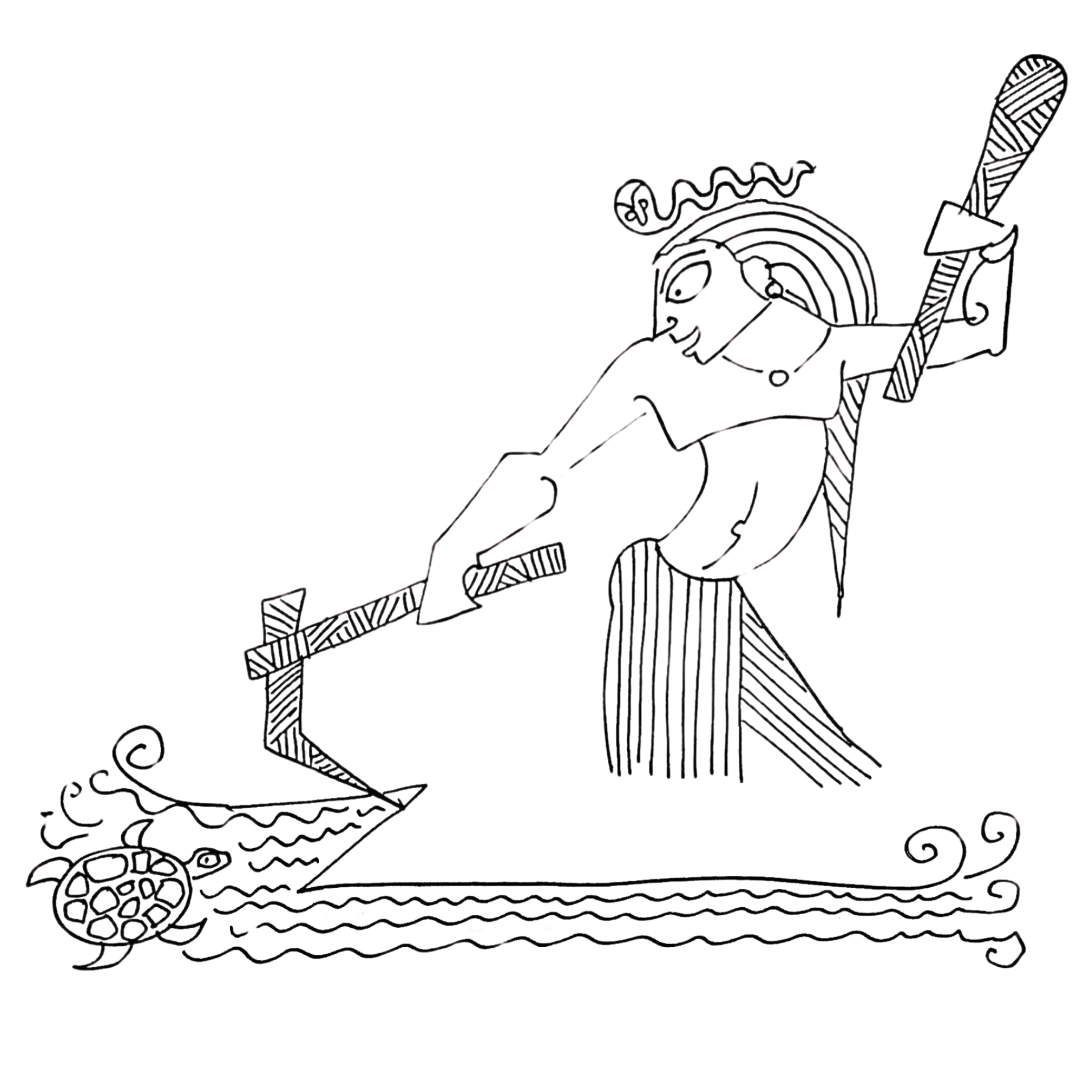
Then, in the Gupta sites, from 500 CE, in and around what is now Madhya Pradesh, we start finding images of goddesses such as Lakshmi at the feet of Vishnu, Prithvi being rescued by Varaha, the river-goddesses Ganga and Yamuna standing at doorways atop dolphins and turtles. By 800 CE, in Ellora, South of the Vindhyas, we find images of Durga fighting the buffalo, the seven matrika goddesses, Krishna and Balarama on either side of Yogamaya, images of the Buddhist Tara holding a lotus flower.
We can argue that goddesses have been integral to Hinduism since Vedic times. But of the 1,000 hymns of the Rig Veda only the maximum number of hymns dedicated to a goddess as the 21 hymns for Usha, the dawn-goddess. The Rig Veda is dominated by male gods—Indra, Agni, Soma, Surya, Prajapati, Aditya, Varuna, Mitra. Women play supplementary roles as the earth Prithvi, or the mother Aditi. Women are important characters in the epics Ramayana and Mahabharata, but the male characters, and masculine concerns, foreground the narrative.
By 1000 CE, this changed dramatically. The goddess appears as a counterpoint and a counterbalance to god. The male trinity of Brahma, Vishnu and Shiva is balanced with the female trinity of Saraswati, Lakshmi and Durga. In Buddhist art, we find images of Tara next to the Buddha. In Tantrik Buddhist art, fierce Bodhisatva are paired with fierce female Dakinis and Yoginis. In Jain art, every Tirthankara is linked to a Yakshi—Chakreshvari for Rishabha, Ambika for Neminatha, Padmavati for Parsvanath. Kings get their royal authority from Durga. Merchants value Lakshmi. Scholars adore Saraswati.
With the arrival of Muslims in India, the masculine form of God once again prevails. Ram becomes God, Krishna becomes God, and the goddess is reduced to consort or devotee, at best mother who needs to be protected. The rising tide of monotheism meant that either God was seen as formless (nirguna) or, when given form, was granted the male form. This is why Hindutva promotes Ram without Sita, Krishna without Radha and Shiva without Parvati.