
Mythologist | Author | Speaker | Illustrator

-
Articles

How Brahmin Bureaucrats Thrived In Islamic Kingdoms
Hemadri Pandit feared the imminent arrival of Islam in the Deccan region. They had, by his time, already controlled the rich Ganga river plains. To protect the threatened Brahmin culture Hemadpant wrote the “Chatur-varga-chintamani ” (popularly known as Hemadri-shastra) – which lists activities to be performed to live a fulfilled life…
-
Articles

Indian Knowledge Systems
The first list of an educational syllabus in India comes from the Chandogya Upanishad, when the Sanatakumar sages ask Narada what subjects he is proficient in. …
-
Articles

View: Privilege to Saraswati at the cost of Durga & Lakshmi is an old Brahmanical hangover
Published on 21st January, 2023, in Economic Times. In America, the state serves the rich. In China, the rich serve the state. The American politicians get the military to ensure American businesses have access to resources and markets. The Chinese politicians restrain most successful businessmen from gambling away the country’s future in speculative stock market…
-
Articles
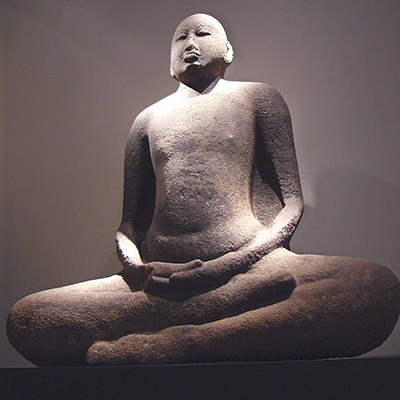
The Meaning of Contentment
Published on 30th December, 2022, in The Hindu. At the start of anything new, like New Year, Hindus look towards Ganesha. We want him to remove obstacles from our lives, and usher in prosperity. We have been conditioned to see his big belly or lambodara as a symbol of wealth. We have forgotten that this…
-
Articles

How Advaita Shapes the Indian Headshake
Published on 17th September, 2022, in Economic Times. The most popular school of Vedanta is called Advaita. Advaita means non-dual. In English it is often translated as monism. But there is a difference between the structure of the two words. Advaita is refuting the existence of two. Monism is acknowledging the existence of only one,…
-
Articles

Economics Of Brahma, Vishnu and Shiva That Businessmen Across the World Need to Know
Published on 25th June, 2022, in Economic Times. The Puranas were composed 1500 years ago, between 5th and 10th century AD. What differentiates the Puranas from the Vedas is the value placed on temple worship, pilgrimages and stories to express a philosophy. The chief protagonists are the trinity of Brahma, Vishnu and Shiva and their…
-
Articles

Divine Mathematics
Published on 11th June, 2022, in Economic Times. People often ask, if Aryabhatta invented zero, how did people count Ravana’s ten heads and Gandhari’s hundred heads before that. It is one of those foolish WhatsApp “mysteries” for people who do not realise number systems predated the invention of the number zero. For example, ten can…
-
Articles

Full-and-Final Settlement Before God
Published on 28th May, 2022, in Economic Times. We often forget that the word cash is derived from the Sanskrit word “Karshapana”. Indians invented the idea of money long ago. Irregularly-shaped copper coins were used by merchants for banking 2500 years ago, about the time coins began being used in ancient Greece and China. Even…
-
Articles
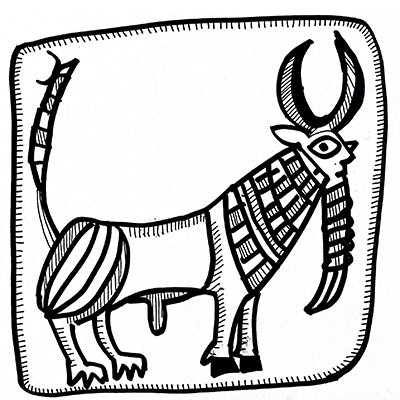
Dogs, Rats, Unicorns and Other Animal Guilds
Published on 30th April, 2022, in Economic Times. Animals have a close relationship with human corporations and guilds. Nearly 4500 years ago, in the Harappan cities of Northwestern India, archeologists have found hundreds of soft stone seals, barely an inch or two long in width that have animal motifs. They are full of marks that…
-
Articles

Modern Management Is Essentially Violent As It Is Based on Consumption
Published on 16th April, 2022, in Economic Times. Consumption is violence. Bhoga (food) demands bali (sacrifice). Something has to be destroyed to produce the food that you consume. This is natural law. So the elements are consumed by trees. Trees are consumed by animals. Animals are consumed by animals. Nature is designed around consumption that…
-
Articles

The West Believes History Has a Direction, a Purpose, an End. But Indian Worldview Is Different
Published on 2nd April, 2022, in Economic Times. Conventional leadership frameworks begin with the notion that there is a problem to be solved, which leads to strategizing, planning, organising, implementing, regulating, motivating, enabling, and reviewing along the way. This model is linear: there is a target at the end. This model is based on Western…
-
Articles

Treasures of Mythology: Inside the Fascinating World of the Merchant Class
Published on 19th March, 2022, in Economic Times. When we read stories from history, we focus on kings and their wars. The reason for this excessive focus on kings and warfare is the fact that the subject of history emerged in Europe in the 19th century. During this time, kings themselves wanted to hear stories…
-
Articles

What Draws the Corporate World to Himalayan Yogis and Siddha Purusha
Published on 5th March, 2022, in Economic Times. Jesus’ fame came not from reasonable and compassionate gospels, but for news that he turned water into wine. Buddha’s fame came not from mindful meditation that destroys desire, but from chanting Buddhist hymns that fulfil desire. Likewise, Himalayan Yogis and Siddha Purusha may look like ascetics but…
-
Articles
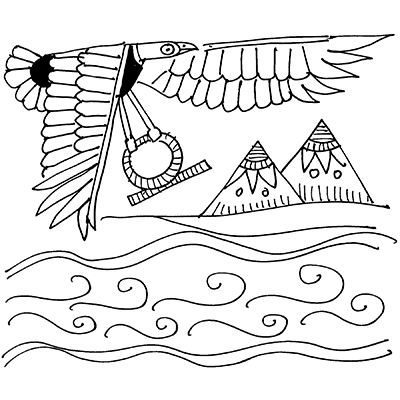
What Lapis Lazuli Tells About the Power Establishment in Ancient India?
Published on 19th February, 2022, in Economic Times. If one travels to a period nearly 5000 years ago, and goes to ancient Egypt, or ancient Mesopotamia (which is modern-day Iraq), we will find images of their gods and goddesses. These deities had blue hair, blue eyebrows and blue eyes. The distinct blue color is placed…
-
Articles
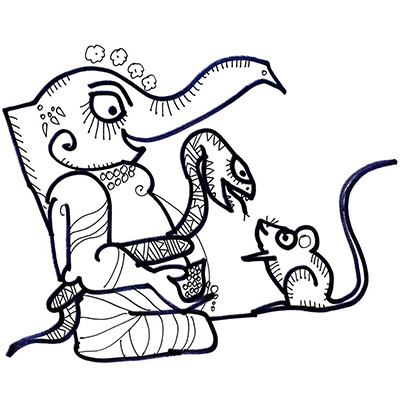
What Ganesha Has to Say About Ambition
Published on 4th February, 2022, in Economic Times. Ganesha, the elephant-headed god of Hindus, is renowned for his huge belly, which is a symbol of affluence and abundance. His elephant head evokes power. His vehicle, or vahana, is a tiny mouse, which is known to overcome barriers, and find its way into storehouses, find food,…
