
Mythologist | Author | Speaker | Illustrator

-
Articles
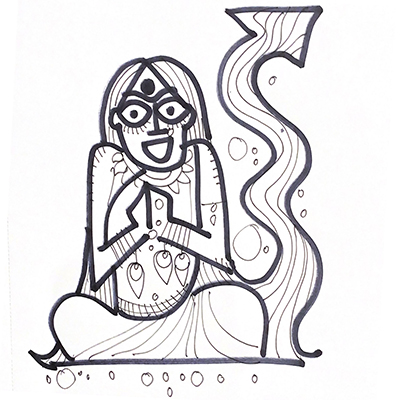
How Bindumati, a Courtesan, Made Ganga Flow in Reverse
Published on 8th January, 2022, in Economic Times. The story of Bindumati comes from the Buddhist text known as Milinda Panha, or questions of Milinda (Menander) which is a conversation between the Indo-Greek king Menander and the Buddhist monk Nagasena. The scripture is about 2000 years old and continues to be venerated in Burma. The…
-
Articles

Hybrid Work Model in Rig Veda
Published on 11th December, 2021, in Economic Times. Rig Veda refers to two types of kingship: that of Indra and that of Varuna. Indra is the warrior-god who loves the energising Soma as he rides into battle to kill demons and retrieve cows. He is the god that the Aryans venerated when they were on…
-
Articles

View: Understanding Economies and Their Role In Rendering Old Models Of Caste Irrelevant
Published on 18th September, 2021, in Economic Times. Caste (jati) is how resources and respect was inherited and distributed in traditional Indian society. The distribution pattern varied across India. The thousands of jatis were classified neatly into a four-fold varna framework found in the Vedas. The four varnas are brahmins, kshatriyas, vaishyas and shudras. The…
-
Articles

A Brahmin in Kerala
Published on 21st August, 2021, in Economic Times. The Puranas tell the story of an asura king called Mahabali who gave people whatever they desired. Mahabali had thrown out Indra, king of devas, who ruled the skies, and now controlled the three worlds: the sky, the earth and everything in between. Mahabali was a generous…
-
Articles
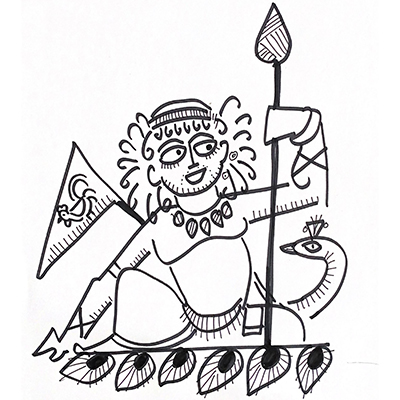
View: Do Not Consume What You Protect
Published on 6th August, 2021, in Economic Times. Four hundred years ago, the people of Kerala began telling the story of how Kerala emerged from a mysterious past. They spoke of how Parashurama reclaimed land from the sea and gave it to the Brahmins. But the Brahmins could not collaborate with each other since they…
-
Articles

Shutting Up a Vampire
Published on A vampire in Indian folktales is known as a vetala. It is unable to cross the river Vaitarni and go to the land of the ancestors. So it lives in the crematorium, inside a corpse, using its tongue to speak. If you can bottle a vetala, you can use it for sorcery and…
-
Articles

Origins of Nepotism
Published on 9th July, 2021, in Economic Times These days, business families are including their daughters in the family businesses. Yet on careful observation, one notices that the son is given responsibility for “outside” jobs such as production and sales, the jobs that take you to the factory and the market. The daughter is usually…
-
Articles

Of Weight and Value
Of Weight And Value: The human mind has power to create value and also strip value. Published on 11th June, 2021, in Economic Times. One of the most peculiar things about the Harappan civilization is its obsession with weights and measures. They had binary measuring systems and decimal measuring systems. They also had pans for…
-
Articles

Unfit for Vikramaditya’s Throne
Published on 28th May, 2021, in Economic Times. About a thousand years ago, a collection of Sanskrit tales, known as ’32 tales of the throne’, came into being to draw attention to the qualities of a good king. In the narrative, king Bhoja finds the throne of legendary king Vikramaditya but every time he tries…
-
Articles
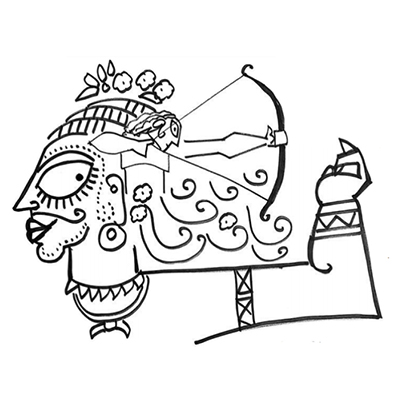
Power Points and Excel Sheets in Jataka Tales
Published on 14th May, 2021, in Economic Times. In the venture capitalist industry, it is known that all things being the same, a tall handsome man who presents well, preferably with an American accent, is more likely to get funds than a short, fat, dark woman with a heavy Indian accent. This is true of…
-
Articles

Give or Take: Bartering For Better Economics
Published on 15th April, 2021, in Economic Times. The word ‘transaction’ is associated with commerce, business and marketplaces. It is considered the opposite of spirituality, which should be non-transactional. Spirituality presupposes a spiritual entity, with infinite energy, that can give its energy to another without seeking anything in return, much like the sun, which gives…
-
Articles
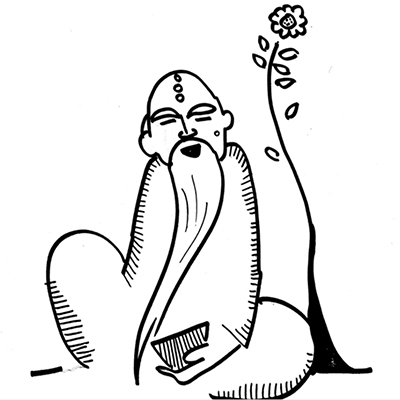
The Spiritual Marketplace
The spiritual marketplace: New Era Gurus Are Here to Help You Find Your Ikigai. Published on 3rd April, 2021, in Economic Times. A market is where there are buyers and sellers. There are people who seek spiritual comfort and those who provide it. That creates the spiritual marketplace. It has always existed since the time…
-
Articles

The Rise of Indian Zaibatsu
The Rise of Indian Zaibatsu: How Indians are adopting more Eastern models Published on 20th February, 2021, in Economic Times. Zaibatsu means financial clique in Japanese. It refers to family-owned vertically integrated industrial and financial business conglomerates that played a key role in the economic transformation of Japan from Meiji period until the end of…
-
Articles

Sea of Spices: How Trade Gets Intertwined With Myths
Published on 26th December, 2020, in Economic Times. There was a goddess called Harsiddhi Mata who resided atop a hill, overlooking the sea in the coastal areas of Gujarat and Sindh. She would see ships sailing by. There were those who would see her temple and not venerate her. So, casting a malevolent eye, she…
-
Articles

Of Thrill-Seekers and Deer Hunters
Published on 11th December, 2020, in Economic Times. In the forest, chasing the deer (mriga) creates a path (marga). Hence in Vedic texts, deer embodies a goal: the object of desire. In the Manusmriti, kings are warned not to indulge too much in deer sport. In ancient India, hunting deer was a major pastime and…
-
Articles
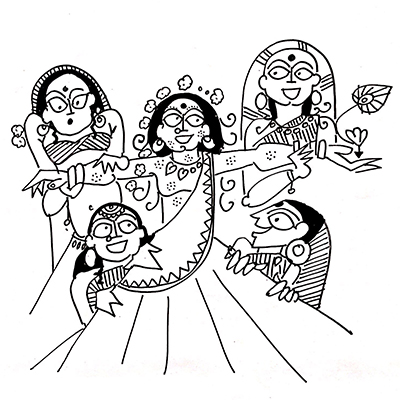
View: Is the Corporate Pantheon Truly Diverse?
Published on 2nd October, 2020, in Economic Times. The corporate world is assumed to be masculine, one that needs to be forced to acknowledge the feminine and the queer through policies. But while the corporate world struggles to be inclusive, we see the opposite trend in the Hindu pantheon, as Hindutva becomes the governing political…