
Mythologist | Author | Speaker | Illustrator

-
Articles

Tax collection: Old View to New
Published on 18th September, 2020, in Economic Times. Ancient Greeks, like ancient Hindus, valued the idea of city-states and decentralised power. But exposure to Middle East introduced monotheism, the idea of empire, with central control, allegedly for deficient governance. This journey of history is reflected in mythology as polytheism moves towards monotheism. Nearly 6,000 years…
-
Articles

Human Sacrifice to Riots: Political Tools of Control
Published on 22nd August, 2020, in Economic Times. In Meso-America, the Aztecs sacrificed humans to their gods. This was deemed barbaric by Spanish conquistadors who arrived there in the 16th Century. It became the reason to label them savages, justify their conversion into Christianity and market the conquest of their land as a civilizing mission.…
-
Articles

The Essence of the Bhagavad Gita
The essence of the Bhagavad Gita: Understanding the significance of sattva-guna, rajo-guna and tamo-guna Published on 22nd August, 2020, in Economic Times. The Bhagavad Gita informs us that the world is made of two intertwined entities: the material (prakriti) and the spiritual (purusha). The latter is technically not an entity as it cannot be measured.…
-
Articles

The Transformation Of King Ashoka and Bill Gates
Published on 25th July, 2020, in the Economic Times. Stories of transformation are very impressive. Let’s take the example of Ashoka. Ashoka was a Mauryan prince who, 2300 years ago, killed his brothers to become the king of Pataliputra. He established a great empire through violence. He used brutal force to suppress all those who…
-
Articles

Brahmins As Kingmakers
Brahmins as Kingmakers: A glimpse into the political scenario in ancient India. Published on 11th July, 2020, in Economic Times If you read Indian history, you would often come across stories in which a king, wanting to coronate himself, or an ambitious warlord, wanting to transform himself into a king, would invite Brahmins from a…
-
Articles

Financial lessons from Satyabhama
Published on 27th June, 2020, in the Economic Times. Krishna was raised by cowherds and then he moved from Vrindavan to Mathura and thence to Dwarka, where he married many women, often princesses from surrounding kingdoms. But his status in the Yadava clan was ensured by his marriage to Satyabhama, daughter of the richest Yadava…
-
Articles

View: Fake News & Politics & Economics Of Faith
Published on 13th June, 2020, in the Economic Times. The Knights Templar was an order of warrior knights that existed nearly 900 years ago. It owed its allegiance to the Christian Church. In its 200-year history, it also established one of the first banking institutions in the world, before it was brutally suppressed by French…
-
Articles
View: Seva For People, Or For Afterlife?
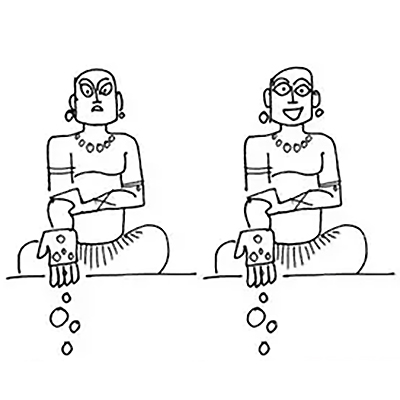
Published on 30th May, 2020, in the Economic Times. The idea of religious institutions doing ‘seva’ and serving the people is an old one. The idea of social work, as we know it today, emerged with the Christian Church and the concept of tithe. Priests would pass around fishnets to those congregated at the church,…
-
Articles

Islam’s Agricultural Contribution
Published on 17th April, 2020, in the Economic Times Nabi Bansa is a Bengali epic written over 300 years ago that narrates the tales of Islamic prophets. Here we are told that when Adam was cast out of Eden, he fell to Serendib, the island of Sri Lanka, and then walked across what we now…
-
Articles

View: Why Indians do not innovate
Published on 4th April, 2020, in the Economic Times Despite being highly creative, there are two reasons why Indians did not, and do not, innovate beyond the idea of ‘jugaad’ – contextual improvisations born of limitations that are generally not scalable. The first is caste (jati), and the second is the doctrine of contentment (santosh).…
-
Articles

Beyond objectives are consequences
Published on 20th March, 2020, in the Economic Times Indian mythology is based on the principle of karma, where every action has an unforeseen reaction. There is no escape from consequences as everything has cause. This Indian paradigm shapes Hinduism, Buddhism and Jainism. However, this principle is alien to western discourse. The western discourse is…
-
Articles

View: The Sacred Balance Of Power
Published on 6th March, 2020, in The Economic Times Across religious scriptures, we come across the concept of balance of power in the unlikeliest of spaces. We hear of charismatic kings who control people (at least warriors) that enable them to wrestle power and make themselves overlords of a kingdom. But how does one maintain…
-
Articles

Dharma Hormones: What Is the Path To Happiness?
Published on 21st February, 2020, in The Economic Times How do you validate human existence? Ancient Hindu scriptures say there are four pillars to this: dharma, artha, kama, moksha. Dharma is about the responsibility to society at large. Artha is about achievement and success. Kama is about intimacy, about sensual and sexual pleasures. Moksha is…
-
Articles

The Culture Of Report Cards
Published on 8th February, 2020, in The Economic Times Every child around the world is now living in a culture of report cards. He is continuously being measured for his abilities by his teachers and his parents: Is he good? Is he better? Is he the best? Is he bad? Is he worse? Is he…
-
Articles
Messaging Modes – Hearing, Overhearing
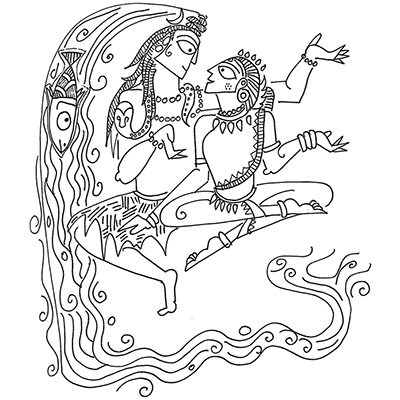
Published on 29th December, 2019, in the Economic Times In Abrahamic mythology, God communicates with humanity through messengers. Judaism informs us how God spoke to Moses, Christianity informs us how God spoke to Jesus, and Islam informs us how God speaks to many prophets from Adam onwards to the final Prophet Muhammad. Messengers hear God’s…
-
Articles

View: Millennials are turning CEOs of their own lives
Published on 2nd November, 2019, in Economic Times How many of us convert corporate behaviour into self-help lessons? Considering that corporate behaviour is shaped by the knowledge and experience of many hundreds of management experts, surely it makes sense to use corporate principles as guidelines to build our life? For example, how many of us…