
Mythologist | Author | Speaker | Illustrator

-
Articles
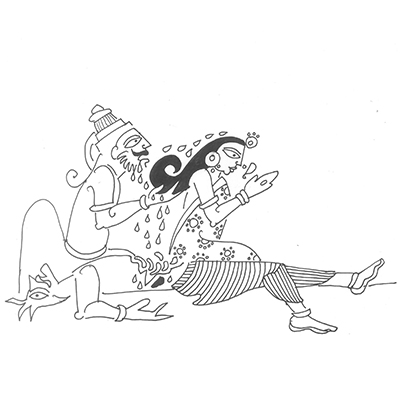
What Is Common Between Gandhi, Draupadi and Chanakya?
Published on 7th May, 2023, in Mid-day. Gandhi, Draupadi and Chanakya, all stood up to authority. But why? For revenge or justice? Chanakya and Draupadi refused to tie their hair, till they got what they wanted. This sounds so dramatic, but that is how stories are told. Most popular narrations of Gandhi’s life inform us…
-
Articles

No Hymns for the Donkey
Published on 21st April, 2023, in The Hindu. In the past 30 years, the donkey population of India has dropped by 90%. It’s sad, considering large donkey fairs have been held annually for centuries in Gujarat, Madhya Pradesh, Punjab and Uttar Pradesh. We rarely think of donkeys as cultural icons. Yet, they are. The wild…
-
Articles

History of How Brahmins Migrated to All Parts of India
Published on 31st December, 2022, in Times of India. To appreciate the history of Africa, we have to study the history of its many tribes. To appreciate the history of India we have to study its many castes. Not the caste system. Just castes – what foods were prepared by different endogamous groups, what kind…
-
Articles
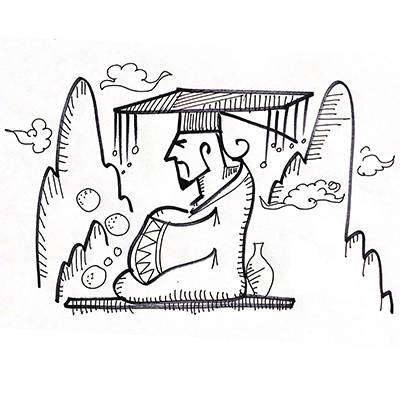
India and China Have Received Many Ideas from Each Other
Published on 26th November, 2022, in Economic Times. Nationalists in India and China love the idea that their culture influenced the world, but hate the idea that their culture was influenced by the world. While the Chinese preferred isolating themselves materially, with walls, Indians preferred isolating themselves psychologically using the caste mindset. Nevertheless, the two…
-
Articles

Why Do We Sacrifice Humans to a God, Ideology or Nation?
Published on 16th October, 2022, in Times of India. There are two types of gods in this world. The singular god of monotheists and the many gods of polytheists. The one god of monotheists demands obedience to the law he communicates through messengers. The many gods of polytheists offer all sorts of help, and solve…
-
Articles

Did Aryans Migrate Out of India to the West, or to the South?
Published on 16th July, 2022, in Times of India. Three kinds of people love the word Arya even today. The first is the local Hindutva folks who insist ‘Arya’ refers to the best of Hindu civilization. The second is the White Supremacist of the Western world; they prefer the word ‘Aryan’ to Arya, and insist…
-
Articles

Modern Management Is Essentially Violent As It Is Based on Consumption
Published on 16th April, 2022, in Economic Times. Consumption is violence. Bhoga (food) demands bali (sacrifice). Something has to be destroyed to produce the food that you consume. This is natural law. So the elements are consumed by trees. Trees are consumed by animals. Animals are consumed by animals. Nature is designed around consumption that…
-
Articles

How Hindus of Andaman and Nicobar Rejected Religious Bigotry,
Published on 9th April, 2022, in Times of India. Located where the Andaman Sea meets the Bay of Bengal, Andaman and Nicobar is a string of over 500 islands, of which only over 30 are inhabited. The northern islands are called Andaman and its original inhabitants comprise the “Negrito” tribes (Onge, Sentinelese, Jarawa) who came…
-
Articles

How Do We Know What We Know?
Published on 20th March, 2022, in Mid-day. How do we know what we know? This subject is called epistemology. Here, we try to understand how knowledge is created. This subject was a part of intellectual discourse in ancient India, under the subject Nyaya. Today, “nyaya” means justice. But in ancient times, it meant rational thinking…
-
Articles

Temples of Swaminarayan
Published on 13th November, 2021, in Economic Times. Most Indians are familiar with Raja Ram Mohan Roy and his Brahmo Samaj and link it with the 19th Century Hindu reformation. But very few know about Sahajanand Swami or the reforms instituted by his Swaminarayan sampradaya, even though both men lived in the same period of…
-
Articles

Religion In Prehistoric India
Published on 3rd January, 2021, in Mid-day. Humans domesticated fire around 3,00,000 years ago. We started using tools around that time. But, the human brain evolved to its current size roughly 2,00,000 years ago. We migrated out of Africa into India, 50,000 years ago. So, when do we find the earliest signs of religion in…
-
Articles

Sea of Spices: How Trade Gets Intertwined With Myths
Published on 26th December, 2020, in Economic Times. There was a goddess called Harsiddhi Mata who resided atop a hill, overlooking the sea in the coastal areas of Gujarat and Sindh. She would see ships sailing by. There were those who would see her temple and not venerate her. So, casting a malevolent eye, she…
-
Articles

Ithasa As Propaganda
Published on 31st October, 2020, in Economic Times. If one travels to ancient Egypt, one sees gigantic monuments of Rameses II. These celebrate his victory against the Hittites, in Syria, in 1300 BCE, in the first real use of horse-driven war chariots in the world. However, if one checks with historical records and does a…
-
Articles

Menstrual Taboos Are Not Unique to Hinduism
Who is a Hindu? Menstrual taboos are not unique to Hinduism Published on 16th August, 2020, in Mumbai Mirror. In Kerala, there is the story of a group of boys who found a rock bleeding. Those who touched it died instantly. The rest were told to wear women’s clothes and take it to the village,…
-
Articles

Islam’s Agricultural Contribution
Published on 17th April, 2020, in the Economic Times Nabi Bansa is a Bengali epic written over 300 years ago that narrates the tales of Islamic prophets. Here we are told that when Adam was cast out of Eden, he fell to Serendib, the island of Sri Lanka, and then walked across what we now…
