
Mythologist | Author | Speaker | Illustrator

-
Articles
The Elephant-Headed Buddha
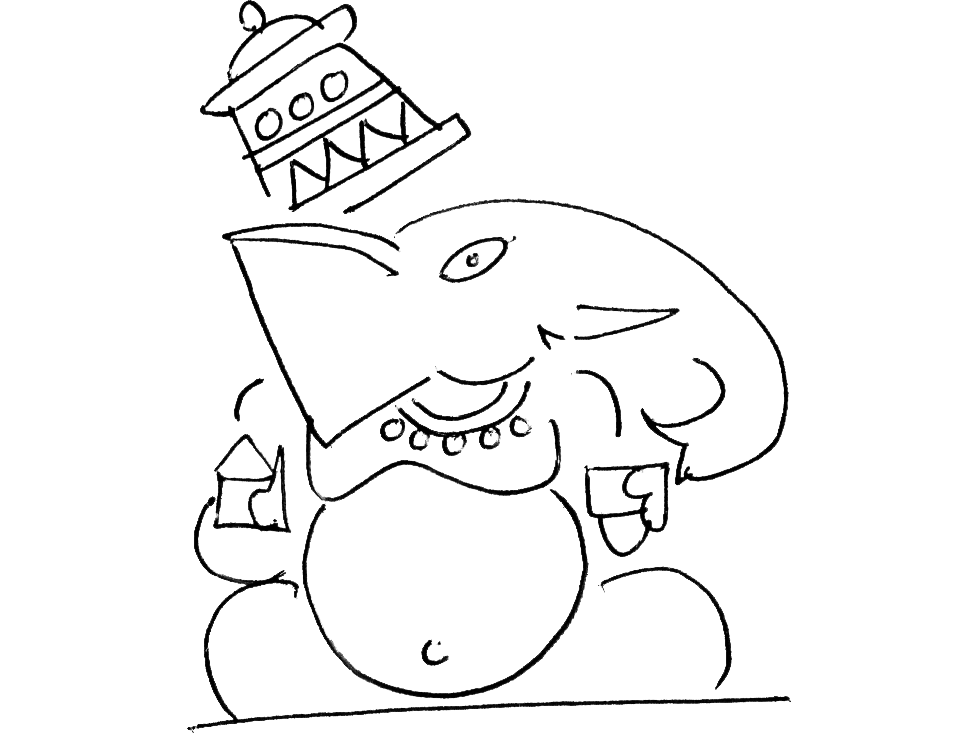
When one travels to Thailand and Japan, one occasionally finds images of Ganesha. Most Indians get very excited as it reveals how Hinduism spread to Southeast Asia and even the Far East. However, on closer examination, one realises the answer is not that simple. These elephant-headed deities worshipped in these countries have nothing to do with Shiva or Parvati. They are…
-
Articles

Diversity and Inclusion is a radical idea in the West because of monotheism
In the USA, a section of activists prefer the word ‘birthing people’ to ‘mothers’. This is erasure of womanhood, say feminists. Such feminists are deemed TERF (trans exclusionary radical feminists). Inclusion of trans-women seems to demand rejection of traditional definitions of womanhood, which is seen as a social construct imposed by patriarchy. Feminists argue that…
-
Articles

Amrit and the Terror of Impermanence
Published 13th May, 2023, in the Economic Times. As the stock market rises and falls, as wars and riots do not yield the desired results, as foreign ties sweeten and sour, the word “amrit” is being used a lot in political circles. It reveals the human inability to accept the truism of impermanence. It is…
-
Articles

Diverse tombs of the rulers of Turkey, Iran and India show that the Islamic world was not homogeneous
Published on 24th February, 2023, in The Hindu. After the sack of Baghdad in the 13th century, the Islamic world, dominated by Arabs since the 8th century, gave way to the Ottomans in Turkey, the Safavids in Iran, and the Mughals in India. These empires owed their success not to religion, but to gunpowder, a…
-
Articles

Veda, Vedanga, Vedanta
Published on 19th February, 2023, in Mid-day. Hinduism can be divided into three major eras. Veda dominated 3,000 years ago, Vedanga dominated 2,000 years ago, and Vedanta became central 1,000 years ago. These are approximations of course, but a good rule-of-thumb to remember Hindu history. The Veda refers to a set of mantras that dominated…
-
Articles

View: Privilege to Saraswati at the cost of Durga & Lakshmi is an old Brahmanical hangover
Published on 21st January, 2023, in Economic Times. In America, the state serves the rich. In China, the rich serve the state. The American politicians get the military to ensure American businesses have access to resources and markets. The Chinese politicians restrain most successful businessmen from gambling away the country’s future in speculative stock market…
-
Articles
Discovering Gay Generals in Jarasandha’s Army
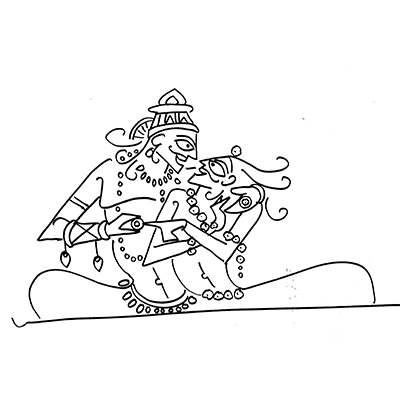
Published on 12th January, 2023, in Times of India. In 2018, when the Supreme Court decriminalised homosexuality, Akhil Bharatiya Prachar Pramukh Arun Kumar said, ‘Just like the Supreme Court, we also do not consider this criminal. But we do not support homosexuality, as same-sex marriages and relations are not in sync with nature. Traditionally too,…
-
Articles

The Boar of Kantara Has Much Significance In Our Mythology
Published on 2nd December, 2022, in The Hindu. The domesticated pig descended from the wild boar. The wild boar is a forager, the domesticated pig is a scavenger. Symbolically, they are a reminder of wild nature and cultivated culture. The pig was amongst the earliest animals to be domesticated across the world, and was a…
-
Articles
India and China Have Received Many Ideas from Each Other
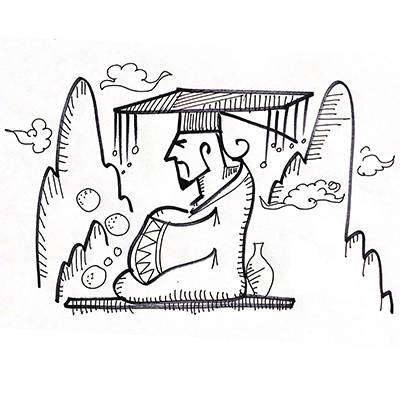
Published on 26th November, 2022, in Economic Times. Nationalists in India and China love the idea that their culture influenced the world, but hate the idea that their culture was influenced by the world. While the Chinese preferred isolating themselves materially, with walls, Indians preferred isolating themselves psychologically using the caste mindset. Nevertheless, the two…
-
Articles
The Mountains That Stopped Eagles
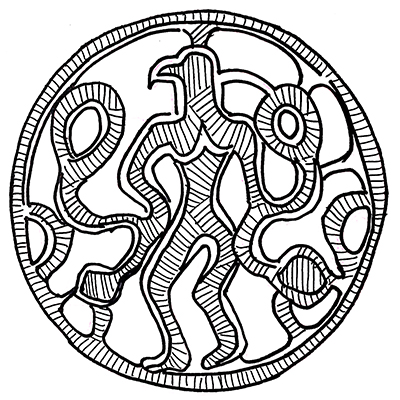
Published on 23rd October, 2022, in The Times of India. The mountains that stopped eagles and killed Hindus – Was Hindu Kush where millions of Hindus died? The Hindu Kush mountains separates South Asia from Afghanistan. These are the mountains that make India a relatively isolated zone and it is through its mountain passes that…
-
Articles
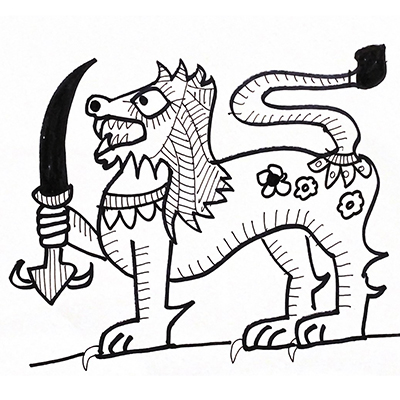
Royal Power of the Symbolic Lion
Published on 16th October, 2022, in Mid-day. Kings across East Asia, whether it’s China, Japan, Thailand, Vietnam, Indonesia consider the lion as the symbol of kings. In front of Chinese palaces, there is the male and female lion, the male holding under his paw a globe representing the world while the female holds a lion…
-
Articles

Why East India’s Contribution to Hinduism Remains Forgotten
Published on 24th September, 2022, in Times of India. Whenever we talk about Hinduism of India, most of the attention is taken over by talk of North India, with Rajput lands to its west and Gangetic plains to its east. Attention then shifts to South India, followed by talk of the Aryan-Dravidian divide. Hardly any…
-
Articles

Tales of the Horned Sage
Published on 18th September, 2022, in Mid-day. The story of Rishyasringa Muni is found in the Ramayana. Dashratha had three wives, but no children. So, he called a sage to perform the ritual that would get him children. The rishi selected was Rishyasringa Muni. In Odia miniature paintings, Rishyasringa is depicted as having two horns.…
-
Articles

The Elusive Amrita and the Question Of Eternal Life
Published on 11th August, 2022, in The Hindu. The earliest story of the grand churning of the ocean of milk, samudra-manthan, for the nectar of immortality, amrita, is found in the Mahabharata. But strangely there are more images of this mythological episode in Southeast Asian temples than in India. There is no artwork in India…
-
Articles

Kashmir Before Islam
Published on 21st May, 2022, in Times of India. The Muslims say that Suleiman (Solomon) came to Kashmir on a flying throne (takht), sat on a hill in Srinagar, and got his djinns to clear the lake, get rid of barbarians and create a land of the true faith. But Islam actually emerged in Arabia…
-
Articles
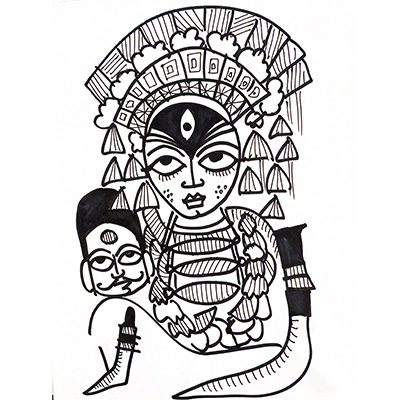
How Nepal Came to Be Once Called ‘Asli Hindustan’
Published on 7th May, 2022, in Times of India. In the 18th century, as many tiny principalities and kingdoms of Nepal were being unified to one mighty kingdom, the king of Nepal saw his land as ‘Asli Hindustan’ and saw India as the land controlled by ‘ulta dharma’ of Mughals. Since then Nepal has been…