
Mythologist | Author | Speaker | Illustrator

-
Articles

What the Chinese Saw In India
Published on 25th July, 2021, in Mid-day. Chinese scholars realised the Buddhism they were receiving was in diluted or corrupted form. So, many monks travelled to India by land and sea routes to get the original documents. They translated them into the local languages. This happened between the fifth and the eighth century, over a…
-
Articles

Why Is Being a Chandala Not Aspirational?
Published on 2nd July, 2021, in The Times of India. Chandala, in traditional Indian literature, refers to a person who works in the crematorium, disposing of dead bodies. He collects corpses from the village, and keeps the village clean. Despite this service, he is seen as a lowly creature in the scriptures. He is asked…
-
Articles
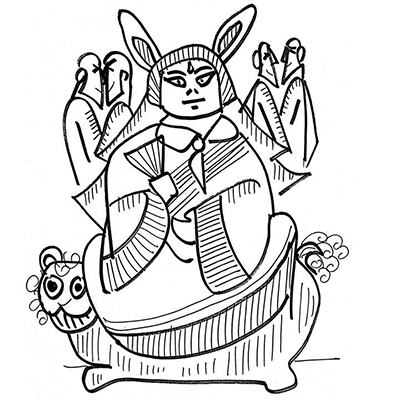
China’s Rabbit Gay God
Published on 6th June, 2021. in Mid-day. In Beijing, during the autumn festival, people buy images of a rabbit god who is said to have been sent by the moon-goddess to save people during an epidemic. But in Taiwan, there is memory of another rabbit god, Tu Shen, one who is matchmaker for homosexual men.…
-
Articles

A Forgotten Buddhist Journey
Published on 4th April, 2021, in Mid-day. About 2,500 years ago, Buddha revolutionised the intellectual world with his idea that desire is the cause of suffering. He invented practices that would end desire and so suffering. He established a community of monks to carry forward his message. But as the centuries passed, the monks built…
-
Articles

The Rise of Indian Zaibatsu
The Rise of Indian Zaibatsu: How Indians are adopting more Eastern models Published on 20th February, 2021, in Economic Times. Zaibatsu means financial clique in Japanese. It refers to family-owned vertically integrated industrial and financial business conglomerates that played a key role in the economic transformation of Japan from Meiji period until the end of…
-
Articles

Were Hindus Ever Invaders?
Published on 30th January, 2021, in Mumbai Mirror. Hindutva keeps saying that Hindus never invaded foreign lands; that India has always been invaded. They speak mostly of Muslim invasion and ‘thousand years of slavery’ but rarely of Persian, Greek, Scythian, Kushan (Chinese) invasions that took place 2,000 years ago. And they completely ignore the invasion…
-
Articles

Fox With Nine Tails
Published on 29th November, 2020, in Mid-day. In ancient China, the belief was that as the common red fox grew older, it would get supernatural powers. Its colour would change and its tails would multiply. Therefore, with the passage of time, an older fox would turn white and grow up to nine tails. A white…
-
Articles

Ithasa As Propaganda
Published on 31st October, 2020, in Economic Times. If one travels to ancient Egypt, one sees gigantic monuments of Rameses II. These celebrate his victory against the Hittites, in Syria, in 1300 BCE, in the first real use of horse-driven war chariots in the world. However, if one checks with historical records and does a…
-
Articles

Fat Buddhist Monks
Published on 26th July, 2020, in Mid-day. This is a story of two fat, Buddhist monks. One story comes from China and the other comes from Thailand. Many people link them with the Buddha, but they come from various local traditions that were absorbed into Buddhism. The first is the popular Laughing Buddha. In China,…
-
Articles
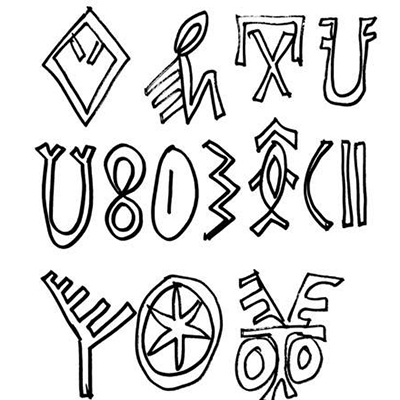
Did the Harappan know to write?
Published on 24th May, 2020, in Mid-day. Writing in India emerges only in the Mauryan period, 2,300 years ago. It is in the Ashokan edicts that we find the Brahmi script. Vedic hymns and Buddha’s lectures, before that, were orally transmitted. The Harappan civilisation, 4,000 years ago, with its sophisticated brick cities and sewage system,…
-
Articles

Is Hinduism timeless?
Published on 10th November, 2019, in Mumbai Mirror. Hinduism is called Sanatan Dharma in popular understanding. It is based on the line from the Bhagavad Gita where Sri Krishna describes the wisdom he is sharing assanatan, which means timeless. Any attempt to ask when this idea was articulated in history is seen by Hindutva politicians…
-
Articles
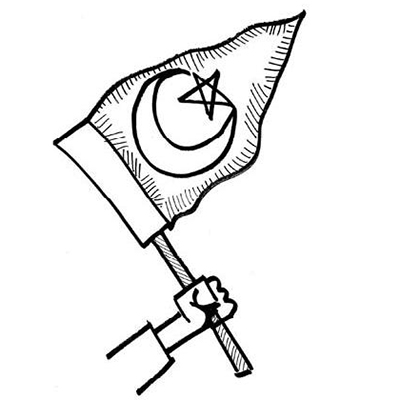
Pakistani Mythology
Published on 3rd November, 2019, in Mid-day Pakistan was the first modern republic to declare itself ‘Islamic’. It imagines itself as the Eastern edge of Arab civilisation, when in fact, it is the Western edge of Indian civilisation. No Pakistani can buy land in Saudi Arabia, get a Saudi Arabian passport or marry a Saudi…
-
Articles
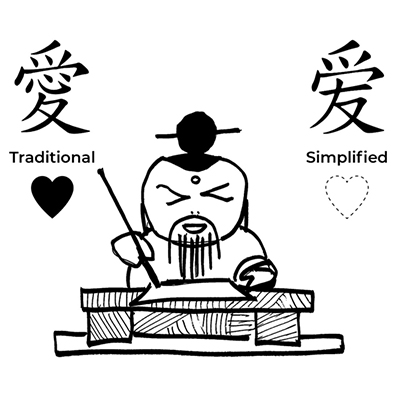
Love in simplified Chinese is without a heart
Published on 18th October, 2019, in Economic Times In China, there are many dialects and a lot of diversity; however, everyone is united by the use of the single script. You can read the same script, in different languages but arrive at the same meaning. This is unlike Indian scripts, where even if different languages…
-
Articles
Managing the boss in India
Published on 26th July, 2019, in Economic Times A friend from Southeast Asia once told me that the Chinese have had a civil service and bureaucracy for over a thousand years, complete with a civil service exam. The success of this bureaucracy is based on respect for hierarchy. It is not based on the individual,…
-
Articles

For all its noble aspirations, social media is pure business.
To make money, you need access to markets. To gain access to markets, you need to make sure that the controller of the market favours you. If the controller of the market shuts the door on you, you have no opportunity to enter the market…
