
Mythologist | Author | Speaker | Illustrator

-
Articles

Geography of God
Published on 6th February, 2022, in Mid-day. In north India, as per politicians, three major pilgrimage sites are important. The first is Ayodhya, where Ram was born and the kingdom of Ram was established. The second is Mathura where Krishna was born. The third is Kashi, with which Shiva is associated. Ram, Krishna and Shiva…
-
Articles

Mythology of Maternal Uncles
Published on 30th January, 2022, in Mid-day. The maternal uncle plays a very important role in Hindu scriptures. He is called the ‘Maama’. He is the brother who visits his sister’s house during the rakhi festival. She visits his house during Bhai Dooj, the final day of Diwali. He watches over her welfare. It is…
-
Articles

In China, Gods, Spirits and Ancestors Thrive, But Leave the Affairs of Humans to Humans
Published on 29th January, 2022, in The Hindu. China today seems mysterious with its very own version of Communism, Capitalism and Democracy. But the mystery vanishes when we see it through a mythic lens and realise that China functions as it always has, magnificence from behind an expressionless face — the wall. Chinese culture does…
-
Articles

21 Principles of Sanatan Dharma
Published on 23rd January, 2022, in Mid-day. Sanatan Dharma is a term used for religions based on rebirth. So it is applied to Jainism, Buddhism and Hinduism. These religions emerged in the Gangetic plains in the second millennium BCE, and spread across the Indian subcontinent. These have to be distinguished from monotheistic religions such as…
-
Articles
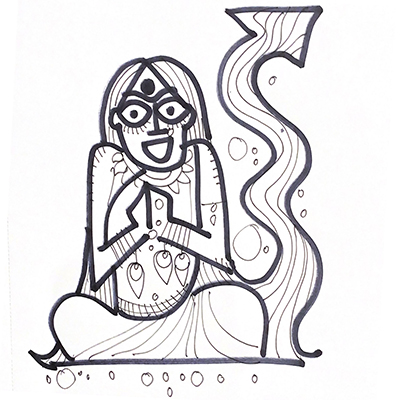
How Bindumati, a Courtesan, Made Ganga Flow in Reverse
Published on 8th January, 2022, in Economic Times. The story of Bindumati comes from the Buddhist text known as Milinda Panha, or questions of Milinda (Menander) which is a conversation between the Indo-Greek king Menander and the Buddhist monk Nagasena. The scripture is about 2000 years old and continues to be venerated in Burma. The…
-
Articles

What Hindutva Doesn’t Get About Sanatan Dharma
Published on 7th January, 2022, in Times of India. Sanatan means something that is timeless. Dharma in colloquial parlance is religion. It can also mean culture and civilisation. So, sanatan dharma can mean “timeless civilisation”. In the Gita, Krishna describes the knowledge he shares as sanatana, timeless. Hindutva — a word that was invented in…
-
Articles

Hindutva’s Caste Masterstroke
Published on 1st January, 2022, in The Hindu. Ever since erstwhile champions of secular values have begun differentiating between Hindu and Hindutvawadi, a whole lot of intellectuals are bristling. They are arguing how these nuanced metaphysical differentiations hold no relevance on the street. Mostly from the Hindu elite, these are the same scholars who will…
-
Articles

When Horses First Came to India
Published on 19th December, 2021, in Mid-day. The horse is not native to the Indian subcontinent. It has been the most prized import from the northwestern regions, from Arabia, Central Asia and from Eurasia. This is why the kings who live in the Northwest part of India, in Gandhara and Madra were referred to as…
-
Articles

Is Celibacy Unnatural or Supernatural?
Published on 18th December, 2021, in Times of India. Celibacy is an unnatural act in nature. All living organisms are meant to reproduce. The sexual act is critical for the survival of the species. Thus, nature does not endorse celibacy. But human culture has endorsed it. Culture has not only endorsed celibacy, but sees it…
-
Books

Eden: An Indian Exploration of Jewish, Christian and Islamic Lore
Eden is the garden of happiness that humanity was cast out of when Adam and Eve, the first human couple, disobeyed the one true God, and ate the fruit of the forbidden tree. To this garden we shall return if we follow God’s law and accept God’s love, conveyed through his many messengers, the first…
-
Articles
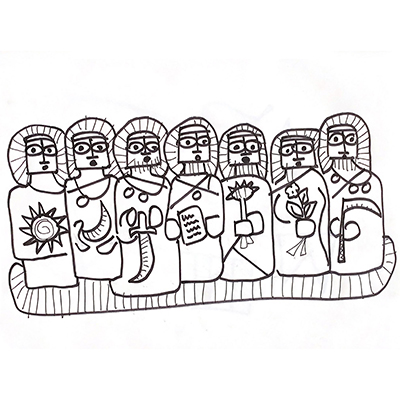
Gods of the Week
Published on 5th December, 2021, in Mid-day. The seven-day-week is not based on any natural phenomena. The ancient Mesopotamians decided that the 7th, 14th, 21st and 28th days after the new moon were days of rest and that is how the concept of the week began. Sumerians believed that the gods flooded the earth for…
-
Articles

‘Dharma’ Always Comes With ‘Dharma-sankat’
Published on 4th December, 2021, in The Hindu. In a crime, the victim accuses the villain. But when the villain counter-accuses the victim, and insists the victim is villain too, we call it ‘whataboutery.’ This word is a neologism, first used in the 1970s in the context of violence in Northern Ireland. Whataboutery creates a…
-
Articles

Was the Harappan Civilisation Hindu?
Published on 28th November, 2021, in Mid-day. We often trace the origin of Hinduism to Rig Veda, dated to 1,500 BCE. But the Rig Veda contains ideas that we can trace to Harappan civilisation. For example, Rig Veda mantra 8.47.17 refers to a measurement system based on increase by a factor of two (1, 2,…
-
Articles

Hindu vs Hindutva: A Mythic Dissonance
Published on 24th November, 2021, in India Today. Hindus are at odds with the world in terms of its underlying mythic structure. By contrast, Hindutva is very much aligned to the dominant global discourse. We realise this if we meditate on two myths: the myth of equality and the myth of the wound. Myth here…
-
Articles

How Did Hinduism Come to Dominate India?
Published on 20th November, 2021, in Times of India. Nearly 2,000 years ago, there were Buddhist stupas across India. Nearly 1,500 years ago, there were Buddhist caves in the Deccan. But 1,000 years ago, Buddhist structures were overshadowed by Hindu temples. Jain art, which was as popular as Buddhist art, became a relatively minor force.…
-
Articles

Study of Myths: How Has Mythology Evolved Over the Years
Published on 14th November, 2021, in Mid-day. The subject of mythology emerged in the 19th Century, as the world discovered the subject of history. Before that, memories, legends, myths, parables, folklore and history were all bundled together in one basket. In the 19th Century, the scientific study of the past began. History demanded evidence and…