Published on 5th December, 2021, in Mid-day.
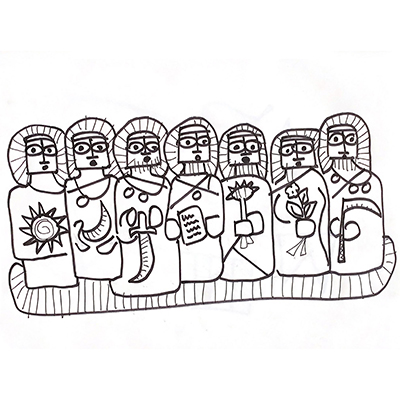
The seven-day-week is not based on any natural phenomena. The ancient Mesopotamians decided that the 7th, 14th, 21st and 28th days after the new moon were days of rest and that is how the concept of the week began. Sumerians believed that the gods flooded the earth for seven days and a new world began afresh when that seven days ended. Later, Babylonians wrote how gods created laws written in seven tablets over seven days. So, in Mesopotamian art we find images of seven gods, and in architecture we find seven rooms dedicated to these gods.
This idea later influenced the Persians, then Greeks, then Romans, and eventually, through trade routes, travelled to India during the Gupta period and China during the Tang period. So by 5th century, the idea of a seven day week had reached India. That is why the week does not figure in Vedic literature, but starts appearing in later Puranic and folk literature. So the idea of fasting on Mondays, Thursdays and Fridays or Saturdays are later Hindu practices. Originally, all practices were linked to the phases of the moon (tithi) and the movement of the sun relative to the stars.
The ancient Mesopotamians valued seven days because seven celestial bodies could be seen in the sky against the twinkling stars: the sun, the moon, Mars, Mercury, Jupiter, Venus and Saturn. Each day was dedicated to these gods, with the sun and the moon playing the role of creator gods. The moon-god was the father god, creator of the sun, as its waxing and waning was believed to be linked to the rise and fall of rivers that caused flood plains that formed the basis of Mesopotamian civilisation. Venus was the moon’s daughter, Ishtar. Even today the moon and Venus play key roles in Arab and Persian culture, a remnant of ancient mythologies, though Islamic tradition refuses to acknowledge this past, as these are deemed “false” gods. The idea of day of rest in Jewish, Christian and Islamic faiths, and the idea of God creating the world in seven days, all stem from ancient Mesopotamia. Mythologies are rarely original.
For the Mesopotamians, Tuesday was linked to war, Wednesday to writing, Thursday to kingship, Friday to love, and Saturday to harvest. For Romans therefore, weekdays were linked to gods who displayed similar traits: Tuesday for aggressive Mars, Wednesday to messenger Mercury, Thursday to royal Jupiter, Friday to fertile Venus and Saturday to Saturday or Cronus, who consumes time. In Norse tradition, which influenced Christian world a thousand years ago, these became the gods Tyr, Wotan, Thor, and Freia which give us our words for Tuesday, Wednesday, Thursday and Friday. Saturday, Sunday and Monday remained with Roman mythology.
When these ideas reached India, Mangal linked to war was linked to Tuesday, Budh linked to communication was linked to Wednesday, wise Brihaspati was linked to Thursday and kingship, as he is guru of Indra, Shukra linked to Friday and fertility as he is guru of asuras, who are fathers of Lakshmi, in Puranic traditions. Saturday is unique as Shani is linked to delays in Hinduism not death. He is also linked to Shiva, hence rebirth, the son of the sun-god, who fathers the new week, in effect the new Sunday.