
Mythologist | Author | Speaker | Illustrator

-
Articles

Female Voice in Rig Veda
Published on 10th April, 2022, in Mid-day. The Rig Vedic hymns were composed over 3,000 years ago, most probably by children of men who migrated into India with horses from Central Asia, and married local women. The hymns mostly reveal the valours of the fathers, but occasionally the longings of the mother. The marriage hymn…
-
Articles

How Hindus of Andaman and Nicobar Rejected Religious Bigotry,
Published on 9th April, 2022, in Times of India. Located where the Andaman Sea meets the Bay of Bengal, Andaman and Nicobar is a string of over 500 islands, of which only over 30 are inhabited. The northern islands are called Andaman and its original inhabitants comprise the “Negrito” tribes (Onge, Sentinelese, Jarawa) who came…
-
Articles

No, It’s Neither a Sin Nor Un-Indian to Drink Alchohol
Published on 1st April, 2022, in Times of India. There are two types of alcohol. One produced by fermenting flowers, fruits and grain (Desi Daru). The other produced by distilling (English Daru). The former was produced in kitchens across India for thousands of years, offered to the many villages gods and goddesses, before the rise…
-
Articles

The West Believes History Has a Direction, a Purpose, an End. But Indian Worldview Is Different
Published on 2nd April, 2022, in Economic Times. Conventional leadership frameworks begin with the notion that there is a problem to be solved, which leads to strategizing, planning, organising, implementing, regulating, motivating, enabling, and reviewing along the way. This model is linear: there is a target at the end. This model is based on Western…
-
Articles
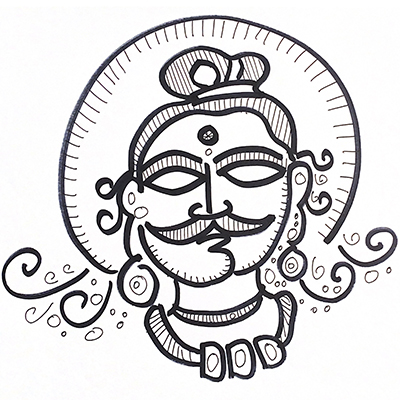
An Eclipsing of History That Frightens Many Hindus
Published on 26th March, 2022, in Times of India. People forget. If you go to Northwest Pakistan today, the region on either side of the Khyber pass, few will remember that in the Bronze Age, 4000 years ago, it connected Harappan cities to settlements in North Afghanistan, which was the source of the much traded…
-
Articles
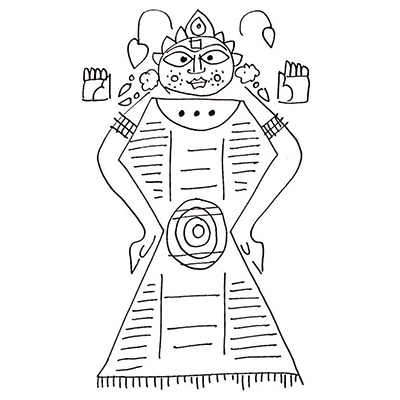
The Jain Monk and His Saka Saviours
Published on 25th March, 2022, in The Hindu About two thousand years ago incidents took place which involved the Jain community that inspired an epic ballad that was put down in writing a thousand years later in Prakrit and local languages. This was the Kalak Acharya Katha that became the standard appendix of the main…
-
Articles

How Do We Know What We Know?
Published on 20th March, 2022, in Mid-day. How do we know what we know? This subject is called epistemology. Here, we try to understand how knowledge is created. This subject was a part of intellectual discourse in ancient India, under the subject Nyaya. Today, “nyaya” means justice. But in ancient times, it meant rational thinking…
-
Articles

Treasures of Mythology: Inside the Fascinating World of the Merchant Class
Published on 19th March, 2022, in Economic Times. When we read stories from history, we focus on kings and their wars. The reason for this excessive focus on kings and warfare is the fact that the subject of history emerged in Europe in the 19th century. During this time, kings themselves wanted to hear stories…
-
Articles

Seven Holes of Hundun
Published on 13th March, 2022, in Mid-day. Hundun gave food to two beings, one who came from the north and the other who came from the south. Grateful, the two decided to help Hundun. Hundun had no eyes, nose, ears or mouth. He did not have the seven holes to appreciate the world around. So…
-
Articles

How Do We Know What’s History, Myth or Legend?
Published on 12th March, 2022, in Times of India. In ancient times, ‘itihasa’ meant stories ‘witnessed’ by the storytellers. So Ramayana is ‘itihasa’ because it was witnessed by Valmiki who wrote the story. Mahabharata is ‘itihasa’ because it was witnessed by Vyasa who wrote the story. The Brihaddevata is a Vedic text full of such…
-
Articles
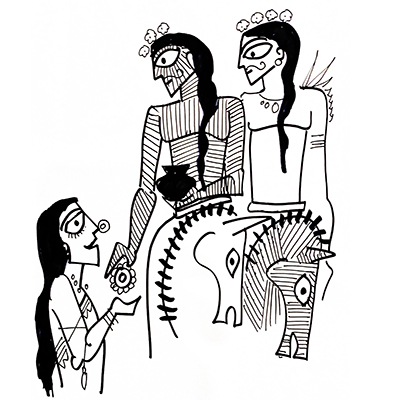
The Dark Man on a White Horse
Published on 6th March, 2022, in Mid-day. Most Indians have heard about Somnath temple that was raided by Mahmud of Ghazni a thousand years ago. Very few know that in the same century, the Chola king from the south raided Odisha and Bengal and took back with him images of Shiva. Even fewer people know…
-
Articles

Tigress Goddess of Harappa
Published on 27th February, 2022, in Mid-day. The first goddess of India is depicted on Harappan seals dated to 2,500 BCE. She is shown as half tiger, like a sphinx, upper half female with headdress and bangles, and the lower half of the cat. It’s the oldest sphinx image in the world, showing a woman…
-
Articles

How Trade Blossomed an Exchange of Ideas Between India and Arabia.
Published on 26th February, 2022, in Times of India. Indians had been trading with Arabs for a long time. About 4000 years ago, trade happened with Harappans by ships that travelled along the sea-coast. Birds were used to identify the direction of the shore if the ship went too far into the sea and lost…
-
Articles

The Body and House of God
Published on 20th February, 2022, in Mid-day. Now-a-days, we do not see the Mediterranean world as a unit. We see the northern shores as European and Christian, and the southern shores as African and Muslim. But for hundreds of years, the entire Mediterranean was a unit controlled by the Roman Empire. Wealth from these regions…
-
Articles

Unfaithful Wives Across Seas
Published on 13th February, 2022, in Mid-day. For nearly 2,000 years, Arab traders used the monsoon winds to travel across the sea to India. Along the Western coasts, in Kerala, Karnataka and Goa, they met people who allowed them to marry their daughters, but did not let them take these wives back home. These were…
-
Articles
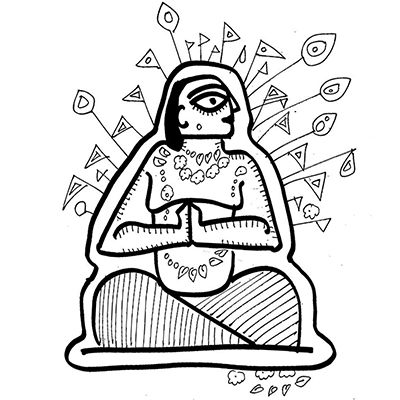
‘Are We Seeking Cultural Unity By Denying History?’
Published on 12th February, 2022, in Times of India. Tall statues of men, using Indian money and Chinese technology, are being built across India to unite India. There is the Statue of Unity of Sardar Patel in Gujarat, the Statue of Equality of Ramanuja-acharya built near Hyderabad, and soon there will be the Statue of…