
Mythologist | Author | Speaker | Illustrator

-
Articles
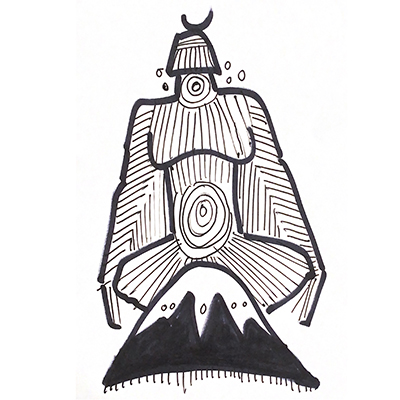
Shiva from Tibet?
Published on 19th June, 2022, in Mid-day. The idea that Tibet was the homeland of Aryas came from Swami Dayananda Saraswati, who in the late 19th century, founded the famous Arya Samaj. He valued the Vedas as the original source of Hinduism, but saw Puranas including worship of Shiva-linga as a degeneration of Arya-dharma, a…
-
Articles

Why Did Medieval Indian Cavalries Shun the Parthian Shot In Archery?
Published on 17th June, 2022, in The Hindu. In one retelling of the epic Ramayana, Ram was so righteous that even though he knew Ravana’s weak spot was his navel, he kept shooting arrows at Ravana’s head, in keeping with Kshatriya dharma. Exasperated, Hanuman got his father, the wind god, to send a fierce breeze…
-
Articles
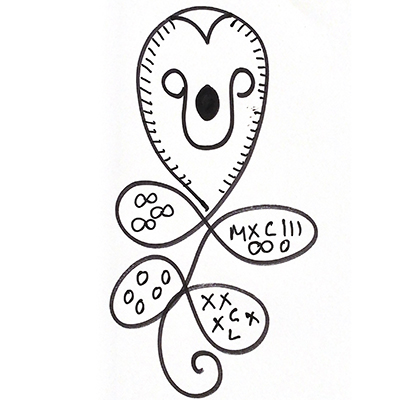
Divine Mathematics
Published on 11th June, 2022, in Economic Times. People often ask, if Aryabhatta invented zero, how did people count Ravana’s ten heads and Gandhari’s hundred heads before that. It is one of those foolish WhatsApp “mysteries” for people who do not realise number systems predated the invention of the number zero. For example, ten can…
-
Articles

Flying Mountains Do Not Lie
Published on 29th May, 2022, in Mid-day. Nationalists want to believe that Hinduism existed homogeneously across the Indian subcontinent (Akhand Bharat) since time immemorial. However, everyone who studies history knows this is not true. Harappan civilisation thrived 4,000 years ago only in Northwest India. Vedic civilisation emerged 3,000 years ago only in Gangetic plains after…
-
Articles
Full-and-Final Settlement Before God
Published on 28th May, 2022, in Economic Times. We often forget that the word cash is derived from the Sanskrit word “Karshapana”. Indians invented the idea of money long ago. Irregularly-shaped copper coins were used by merchants for banking 2500 years ago, about the time coins began being used in ancient Greece and China. Even…
-
Articles

Claiming the Earth as Nation
Published on 22nd May, 2022, in Mid-day. In prehistoric times, people captured a hunting ground or agricultural land or pastures by claiming that is where the ancestor was buried. Burial was an important ritual invented by ancient people to claim rights over lands. Later, they invented stories to claim land. The Maori say that their…
-
Articles

Kashmir Before Islam
Published on 21st May, 2022, in Times of India. The Muslims say that Suleiman (Solomon) came to Kashmir on a flying throne (takht), sat on a hill in Srinagar, and got his djinns to clear the lake, get rid of barbarians and create a land of the true faith. But Islam actually emerged in Arabia…
-
Articles

Why Scholars Don’t Agree About the Origins of the Shivlinga
Published on 18th May, 2022, in Times of India. Orientalist academicians love describing the Shiva-ling as a ‘phallic symbol’ because it irritates the Hindu who prefer to see the object of their devotion as something spiritual, not sexual. For the Orientalist, i.e. Western and Westernised scholar, such descriptions are, at one level, a way of…
-
Articles

Lion Atop an Elephant
Published on 8th May, 2022, in Mid-day. A very common motif found in Indian art is the lion standing on top of the elephant, defeating it. These images are called the Gaja-Simha images, Gaja meaning the elephant and Simha meaning the lion. Some Orientalist scholars have tried to explain this image as the triumph of…
-
Articles
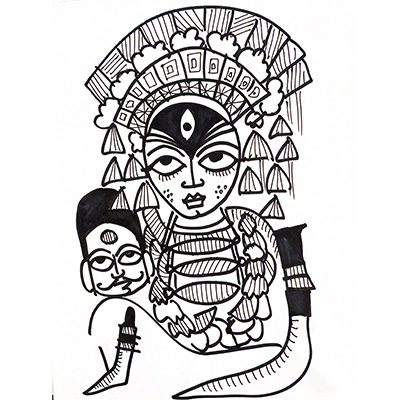
How Nepal Came to Be Once Called ‘Asli Hindustan’
Published on 7th May, 2022, in Times of India. In the 18th century, as many tiny principalities and kingdoms of Nepal were being unified to one mighty kingdom, the king of Nepal saw his land as ‘Asli Hindustan’ and saw India as the land controlled by ‘ulta dharma’ of Mughals. Since then Nepal has been…
-
Articles
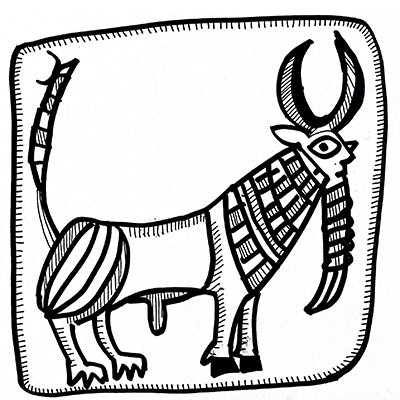
Dogs, Rats, Unicorns and Other Animal Guilds
Published on 30th April, 2022, in Economic Times. Animals have a close relationship with human corporations and guilds. Nearly 4500 years ago, in the Harappan cities of Northwestern India, archeologists have found hundreds of soft stone seals, barely an inch or two long in width that have animal motifs. They are full of marks that…
-
Articles
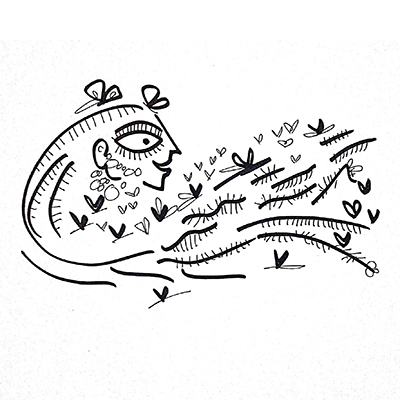
Creepy-Crawly Lore
Published on 1st May, 2022, in Mid-day. The story of Bhramari Devi comes to us from Andhra Pradesh’s Mallikarjuna temple. It is said that there was an asura called Arunasura. He had asked for protection from all creatures that have no legs, two legs or four legs. This meant he was protected from every fish,…
-
Articles

The Jogi As Seasonal Hermit
Published on 23rd April, 2022, in The Hindu. In North India, especially in the Gangetic plains, in what is now Uttarakhand, Uttar Pradesh and Bihar, we find songs known as Baramasa. It is a 12-month cycle in poetry, expressing the loneliness and longing of a woman in a village, for a husband who is travelling…
-
Articles

What Genghis Khan Can Teach Us About Secular Values
Published on 23rd April, 2022, in the Times of India. China today has a very problematic relationship with two provinces on its west. To the Northwest is Xinjiang, home of Uighur Muslims. To its Southwest is Tibet, home of Vajrayana Buddhism. In both these provinces, there are beliefs in forces that are greater than the…
-
Articles

Modern Management Is Essentially Violent As It Is Based on Consumption
Published on 16th April, 2022, in Economic Times. Consumption is violence. Bhoga (food) demands bali (sacrifice). Something has to be destroyed to produce the food that you consume. This is natural law. So the elements are consumed by trees. Trees are consumed by animals. Animals are consumed by animals. Nature is designed around consumption that…
-
Articles

Female Voice in Rig Veda
Published on 10th April, 2022, in Mid-day. The Rig Vedic hymns were composed over 3,000 years ago, most probably by children of men who migrated into India with horses from Central Asia, and married local women. The hymns mostly reveal the valours of the fathers, but occasionally the longings of the mother. The marriage hymn…