
Mythologist | Author | Speaker | Illustrator

-
Articles

‘Thali’, ‘handi’, ‘paniki’
‘Thali’, ‘handi’, ‘paniki’: Unique Inventions of the Indian Kitchen by Women Who Remain Nameless Published on 26th June, 2021, in Economic Times. An Indian kitchen is a sacred place. Many people do not take footwear into the kitchen. They insist on taking a bath before commencing the activity of cooking. This reminds us that a…
-
Articles
China’s Rabbit Gay God
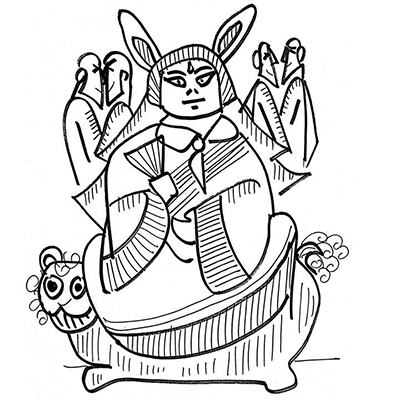
Published on 6th June, 2021. in Mid-day. In Beijing, during the autumn festival, people buy images of a rabbit god who is said to have been sent by the moon-goddess to save people during an epidemic. But in Taiwan, there is memory of another rabbit god, Tu Shen, one who is matchmaker for homosexual men.…
-
Articles

Hindutva: A Sampradaya, Not a Parampara
Published on 30th May, 2021, in Mid-day. The word Hindutva was invented by Chandranath Basu in Bengal in 1892. He was against the 19th Century reform movement popularly known as Hindu Renaissance led by Raja Ram Mohan Roy, who had coined the word ‘Hinduism’ in 1816. This period saw Dayanand Saraswati who said, ‘Back to…
-
Articles

Bhairava’s Truth In the Light Of the Funeral Pyre
Published on 17th May, 2021, in Scroll.in . Hindutva is a 19th-century political ideology that proclaims itself to be the defender of Hinduism. Yet it is terrified of truth. The truth of death – of hundreds of bodies floating down the Ganga and thousands being cremated in funeral pyres across India, which reveals not the…
-
Articles
Kaabah, As Metaphor
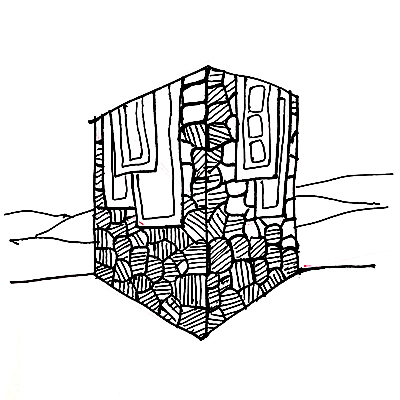
Published on 9th May, 2021, in Mid-day. Humans found food in the plant and animal kingdoms. They were first foragers of fruits and roots, and hunters of animals. Then, they became cultivators of the land and herders of goats, pigs, sheep and cattle. Many tribes in India tell the story of how Thakurdev taught them…
-
Articles

Tamed by Buddhism
Published on 18th April, 2021, in Mid-day. Buddha taught the sacred lore (dhamma) that would end all suffering. Many of his students renounced society and became monks (bhikku) and nuns (bhikkuni) of his sacred order (sangha). They travelled everywhere spreading Buddhist ideas. The people they encountered had their own gods—friendly or dangerous spirits who lived…
-
Articles

Don’t Turn Back
Published on 11th April, 2021, in Mid-day. Once, an old man promised a fellow traveller, a young man, his daughter’s hand in marriage. Days later, when the young man actually showed up at the village, the old man refused saying he promised no such thing. Bring a witness, demanded the old man. The young man,…
-
Articles

A Forgotten Buddhist Journey
Published on 4th April, 2021, in Mid-day. About 2,500 years ago, Buddha revolutionised the intellectual world with his idea that desire is the cause of suffering. He invented practices that would end desire and so suffering. He established a community of monks to carry forward his message. But as the centuries passed, the monks built…
-
Articles

To Burn or Bury.
Published on 21st March, 2021, in Mid-day. Hindus are constantly reminded of the cycle of life, in ritual after ritual. In Vedic times, 3,000 years ago, bricks would be gathered to build a fire altar where the gods would be invited to come and partake in a meal of soma juice. After the gods had…
-
Articles

View: How Rigveda Speaks of Aspiration and Collaboration
Published on 19th March, 2021, in the Economic Times. The Veda is not a single book. It is a corpus of knowledge, layers over layers of thought, expressed in hymn, melody, ritual and ideas, produced over forty generations, as the Aryas kept moving facing east (pranamukha) and turning clockwise (pradakshina), for a thousand years, from…
-
Articles

The Hamsa Hand
Published on 14th March, 2021, in Mid-day. The hamsa is a common symbol used across the Middle East as a good luck sign. Originating in Ancient Egypt probably, it is used to bring in prosperity and to ward off evil. The word hamsa means five and represents the five fingers of the hand. When the…
-
Articles

Fluid Marriage Rites
Published on 7th March, 2021, in Mid-day. Suriya, the daughter of the sun-god, marries the twin-gods, the Ashwins, and rides with them on their chariot. So says the Rig Veda. Later, we are told, that the Ashwins do not actually marry her: they simply woo her for her real husband. In the marriage hymn, Rig…
-
Articles

Is Lanka Located In Madhya Pradesh?
Published on 28th February, 2021, in Mumbai Mirror. Temples dedicated to Ravana in MP, and rulers claiming descent from him in this region, indicate that Lanka may not be across the ocean as imagined, but very much within Indian territory. Many people are convinced that the Ramayana they saw on television is history, and that…
-
Articles

The Rajput’s Umbrella
Published on 21st February, 2021, in Mid-day. When a Rajput king dies, his bones are collected after cremation and cast into the river, as is common practice amongst many Hindus. Additionally, the spot where he is cremated is marked by a gazebo popularly known as chhatri (umbrella), so that dogs and commoners may not trespass…
-
Articles

The Rise of Indian Zaibatsu
The Rise of Indian Zaibatsu: How Indians are adopting more Eastern models Published on 20th February, 2021, in Economic Times. Zaibatsu means financial clique in Japanese. It refers to family-owned vertically integrated industrial and financial business conglomerates that played a key role in the economic transformation of Japan from Meiji period until the end of…
-
Articles
Sindhi Love Poetry
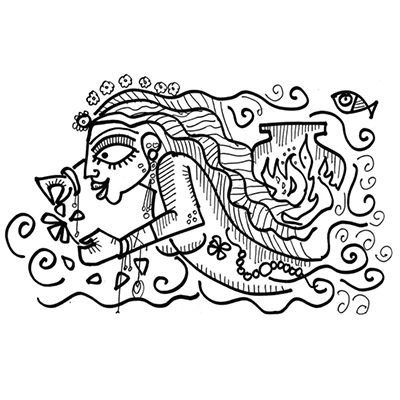
Published on 14th February, 2021, in Mid-day. In the 16th Century, Shah Abdul Latif Bhittai wrote a set of love poems in Sindhi to express Sufi mysticism, metaphorically capturing the tension between love and law, head and heart. Each has a female protagonist, hailing from Northwest India, from Gujarat to Punjab, and from different social…