
Mythologist | Author | Speaker | Illustrator

-
Articles
Sindhi Love Poetry
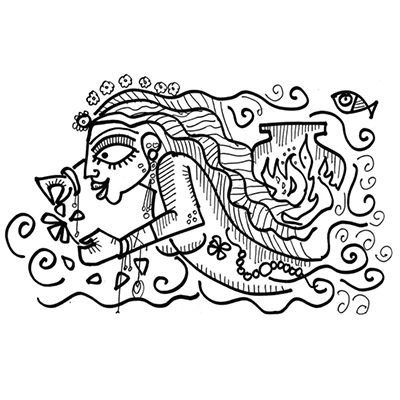
Published on 14th February, 2021, in Mid-day. In the 16th Century, Shah Abdul Latif Bhittai wrote a set of love poems in Sindhi to express Sufi mysticism, metaphorically capturing the tension between love and law, head and heart. Each has a female protagonist, hailing from Northwest India, from Gujarat to Punjab, and from different social…
-
Articles

Taoist Way Of Contentment
Published on 7th February, 2021, in Mid-day. Before Buddhism, China had two dominant worldviews: Confucianism promoted by urban centres, and Taoism that was popular in the rural countryside. Confucianism valued the king, the court, and civilised conduct, based on obedience to authority, and veneration of traditional rites, and customs. It valued culture over nature. Taoism…
-
Articles

View: The Beginning and End of Using Religion
Published on 6th February, 2021, in The Economic Times. When the Romans went about conquering, they did not destroy local temples or reject local gods. They simply demanded that those conquered owed libations to the Roman emperor, while carrying on with their own religious practices, to show their allegiance to Rome. They even tolerated the…
-
Articles

Were Hindus Ever Invaders?
Published on 30th January, 2021, in Mumbai Mirror. Hindutva keeps saying that Hindus never invaded foreign lands; that India has always been invaded. They speak mostly of Muslim invasion and ‘thousand years of slavery’ but rarely of Persian, Greek, Scythian, Kushan (Chinese) invasions that took place 2,000 years ago. And they completely ignore the invasion…
-
Articles
Horned Demons and Rebels
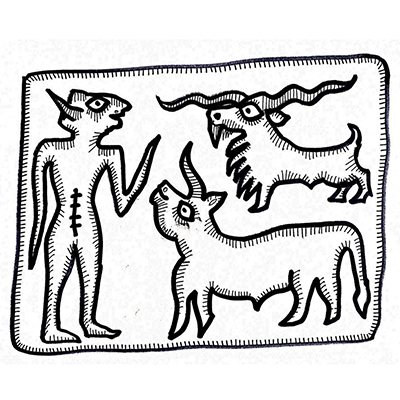
Published on 17th January, 2021, in Mid-day. The image of a horned, White man storming the US Capitol building is now part of history. It reveals the fragility of democracy and the lure of megalomaniacs and conspiracy theories. But, why horns? Do they imply power? Or is it a fantasy of how barbarians should be?…
-
Articles

Religion In Prehistoric India
Published on 3rd January, 2021, in Mid-day. Humans domesticated fire around 3,00,000 years ago. We started using tools around that time. But, the human brain evolved to its current size roughly 2,00,000 years ago. We migrated out of Africa into India, 50,000 years ago. So, when do we find the earliest signs of religion in…
-
Articles

Sea of Spices: How Trade Gets Intertwined With Myths
Published on 26th December, 2020, in Economic Times. There was a goddess called Harsiddhi Mata who resided atop a hill, overlooking the sea in the coastal areas of Gujarat and Sindh. She would see ships sailing by. There were those who would see her temple and not venerate her. So, casting a malevolent eye, she…
-
Articles

Pagans In Christmas
Published on 20th December, 2020, in Mid-day. The word “pagan” was used derisively by colonial powers to refer to non-Christian faiths, especially polytheistic ones that celebrated divinity through nature-plants, animals, rivers, mountains, stars. Yet, paganism contributed greatly to what we call Christian rituals and festivals today. Jesus lived 2,000 years ago, but his mythology (virgin…
-
Articles

Hindu Parliament and Churning the Ocean of Milk
Published on 6th December, 2020, in Mumbai Mirror. The design of the Parliament building in Delhi was based on yogini shrines of North India that were built over 1,000 years ago. They are circular without a central roof, very different from later temples dedicated to Shiva and Vishnu, where the deity is in an inner…
-
Articles

Mahasiddhas Of Tantrik Buddhism
Published on 6th December, 2020, in Mid-day. Buddhism has a vast history of 2,500 years. The earliest form of Buddhism is called Theravada Buddhism. Here, Buddha is visualised as a monk. Gautam Buddha was a prince, who abandoned his kingdom and his family in search of the answer to life’s suffering. He concluded that all…
-
Articles

Fox With Nine Tails
Published on 29th November, 2020, in Mid-day. In ancient China, the belief was that as the common red fox grew older, it would get supernatural powers. Its colour would change and its tails would multiply. Therefore, with the passage of time, an older fox would turn white and grow up to nine tails. A white…
-
Articles

View: Can America Be Hindu Holy Land?
Published on 28th November, 2020, in Economic Times. In the 19th-century, Joseph Smith argued that he had found gold plates buried in the Americas. These gold plates, he said, told the secret history of the Christians. That during the Babylonian exile many prophets migrated out of the Holy Land and managed to find their way…
-
Articles
The Origins of Bharat Mata
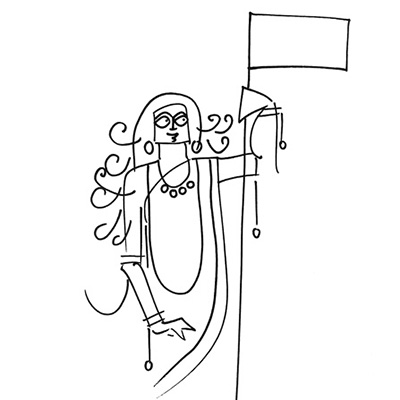
Published on 22nd November, 2020, in Mumbai Mirror. Every Indian village is personified as a grama-devi. So, we have Chandigarh associated with the goddess Chandi. Calcutta is associated with the goddess, Kali. Mumbai is associated with the goddess, Mumba Devi. The idea of Bharat-mata, the goddess of the Indian nation state, has roots in this…
-
Articles

Sita Is Not Helen
Published on 1st November, 2020, in Mid-day. Many people are of the opinion that Greek and Hindu mythologies have much in common. This idea was first proposed by Europeans who believed that all pre-Christian cultures were pagan and so, had a common theme. So, they saw the devas of Hindu mythology as the Olympians of…
-
Articles

Ithasa As Propaganda
Published on 31st October, 2020, in Economic Times. If one travels to ancient Egypt, one sees gigantic monuments of Rameses II. These celebrate his victory against the Hittites, in Syria, in 1300 BCE, in the first real use of horse-driven war chariots in the world. However, if one checks with historical records and does a…
-
Articles

Donkey’s Curse and Cross
Published on 25th October, 2020, in Mid-day. In many parts of India, especially in Maharashtra and Goa, one finds stone tablets showing a strange image of a donkey having sex with a woman. Known as “gadhe-gal” or “donkey-curse”, archaeologists believe these stones are 1,000-year-old land grants, carved in stone. They were probably carved by Shilahara…