
Mythologist | Author | Speaker | Illustrator

-
Articles
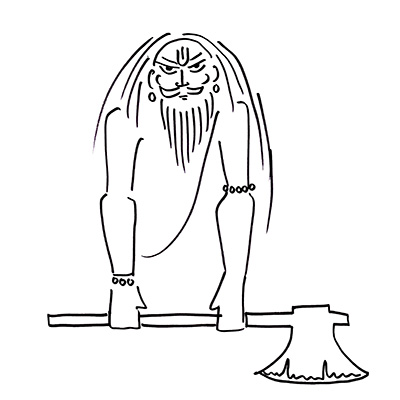
Parshuram’s Tryst With Kshatriyas
Published on 26th February, 2023, in Mid-day. Parshuram was born in a Brahmin family of the Bhrigus. His father, Jamadagni, was a sage who performed rituals in exchange for which he received cows. His mother was a princess. Parshuram is famous for raising his axe for two reasons. The first time he did so, he…
-
Articles

Why the Location of Shiva’s Pillars Has Become So Controversial
Published on 25th February, 2023, in Times of India. The Assam government’s claim that the Bhimashankar Jyotirlinga is located in the northeastern state has spawned yet another religious flashpoint. This is what happens when mythology is assumed to be history Until recently, most people believed that Bhimashankar Jyotirlinga is located in Maharashtra. But then the…
-
Articles

Veda, Vedanga, Vedanta
Published on 19th February, 2023, in Mid-day. Hinduism can be divided into three major eras. Veda dominated 3,000 years ago, Vedanga dominated 2,000 years ago, and Vedanta became central 1,000 years ago. These are approximations of course, but a good rule-of-thumb to remember Hindu history. The Veda refers to a set of mantras that dominated…
-
Articles

Donation of Courtesans
Published on 17th February, 2023, in Economic Times. Chanakya’s Arthashastra talks about appointing a superintendent for the ganika, variously translated as pleasure women, prostitutes or courtesans. This is done in a matter-of-fact way. No morality is attached. Ganikas were valuable sources of pleasure, income and information for the state. These were not prostitutes, who have…
-
Articles
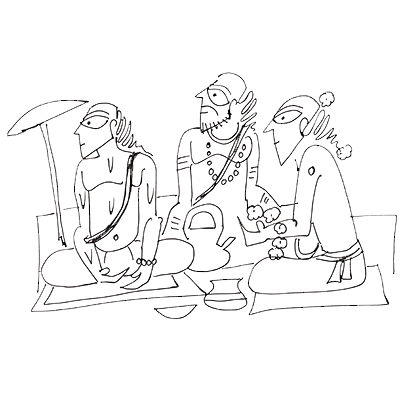
Diversity Amongst Brahmins
Published on 12th February, 2023, in Mid-day. Our textbooks teach us that Hindu society is divided into four groups: Brahmin, Kshatriyas, Vaishya, Shudras, consisting of priests, landed aristocrats, merchants and servants. This is the Vedic varna system. However, this is a highly simplistic division, which doesn’t take into account that there are over 5,000 communities…
-
Articles
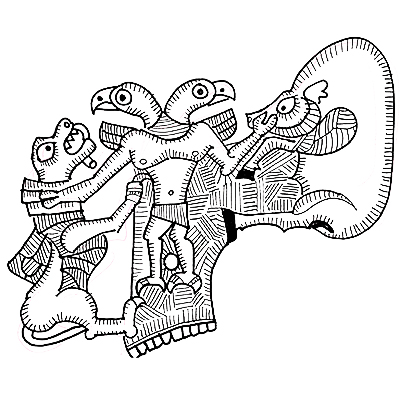
Oxus Between Harappans and Aryans
Published on 5th February, 2023, in Mid-day. No conversation about Harappans and Aryans is now complete without discussing the Oxus civilisation. Cities of the Oxus civilisation, in what is now Turkmenistan, Uzbekistan, Tajikistan, traded with cities of the Harappan civilisation to their south, until Harappan cities ceased to exist by 1900 BCE. They also had…
-
Articles

How Gods, Demons Formed India’s Mountains, Rivers and Seas
Published on 28th January, 2023, in The Times of India. One of the ways you map India is through the Shakti Pithas. It is said that when the goddess got angry with her father, Daksha, for insulting her husband, Shiva, she jumped into the yagya altar and burned herself to death. Shiva carried the remains…
-
Articles
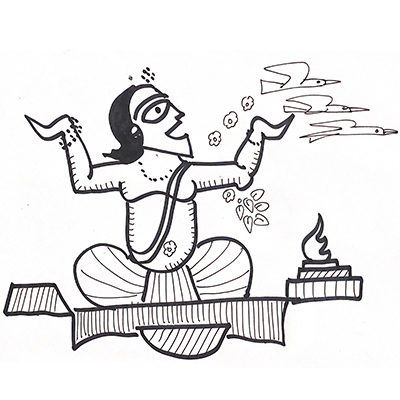
How the Gayatri Mantra, composed by men, heard by men, for a male deity, became embodied as a goddess
Published on 27th January, 2023, in The Hindu. Mantra is a carefully crafted sound formula that has the power to invoke and anchor divine energy for the benefit of humans: this is what Hindus, Buddhists and Jains believe. Rig Veda is the oldest collection of mantras: 10,000 verses that were brought together like flowers to…
-
Articles

View: Privilege to Saraswati at the cost of Durga & Lakshmi is an old Brahmanical hangover
Published on 21st January, 2023, in Economic Times. In America, the state serves the rich. In China, the rich serve the state. The American politicians get the military to ensure American businesses have access to resources and markets. The Chinese politicians restrain most successful businessmen from gambling away the country’s future in speculative stock market…
-
Articles
In Joshimath, the question is: What is the cost of pilgrimage?
Published on 12th January, 2023, in Indian Express. The pandas of Jagannath Puri in Odisha are often chastised for aggressively demanding daan and dakshina from pilgrims. They argue the temple is their mother – she feeds them through those who visit the temple. This idea that pilgrim spots are also commercial spots, source of livelihood…
-
Articles
How Jainism Spread From North to South In India
Published on 11th January, 2023, in The Times of India. We are inclined to see religion from a historical point of view, through the lens of time. But we rarely see religion from the perspective of geography. We are told Jainism is an Indian religion but which part of India did it originate from, where…
-
Articles

Where Is the River Saraswati?
Published on 8th January, 2021, in Mid-day. In Gujarat, there is a river called Saraswati that originates in the Aravalli mountains, and runs for 350 km. In Uttarakhand, there is another Saraswati river that is a tributary of the Alakananda that joins the river near Badrinath. There is another Saraswati river that flows through the…
-
Articles

Losing and Gaining the Head
Published on 1st January, 2023, in Mid-day. We have heard stories of how Shiva beheaded his father-in-law Daksha Prajapati and replaced Daksha’s head with that of a goat and how he beheaded his son Ganesha and replaced Ganesha’s head with that of an elephant. We have also heard folk stories of how devotees offer their…
-
Articles

History of How Brahmins Migrated to All Parts of India
Published on 31st December, 2022, in Times of India. To appreciate the history of Africa, we have to study the history of its many tribes. To appreciate the history of India we have to study its many castes. Not the caste system. Just castes – what foods were prepared by different endogamous groups, what kind…
-
Articles
Tales Of Gods, Politics Of Kings
Published on 24th December, 2022, in Economic Times. If one goes to Kerala, one hears of “tharavad”. These were ancestral homes, where large joint families lived together. They controlled large tracts of land. A similar system is found in faraway Nepal. Here, instead of the word “tharavad”, the word “guthi” is used. This is a…
-
Articles

Those Who Give Gifts Voluntarily Are Truly Rare and Great
Published on 10th December, 2022, in Economic Times. Many people think the world is unravelling itself today. Politicians insist this unravelling began a thousand years ago with the coming of Muslim warlords of Central Asia (Turuka) followed by the Europeans. But as per Sanskrit lore, this began two thousand years ago, with the arrival of…