Published on 26th February, 2023, in Mid-day.
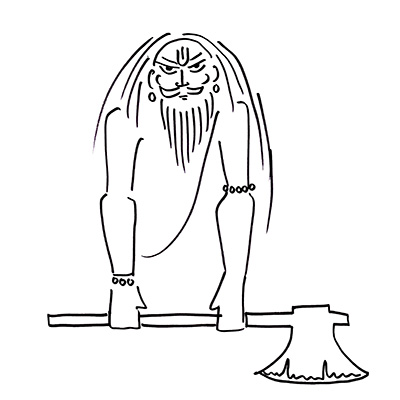
Parshuram was born in a Brahmin family of the Bhrigus. His father, Jamadagni, was a sage who performed rituals in exchange for which he received cows. His mother was a princess.
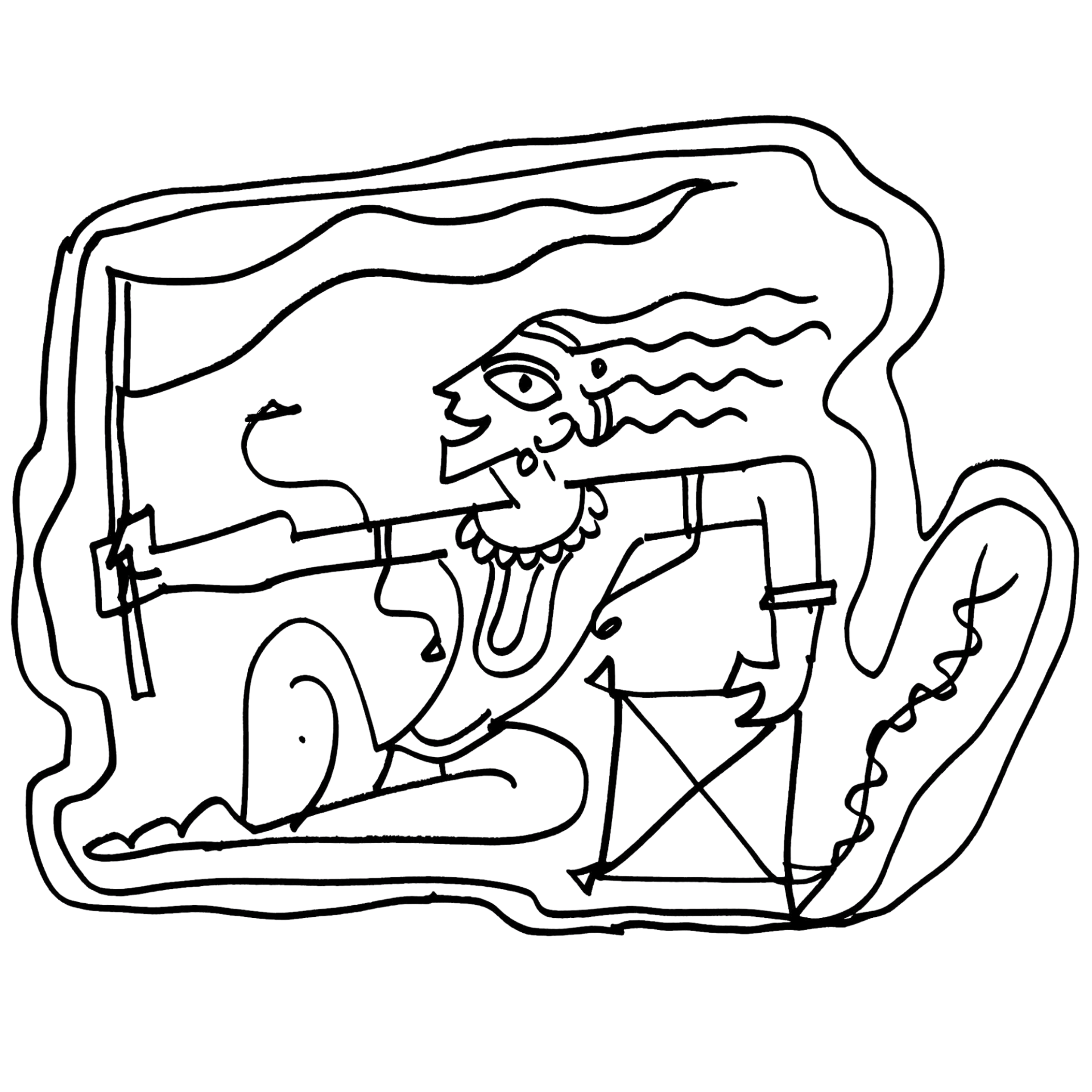
Parshuram is famous for raising his axe for two reasons. The first time he did so, he beheaded his mother on his father’s orders, because she desired another man. And the second time he raised this axe was to kill the king who tried to steal his father’s cow. In most stories, the man to whom the mother is attracted, and the man who steals the cow is the same, the king, Kartavirya Arjun of the Haihaiya clan.
This is a story of a man who rises up against the Kshatriyas. The Kshatriyas are associated with disrespecting the laws of marriage and property and hence, declared adharmic, followers of jungle law (might is right) rather than civilised code of conduct (help the helpless).
Parshuram goes on to kill 21 generations or clans of Kshatriyas. He fills five lakes with their blood. He uses that blood to make offerings to his ancestors. This makes him an extremely violent character. His violence is amplified by the fact that he’s born in the family of Brahmins, who are supposed to follow a non-violent path.
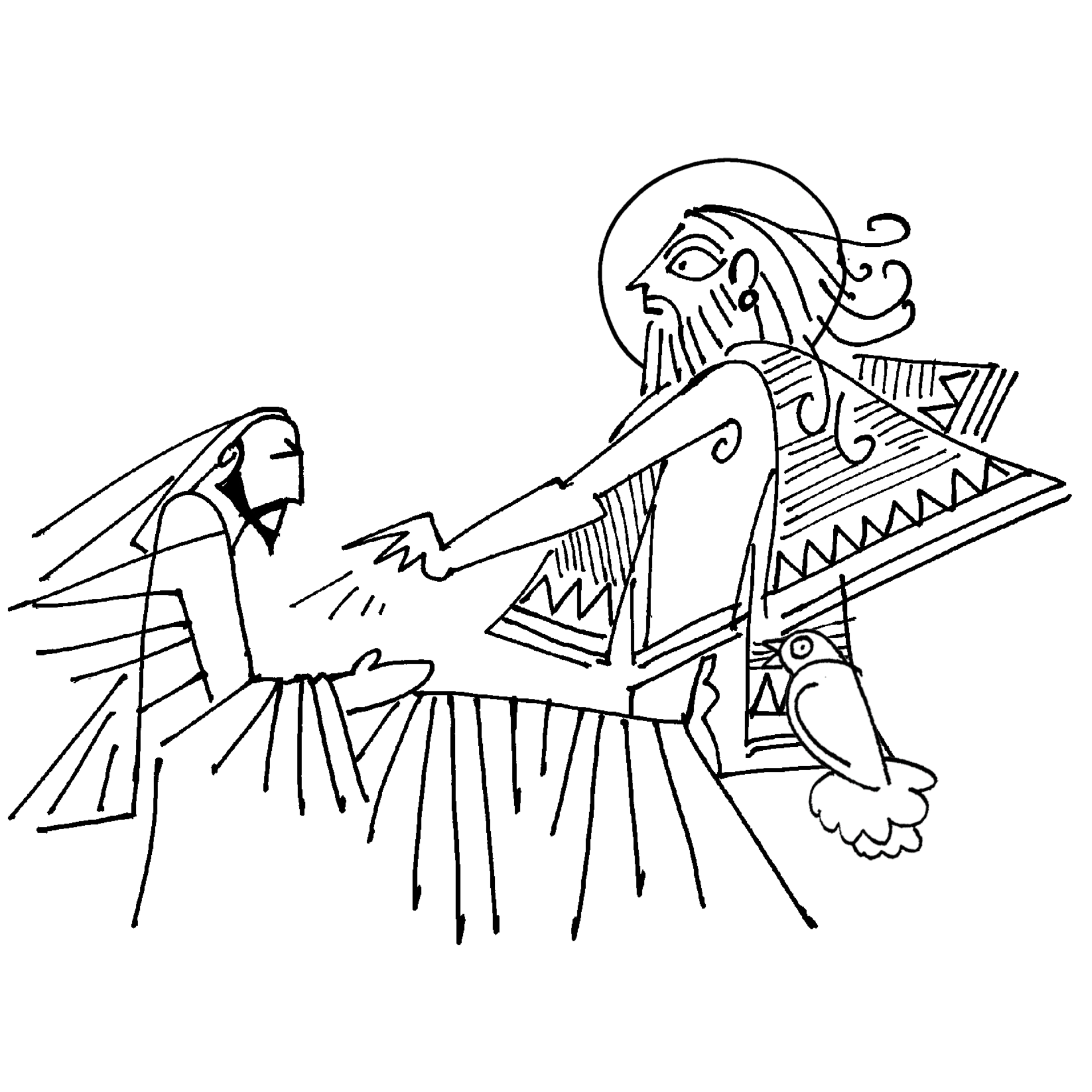
Yet, in the Ramayana and Mahabharata, we see a reversal in his role, where Kshatriyas overpower Parshuram. In the Ramayana, during Sita’s swayamvar, Ram breaks the bow of Shiva. He wins Sita’s hand in marriage. He is challenged by Parshuram to wield Vishnu’s bow that is in Parshuram’s possession. Ram does so easily, making Parshuram feel that he has no other value on Earth as a kshatriya, like Ram, who respects the laws of marriage and property has descended on Earth. In Ramayana, Ravana is defeated by Kartavirya Arjun who is defeated by Parshuram who is defeated by Ram. Thus Ram’s victory over Ravana is foreshadowed.
In the Mahabharata, Parshuram fights Bhishma in order to force him to marry a woman called Amba. But he is unable to defeat Bhishma in battle or convince him to marry Amba. Thus, the Kshatriya Bhishma overpowers Parshuram. In the Mahabharata, the three commanders of the Kaurava army are Bhishma, Drona and Karna. All three are students of Parshuram, all three are defeated by Krishna. Once again, the Brahmin is overpowered by a non-Brahmin, this time a cowherd.
In Jain mythology, Kartavirya Arjun’s widow bears a child called Subhoma in secret who not only defeats Parshuram, but wipes out 21 clans of warrior Brahmins. Subhoma becomes a mighty Chakravarti. This is yet another story of a Kshatriya overpowering the warrior priest.
Brahmins too have an uncomfortable relationship with Parshuram. Parshuram chooses to live in a land where there are no Brahmins. He threw his axe into the sea that withdrew to reveal the western coast of India. As per local lore, no Brahmin wanted to live there. So Parshuram created new Brahmins who, like him, chose the path of war over the path of peace. This is used to explain why many Brahmin communities in coastal India own land, and behave like feudal lords, rather than focussing in Vedic knowledge and temple rituals.
Of course, in Hindutva’s political discourse, we find a new Parshuram—one who was born to push out invaders, an original and inspiring idea based on a creative reading of Hindu lore.