
Mythologist | Author | Speaker | Illustrator

-
Articles

Menstrual Taboos Are Not Unique to Hinduism
Who is a Hindu? Menstrual taboos are not unique to Hinduism Published on 16th August, 2020, in Mumbai Mirror. In Kerala, there is the story of a group of boys who found a rock bleeding. Those who touched it died instantly. The rest were told to wear women’s clothes and take it to the village,…
-
Articles

Sacred Footprints And Footwear
Published on 5th July, 2020, in Mid-day. In the Mahabharata, there is the story that the sun-god invented the footwear, and the parasol, to protect people’s feet from getting burnt on the ground heated by the summer sun. Sages were angry with the sun as their wives were complaining and were planning to take away…
-
Articles

When the Vedas Reached South
Published on 19th April, 2020, in Mid-day The mention of southern states is conspicuously absent in vedic literature. Hymns of the Rig Veda date back to 1500 BCE. They refer to the Saptasindhu or Indus Valley region. Shatapatha Brahmana, dated to 800 BCE refers to a movement towards what is now Bihar. In the Aitreya…
-
Articles

Fourteen jewels from the sea
Published on 11th January, 2020, in the Economic Times The churning of the ocean of milk is a key theme found in temples across ancient Southeast Asia indicating the spread of Hindu ideas there between the 3rd and 13th century. This story is linked to kingship and enterprise as it shows how Vishnu gets the…
-
Articles

Managing the boss in India
Published on 26th July, 2019, in Economic Times A friend from Southeast Asia once told me that the Chinese have had a civil service and bureaucracy for over a thousand years, complete with a civil service exam. The success of this bureaucracy is based on respect for hierarchy. It is not based on the individual,…
-
Articles
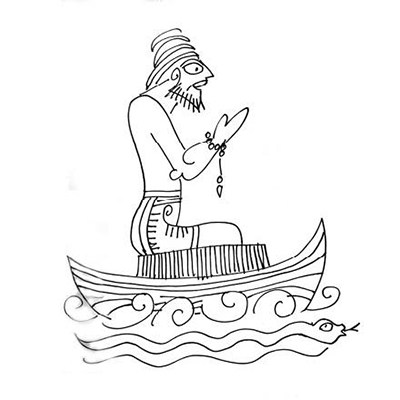
Sea-faring Kaundinya
Published on 8th June, 2019, in Mid-day. If you travel to Cambodia, you will come across a folklore that a sage from India known as Kaundinya travelled across the sea to what is now called Cambodia, where he encountered a Naga princess, who fell in love with him. She happened to be the ruler of…
-
Articles

Hinduism and Buddhism
Published on 28th April, 2019, in Mumbai Mirror. It was in the 19th Century that the wider world actually heard of the Buddha and Buddhism. Although Buddhism was practised for centuries in the Far East and Southeast Asia, people did not realise that the various images of the Buddha found in these countries belonged to…
-
Articles

How India lost its rich maritime tradition to Europeans
Published on 22nd March, 2019, in Economic Times. Sea travel is mentioned in the Buddhist Jataka tales but not in the great epics Ramayana and Mahabharata, perhaps because the former was patronised by mercantile communities (vaishyas) and the latter by landed gentry (kshatriyas). Sailors from India travelled along the monsoon winds to Southeast Asia and…
-
Articles
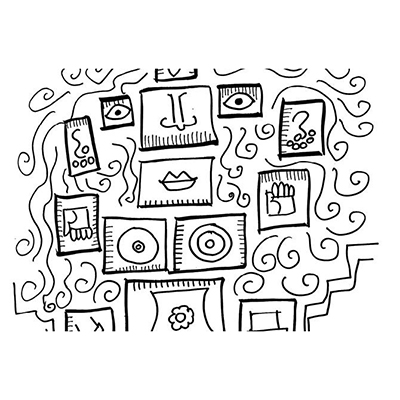
Land of body parts
The Buddhists and the Hindus share the idea of the land becoming sacred, when it is connected with the body of a holy being…
-
Articles
Who is a Hindu? The forest of sacred stories
Puranas introduce us to the classical Hindu trinity of Brahma, Vishnu and Shiva and their spouses — goddesses Saraswati, Lakshmi and Parvati…
-
Articles

Spa-walla Buddha
Today when you think of Buddha, he has become a spa icon. You can go to any health spa for a massage, a steam or a jacuzzi and there in front of you, you will find an image of Buddha,…
-
Articles

How Brahmins helped create temple-states and kingdoms in South India and Southeast Asia
It is fashionable nowadays to use the word ‘Brahmin’ with contempt … But this outrage (real and imagined) must not blind us to the contribution of Brahmins …
-
Articles

The spread of Hinduism
By the time the Upanishads were composed, 2,500 years ago, there was a familiarity with the Gangetic Plain…
-
Articles

Who is a Hindu? Indra: Entitled, insecure, dispensable
How the primary god and great warrior of the Vedas ended up as a minor Puranic god…
-
Articles
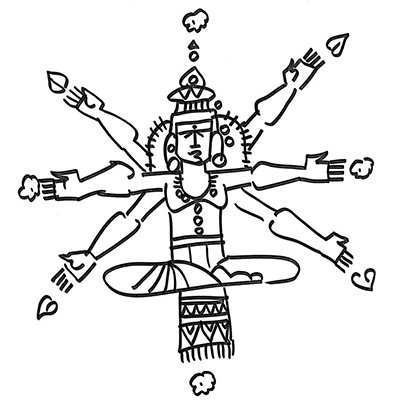
From five to ten directions
The concept of 10 diggapalas reached its final form about a thousand years ago when grand Hindu temples of stone started being built across India. But the thought can be traced to the Gangetic plains where Vedic yagna was being performed 3,000 years ago…
-
Articles

Bridging the many interpretations of the Ramayana across Southeast Asia and India
From the Ramakien in Thailand to the Ramaker in Cambodia, the eclectic interpretations of the story in Asean countries are worth recounting…