
Mythologist | Author | Speaker | Illustrator

-
Articles
The Meaning of Contentment
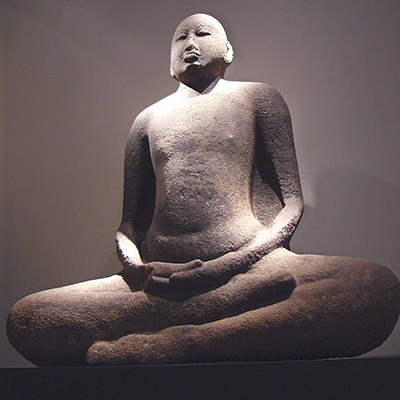
Published on 30th December, 2022, in The Hindu. At the start of anything new, like New Year, Hindus look towards Ganesha. We want him to remove obstacles from our lives, and usher in prosperity. We have been conditioned to see his big belly or lambodara as a symbol of wealth. We have forgotten that this…
-
Articles

How Hara and Hari Helped Kings of Cambodia
Published on 17th December, 2022, in Times of India. In the 5th century AD, i.e. 1,500 years ago, the Gupta kings rose in India. They were amongst the earliest royal families to establish themselves through a Hindu framework. Following the Gupta period, trade with Rome was disrupted, as the Roman Empire collapsed. But trade from…
-
Articles

Those Who Give Gifts Voluntarily Are Truly Rare and Great
Published on 10th December, 2022, in Economic Times. Many people think the world is unravelling itself today. Politicians insist this unravelling began a thousand years ago with the coming of Muslim warlords of Central Asia (Turuka) followed by the Europeans. But as per Sanskrit lore, this began two thousand years ago, with the arrival of…
-
Articles
How Did Jainism Survive In India?
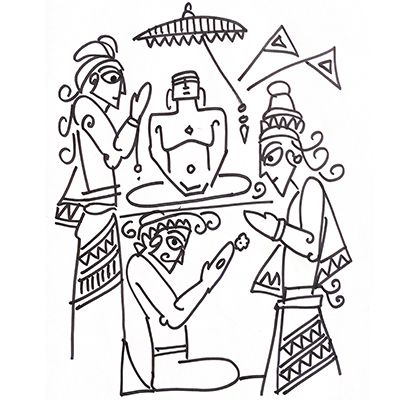
Published on 3rd December, 2023, in The Times of India. Until its revival in the 20th century by Babasaheb Ambedkar — as part of the Navayana movement for Dalit upliftment — Buddhism had all but been forgotten in the land of its birth. By contrast, Jainism maintained a tenacious hold in mainland India. This despite…
-
Articles
Dharma Governance and Chakravarti Government
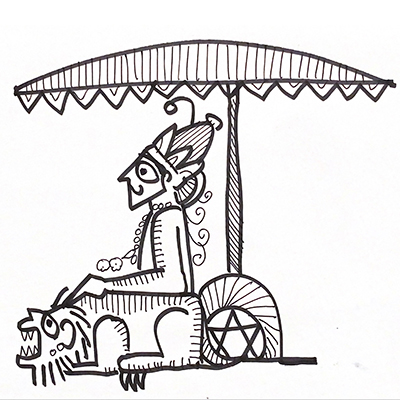
Published on 11th November, 2022, in Economic Times. Forming the Government is not the same as Governance. This is most beautifully understood when we compare the concept of Dharma-raja and the Chakravarthi. Dharma-raja is one who rules by dharma. Chakravarti is one who turns the wheel. This wheel represents the wheel of chariots and wagons…
-
Articles

Why East India’s Contribution to Hinduism Remains Forgotten
Published on 24th September, 2022, in Times of India. Whenever we talk about Hinduism of India, most of the attention is taken over by talk of North India, with Rajput lands to its west and Gangetic plains to its east. Attention then shifts to South India, followed by talk of the Aryan-Dravidian divide. Hardly any…
-
Articles

When Somnath Temple Was Being Raided, Chola kings Were Reaching Vietnam
Published on 15th August, 2022, in Times of India. As per Brahmin lore, all civilisation in Tamil lands emerged in a mystical past after Agastya brought grammar from the Himalayan regions, along with mountains and rivers which became known as Southern Kailasa and Southern Ganga. But these are clearly later tales, composed less than thousand…
-
Articles
What You Need to Know About Buddhist Capitalism
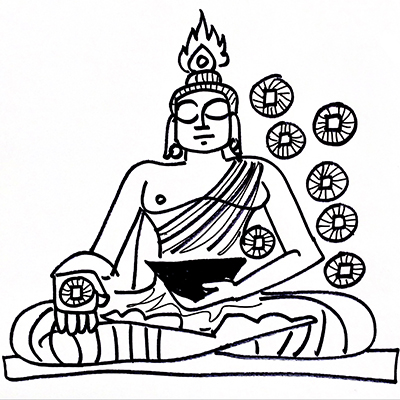
Published on 6th August, 2022, in Economic Times. We have always been taught that capitalism was invented in Europe. But the capitalism that we see today is the outcome of the Industrial Revolution. Before the Industrial Revolution, capitalism thrived in trading routes controlled by the Arabs. These routes extended from Southeast Asia, right up to…
-
Articles

Did Aryans Migrate Out of India to the West, or to the South?
Published on 16th July, 2022, in Times of India. Three kinds of people love the word Arya even today. The first is the local Hindutva folks who insist ‘Arya’ refers to the best of Hindu civilization. The second is the White Supremacist of the Western world; they prefer the word ‘Aryan’ to Arya, and insist…
-
Articles
Full-and-Final Settlement Before God
Published on 28th May, 2022, in Economic Times. We often forget that the word cash is derived from the Sanskrit word “Karshapana”. Indians invented the idea of money long ago. Irregularly-shaped copper coins were used by merchants for banking 2500 years ago, about the time coins began being used in ancient Greece and China. Even…
-
Articles

How Hindus of Andaman and Nicobar Rejected Religious Bigotry,
Published on 9th April, 2022, in Times of India. Located where the Andaman Sea meets the Bay of Bengal, Andaman and Nicobar is a string of over 500 islands, of which only over 30 are inhabited. The northern islands are called Andaman and its original inhabitants comprise the “Negrito” tribes (Onge, Sentinelese, Jarawa) who came…
-
Articles
The Dark Man on a White Horse
Published on 6th March, 2022, in Mid-day. Most Indians have heard about Somnath temple that was raided by Mahmud of Ghazni a thousand years ago. Very few know that in the same century, the Chola king from the south raided Odisha and Bengal and took back with him images of Shiva. Even fewer people know…
-
Articles

How Did Hinduism Come to Dominate India?
Published on 20th November, 2021, in Times of India. Nearly 2,000 years ago, there were Buddhist stupas across India. Nearly 1,500 years ago, there were Buddhist caves in the Deccan. But 1,000 years ago, Buddhist structures were overshadowed by Hindu temples. Jain art, which was as popular as Buddhist art, became a relatively minor force.…
-
Articles

How Did Tantra Spread from India to Tibet?
Published on 14th August, 2021, in Times of India. Tibetan Buddhism is called Vajrayana Buddhism, which is sometimes also called Tantrik Buddhism. Here, women play an important role, which is why the symbols of Vajrayana Buddhism are a double-sided dagger (vajra) and the bell (ghanta), representing male and female principles, which in turn represent the…
-
Articles

Is Lanka Located In Madhya Pradesh?
Published on 28th February, 2021, in Mumbai Mirror. Temples dedicated to Ravana in MP, and rulers claiming descent from him in this region, indicate that Lanka may not be across the ocean as imagined, but very much within Indian territory. Many people are convinced that the Ramayana they saw on television is history, and that…
-
Articles

Sea of Spices: How Trade Gets Intertwined With Myths
Published on 26th December, 2020, in Economic Times. There was a goddess called Harsiddhi Mata who resided atop a hill, overlooking the sea in the coastal areas of Gujarat and Sindh. She would see ships sailing by. There were those who would see her temple and not venerate her. So, casting a malevolent eye, she…