Published in First city, Delhi, October 2003.
All of us are told that Hindu gods are the manifestations of the same divine principle. Shiva, Vishnu and Durga are different forms of God (spelt with upper case). And yet, the rituals adoring each of these manifestations of the divine are quite different. Especially intriguing is the fact that raw milk is offered to Shiva, butter is offered to Vishnu (and his most popular incarnation Krishna) while blood is offered to the Goddess.
Blood sacrifice is an integral part of Goddess worship. Not many people like the idea today but the fact remains that across India for centuries animals have been slaughtered in Goddess shrines, usually around the festival of Dussera when the Goddess battles her most powerful adversary Mahisha- the buffalo demon.
The story of Durga comes to us from the Devi Mahatmya, a 6th century text which is part of the Markandeya Purana. By the time this text was written, Goddess worship was clearly a significant component of popular religion in India. Neither the popularity of Buddhist monasticism nor the male bias of Vedic Brahmanism could overshadow the appeal of the Goddess and her fondness for blood. The Devi Mahatmya refers to the Goddess as a warrior who kills or helps kill trouble-making demons like Mahisha, Shumbha-Nishumbha, Chanda-Munda, Madhu-Kaitabha and Raktabija. In folk and classical songs, she is described as one who loves blood and bedecks herself with the heads and entrails of her victims.
And yet in the Durga Pandal, what we see is a gentle, benign looking deity, dressed in finery, her face ethereal and enchanting, smiling benevolently. Her devotees worship her as mother. They sing songs to her glory. But few pay attention to the blood on the altar. A buffalo lies decapitated. In clay, if not in flesh. Those lips, those eyes, those jewels distract us from the violence around: the weapons of war, the ferocious lion, the man impaled by a trident, the blood pouring out of the buffalo’s severed neck.
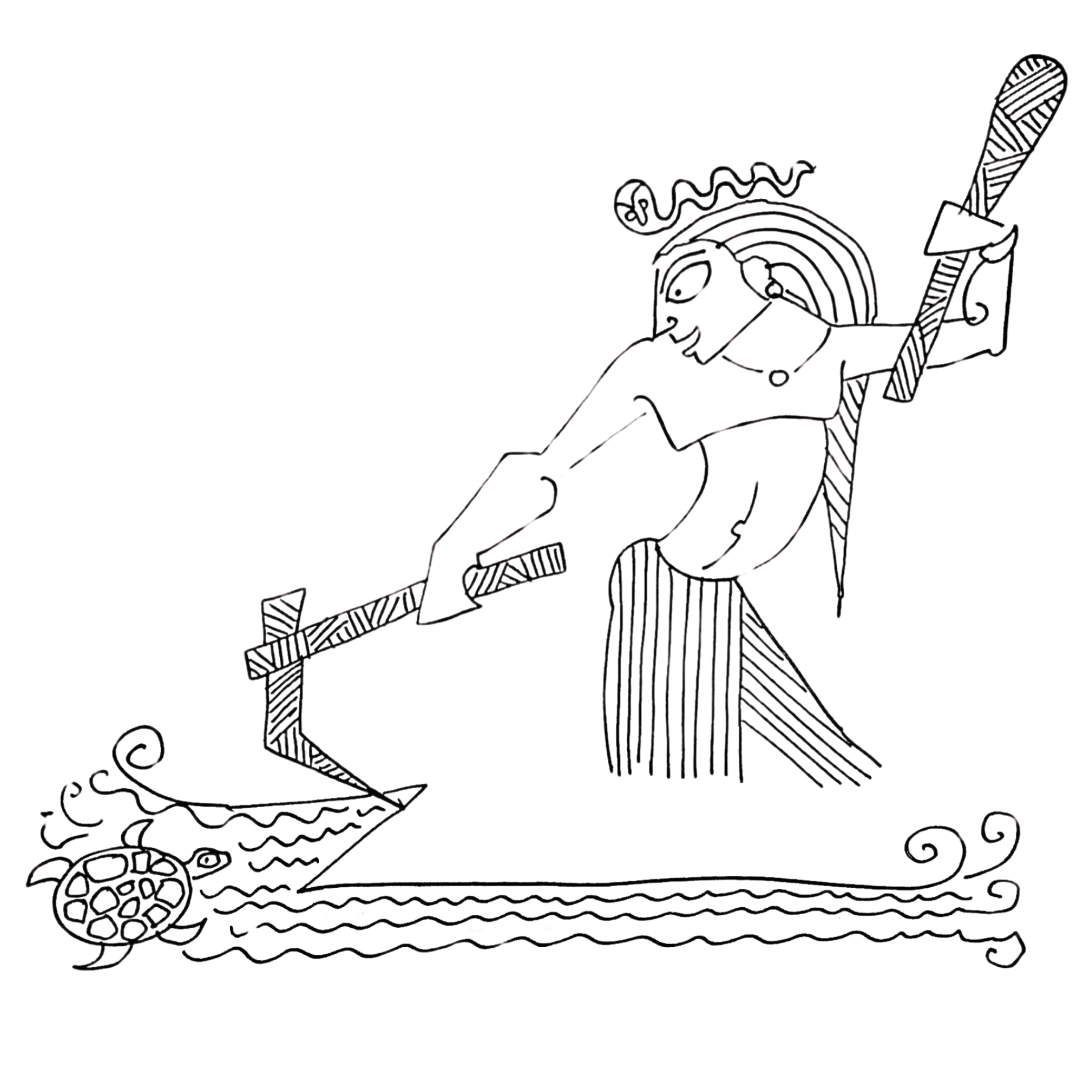
In many parts of India, buffaloes are actually sacrificed to the Goddess. The beast is decorated with garlands of neem leaves. It is smeared with turmeric and kumkum. The entire village participates in the ceremony. Drums are beaten. Women go into a frenzy. Men dance. And finally, one of the men, usually belonging to a lower caste, raises the axe and beheads the sacrificial beast. The blow is swift and hard. The animal must die in a single stroke. It must not struggle or gasp for life. It must be alive one moment and dead in the next. Everyone will cheer the Goddess. The blood and entrails of the beast will be mixed with grain and spread over the fields. The flesh will be cooked. A feast will follow.
During the Dussera festival, fasting is common. Some become vegetarian. Others deny themselves onions and garlic. All this for the Goddess who is Rakta-priya, “fond of blood.” In dissertations, scholars — both Indian and Western — describe Durga as the ‘mother’ goddess. And yet what does this mother do — she kills a buffalo after a fight that lasts for nine nights. Explanations are simplistic: It is the battle of good over evil. Fine. So she kills the bad guy but why does she drink his blood and wear his head as a trophy? Shiva kills demons like Andhaka and Taraka but we don’t pour blood over the Shiva-linga. Vishnu as Rama and Krishna kills Ravana and Kamsa. But the very idea of blood in Vishnu temples is shocking. Why then this special offering for the Goddess in a country where women are associated with timidity, weakness and gentleness.
Feminists associate the buffalo with the “male patriarch”. Some believe female frustration at being repressed and suppressed manifests in myth as the tale of the Goddess who kills her oppressor. Through Durga, the Indian female unconsciousness projects their desire for liberation from patriarchy. This point of view is endorsed by the fact that the beasts sacrificed to the Goddess are invariably male, never female.
Durga has been patronized as much by men as by women. She is the goddess of warrior tribes such as Rajputs and Marathas. For them, Mahisha embodies their enemies while Durga embodies their martial might. Durga’s image is therefore placed on the doorway of fortresses. The word “Durga” means “invincible”. Durga is unconquered, hence a virgin. The man she kills is the man who seeks to marry, hence ‘conquer’ her.
But Durga does not shy away from marriage. In fact she is dressed less as a warrior and more as a bride. She wears a prominent nose ring, anklets, armlets, which are marital, hardly martial, symbols. Her children surround her. Her unbound hair is the only expression of her autonomy. That and the conspicuous absence of her husband, Shiva.
Shiva is a hermit. He has no interest in worldliness. He sits atop an icy mountain lost in meditation in serene isolation. He is according to Tantra the embodiment of the spirit, the fountainhead of consciousness. The spirit enlivens us. But the spirit can neither feed the flesh nor clothe it. For food, clothing and shelter, for self-preservation and self-propagation, one has to be worldly. One has to interact with the forces of nature. One has to be creative sometimes and destructive at others. To produce babies we must have sex. To get milk out of the cows we must ensure that they mate with bulls. To transform the flower into the fruit we must hope that the birds and bees pollinate and fertilize them adequately. To get food we have to uproot weeds and sow seeds of our choice. We have to kill rats and rodents, which try to steal what we grow. To make silk we have to boil silk worms. To make houses we have to cut down forests home to many birds and beasts. To live we cannot shy away from sex and violence.
And that is what Durga embodies. Her bridal form acknowledges the sexual, creative side of life. Her warrior aspect embraces the violent, destructive side of life. She is as worldly as her consort, Shiva, is other worldly. In folk lore, one hears of how the two quarrel. He speaks of the importance of destroying desire while she celebrates the simple pleasures of life — providing food for her children. He is content drinking poison and living in crematoriums while she works hard to take care of her young ones. When she begs for some jewels from her simpleton husband, he offers her Rudraksha beads. When she tells him to give her a roof over the head, he points out a cave for her.
The Goddess clearly complements the male forms of the divine. She is the world the male deities react to. Her children Lakshmi, Saraswati, Ganesha and Kartikeya personify wealth, knowledge, brain and brawn, the best things material life has to offer. Shiva copes with the material world by staying away from it, while Vishnu through his many incarnation deals with material life by applying the principle of detached duty. Both Shiva and Vishnu are protecting the mind from being overpowered by the vagaries of material life. Durga, however, plunges into it, oscillating in her roles as warrior and mother. She kills and she feeds. She needs to drink blood. Only then will she have the energy to produce milk, the same milk which is poured on Shiva and the same milk which will churned to make butter for Vishnu and Krishna. Thus flows the cycle of life, of nature and of divinity.