Most historians do not understand myths. They confuse it with fiction. Myths need to be distinguished from other kind of stories that shapes human culture:
- Parables and fables that are prescriptive.
- Ballads, sagas, and legends that seek to evoke tribal pride.
- Propaganda that seeks to mobilise people.
- Fiction that communicates an author’s imagination to entertain, enlighten, inspire, or reflect. News that narrates stories of the present, based on verifiable facts.
- History (itihasa in Hindi) that narrates stories of the past, based on verifiable facts.
- Myth (itihasa-purana in Sanskrit) that uses metaphors to provide a community with a map to cope with life, the world, and the afterlife. Myth justifies borders and hierarchies to establish identity. Hence, it makes sense to insiders, not outsiders.
Myths are often a function of geography. West Asia has deserts and mountains. By contrast, South Asia is full of river valleys, and is shaped by the Monsoon. This resulted in different migration patterns, different economic activities, and different forms of political organisation. This gave rise to different stories that created communities and tribes. The myths of West Asia are, therefore, different from the myths of South Asia.
Myths are never static. They change over time. West Asia did not always have Christianity, Islam, or Judaism. Likewise, the mythology of India has never been static. Vedic Hindus were different from Sanatani Hindus, who attack anyone who does not eat vegetarian food. Vedic Hindus sacrificed all kinds of animals, including horses, for their ancestors and gods.
Hindu myths did not emerge fully formed like the adult Draupadi emerging from the fire-pit in the Mahabharata. It changed over time. When we map myth to history, something fabulous emerges:
- The 3,000-year-old Vedic poetry and prose did not glamorise hermits, but the 2,500- year-old Vedic philosophy did.
- In 2,000-year-old Hindu epics, we find householders being presented as superior to hermits.
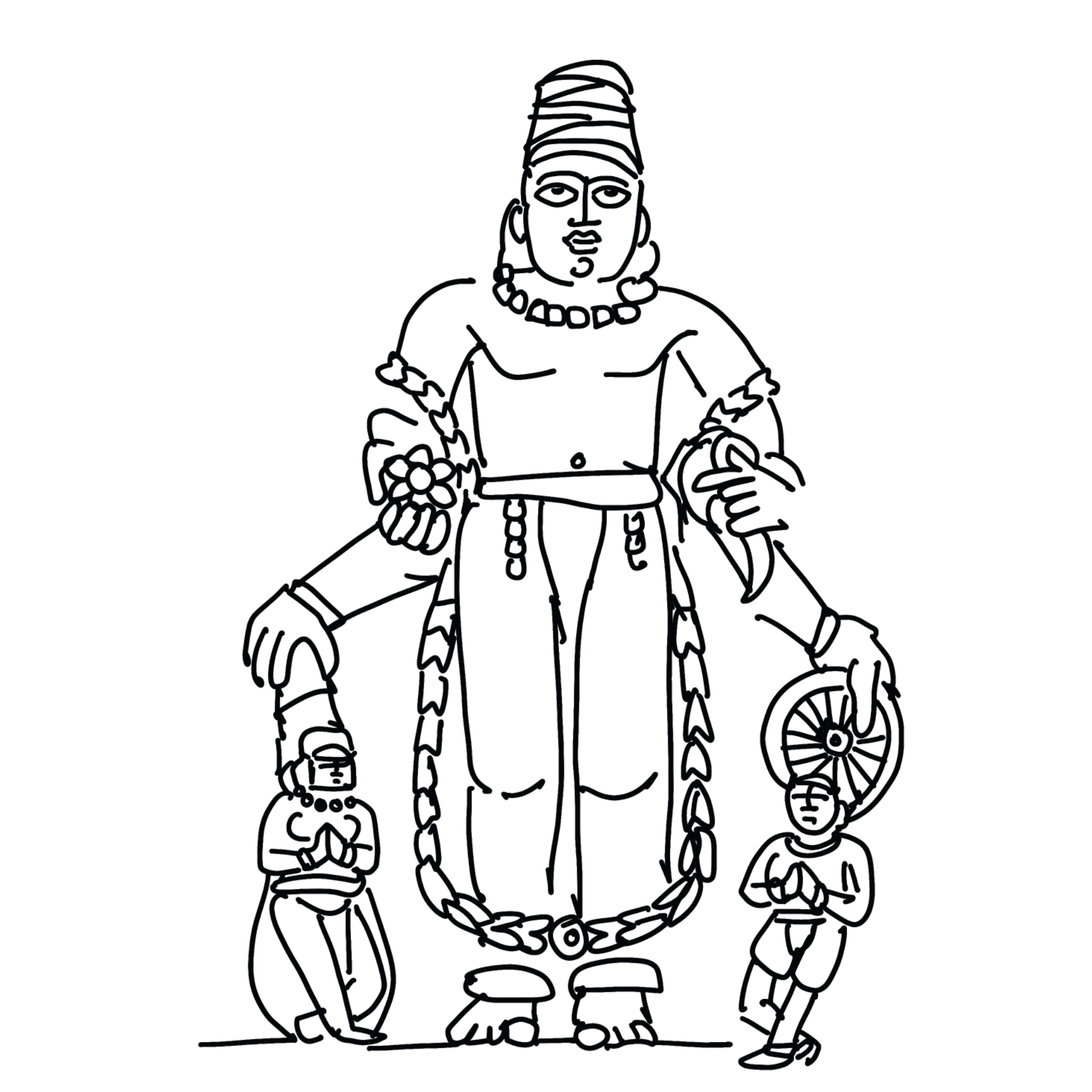
- In 1,000-year-old temples, multi-armed gods and goddesses are evoked in occult rituals to empower kings and establish ‘mandala’ kingdoms in India and Southeast Asia.
- In 500-year-old poetry, the gods become more mystical, analytical, and aesthetic, the object of the devotee’s deep love.
While Hindu myths were evolving in response to Indian history, monotheistic myths were evolving in response to West Asian history.
The Old Testament of the Bible was being composed around 600 BC, when the first temple of Jerusalem was destroyed by the Babylonians. This is when Vedic ritualism was slowly being challenged by monastic ideals in India.
The New Testament of the Bible was being compiled around 100 AD, after the second temple in Jerusalem was destroyed by the Romans. This is when the Ramayana and the Mahabharata had reached their final form in India. Ideas from North India were spreading to West, East, and South India.
The Quran had reached its final form around 700 AD, following the rise of the Arab empire that overshadowed both the Holy Roman and the Persian empires. By this time, the Maha-Puranas narrating tales of Brahma, Vishnu, Shiva, and Durga had reached their final form in India, and were being displayed on temple walls, and in theatrical productions.
The Old Testament (Jewish Bible), the New Testament (Christian Bible), and the Quran (Islamic lore) constitute the body of West Asian myths. They create a belief system that is very different from Hindu myths. They speak of one true god who does not permit the worship of false gods. Here, everyone lives one life, followed by the Judgement Day. They are expected to live as per the commandments transmitted through messengers. Jews, Christians, and Muslims are unable to agree on what that message is.
By contrast, there is no Judgement Day in Hindu myths. Hindu myths speak of rebirth and a balance sheet of debit and credit. Here, one seeks liberation from the trap of endless debts. Belief in one true god explains much of the conflicts in West Asia. Belief in rebirth explains the diversity, dynamism, and complexity in India.
The two myths engaged with each other: Peacefully, through the Monsoon maritime trade across the Indian Ocean; and violently, through military campaigns of horse-breeding and horse-trading tribes of Central Asia.
While the Old Testament, the New Testament, and the Quran are textual and resist change, Hindu myths remain primarily oral, aesthetic, and ritual; so very fluid, changing dramatically with history and geography. The dynamism and diversity make Hindu myths very difficult to fix or date. But broad shifts are evident. Along with the flexibility and the adaptability, there is an undeniable resilience. Many things change, yet many things remain the same. There is discontinuity and continuity.