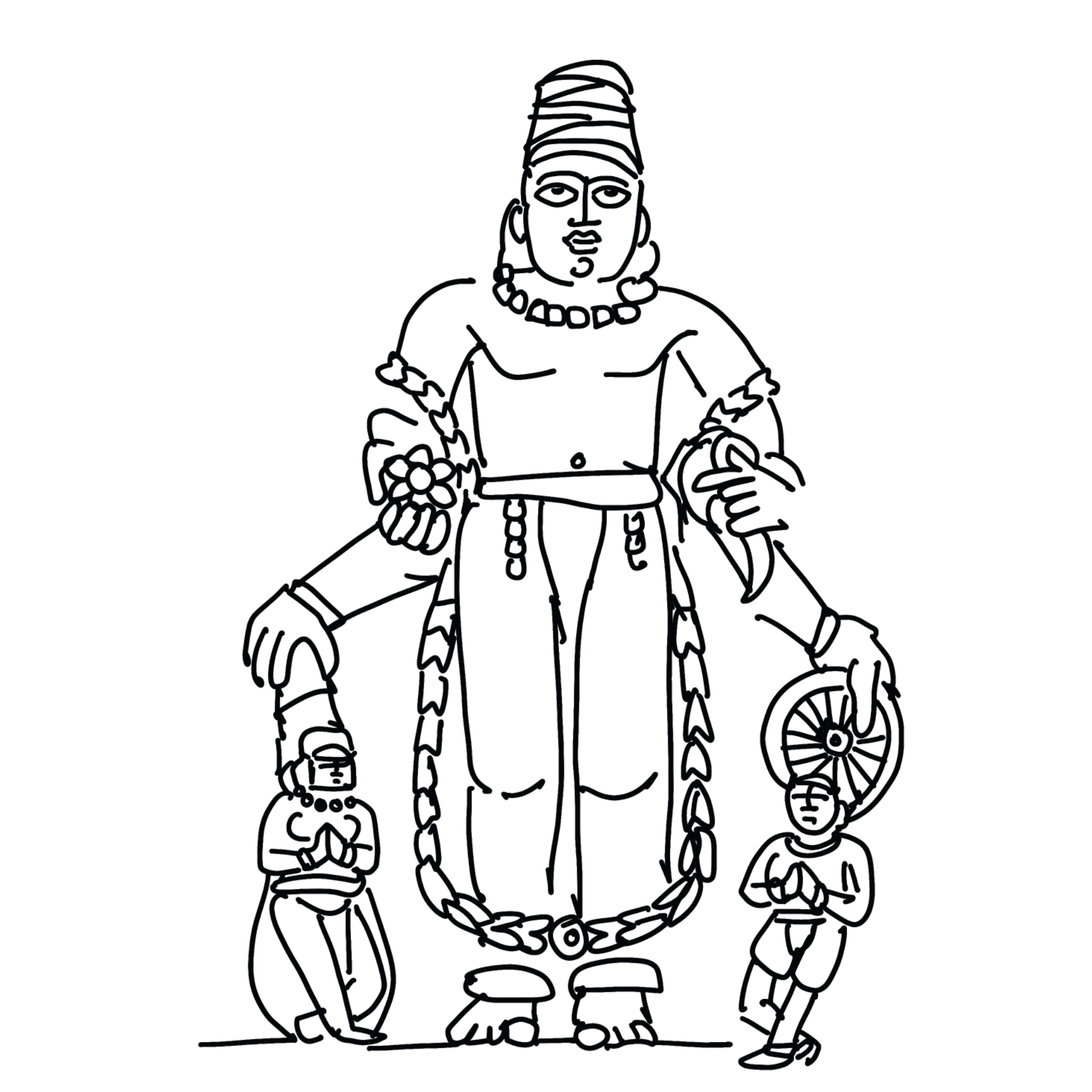
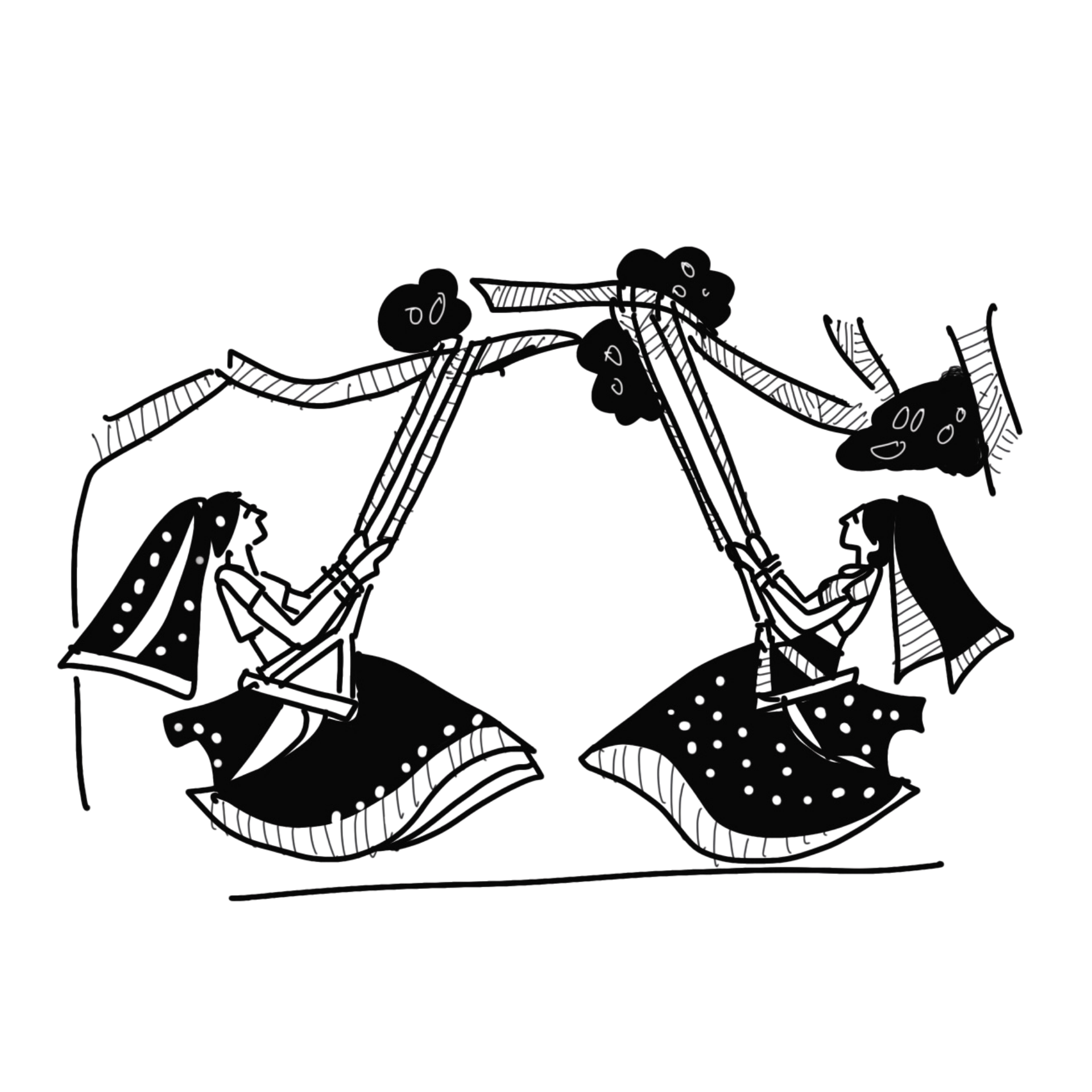
In Hinduism, the divine is represented as a couple—a man and a woman who get married. Consequently, many Hindu temple ceremonies are essentially marriage rituals. The male aspect of God is visualised either as Shiva, who smears himself with ash and has matted locks, or as Vishnu, who anoints himself with sandalwood paste and adorns himself with silk, flowers, and jewellery. These two male forms of the divine embody two aspects of the mind: Shiva represents the desire to withdraw from the world, while Vishnu symbolises the desire to engage with people. For each of them, the world takes a different form, the female form the bride, the Goddess.
For Shiva, the bride is Parvati, the mountain princess who enchants him and encourages him to abandon his ascetic ways and become part of a household. Together they become Gauri-Shankar or Uma-Maheshwar. In art, they are seen engaged in deep conversation atop Mount Kailash. Vishnu, however, needs no encouragement to marry. He enjoys the world of pleasure, but his wife Lakshmi, the goddess of fortune who was churned out of the ocean of milk, is a whimsical being who dislikes being told what to do. She is independent, and autonomous, and goes wherever she pleases, and no one can stop her.
If anyone tries to control her, she will start quarrels and make their lives miserable. Thus, through the stories of Shiva and Parvati, and Vishnu and Lakshmi, different aspects of married life are depicted, spotlighting diverse households.
Shiva is the reluctant groom who must be gently nudged into becoming a devoted husband, with the woman in charge. If Parvati goes to Shiva and draws him out of his cave, the Vishnu stories present the opposite. Vishnu goes wherever Lakshmi is; he woos her, and when she gets annoyed, he strives hard to console her, turning her frown into a smile with his charm and gifts.
In Tamil Nadu, devotees of Shiva often ask if a newly married household is like Chidambaram or Madurai. The temple town of Chidambaram, where Shiva is the presiding deity, serves as a metaphor for a household where the husband is dominant. The temple town of Madurai, where the Goddess Meenakshi is the presiding deity, represents a home where the lady is in charge.
A Vaishnavite household may relate to Srirangam, where Vishnu lies and sits comfortably while his wife manages the household chores. It can also resemble Tirupati, where Vishnu stands alert, working hard to impress his wife, Padmavati, the lotus-born. To marry her, he had to pay a heavy bridal price, to prove he was not a pauper but a man of the world.
These stories can be seen literally or metaphorically, but through them, ancient people explored the various ways households could be structured, based on the personalities of the man and the woman. There is no standard household — even for the gods. There are tales where Shiva and Parvati quarrel, and Parvati retreats to the forest until Shiva makes amends and brings her back.
Similarly, in many Vishnu temples, the angry goddess takes refuge in a tamarind grove, hiding in the darkness until her husband seeks her out, determined to transform her anger into affection. In Shiva temples, the couple are always together, but in Vishnu temples, the goddess has her separate shrine, asserting her identity.
These stories were traditionally narrated at weddings to help newlyweds understand that life is not easy even for the divine. It requires adjustments, and even gods and goddesses are not perfect. They, too, must work to make their marriage thrive.