
Articles
-

Ashoka and the Unifier of China
Over 2200 years ago, two rulers on opposite ends of Asia confronted a similar problem: how to hold together vast, diverse territories emerging from long periods of conflict. Qin Shi Huang in China and Ashoka in India both inherited states…
-

Chandala’s daughter, Arundhati
Arundhati is remembered today as the ideal wife, the tiny star beside Vasistha in the Saptarshi constellation, shown to every new bride as a model of fidelity. But beneath this polished image lies a far more unsettling story.
-

Persia was a Civilisation Long Before Islam and Rome
Zoroastrianism traced its teachings to the prophet Zarathustra (Zoroaster), who is believed to have lived many centuries earlier, perhaps around 1200 BC, according to some scholars.
-
Did the Mughals invent Hindi?
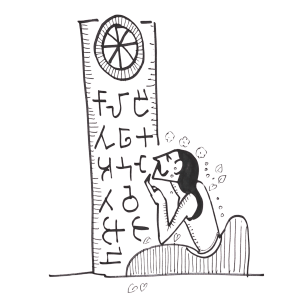
Hindi is often described as a language born in Mughal barracks, as if it were simply the speech of imperial camps. This is an attractive phrase, but it is historically incomplete. The story of Hindi is much older, far wider,…
-

A Colonial Category Called Religion
Hinduism did not become a religion by organic evolution. It was forced into becoming a religion by colonial definitions, Christian templates and Brahminical reinterpretations. What had functioned for centuries as a civilisational ecosystem of caste, ritual, myth, kinship, land and…
-

If Usha Vance became Christian, would she be American enough?
Sensing the shift in public narrative following the killing of Charlie Kirk, now seen as a Christian martyr, Vice President JD Vance declared publicly that he hoped his wife, Usha, daughter of Telugu Brahmin immigrants, would convert to Christianity. But…
-

The Ravana of Ratanpur
At Ratan-gad, or Ratanpur Fort, near Bilaspur in Chhattisgarh — once part of Madhya Pradesh — there exists a rare and striking sculpture of Ravana. He is shown cutting off several of his 10 heads and offering it into a…
-

The Tale of Two Somnaths
Loud discussions on how Muslim raiders from Ghazni plundered Somnath temple, on the Gujarat coast a thousand years ago, ignore how Jain ‘basadi’ in Karnataka were replaced by Somanatha Shiva temples around the same time. This is also the time…
-

Will Bollywood Rama Ignore Shambuka?
A Brahmin approaches Rama in grief. His young son has died prematurely. Such a death, he says, can only happen when dharma is disturbed. A king is responsible for cosmic order. If something unnatural has occurred, the fault lies with…
-

Are God’s Messengers Real or Imaginary?
We know that information about Gautama Buddha, Chanakya, and Shankaracharya come from textual sources that were composed centuries after their supposed lifetimes. There is no material proof of their existence. But they are assumed to be historical figures. The same…
-

Comparing Poems from Tantra and Bhakti
A tiny fragment of the Indian population was literate in medieval times. But a large portion knew poetry, composed poetry and transmitted poetry. These poems are thus major cultural outputs.
-

Blood Pacts of Kutch
Priestly role was often performed by Charans. They were bards, negotiators, ritual specialists, poets, warriors, royal companisons and much more. They preserved memory in the old Dingal language.
-

All About Marriage, Meaning, and the Shiva–Shakti Union
The marriage of Shiva and Shakti is not about property, lineage, or inheritance. It is not about power, spectacle, or display. It is about two individuals giving meaning to each other.
-

Temple Gopurams As Royal Defiance
Most of the tall gopurams we see in South India today were built by Nayaka kings of Telugu origin. Most are three to four centuries old, built during and after the Vijayangar period. Nayaka rulers reimagined Ram and Krishna as…
-
Can a French man be a ‘civilisational Hindu’?
In New India, an Italian woman with an Indian passport remains a ‘foreigner’, but a French man with an Indian passport becomes a ‘civilisational Hindu’, and is even asked to influence young impressionable minds by creating ‘decolonised’ school textbooks.
-

Can a French man be a ‘civilisational Hindu’?
In New India, an Italian woman with an Indian passport remains a ‘foreigner’, but a French man with an Indian passport becomes a ‘civilisational Hindu’, and is even asked to influence young impressionable minds by creating ‘decolonised’ school textbooks.