
Mythologist | Author | Speaker | Illustrator

-
Articles
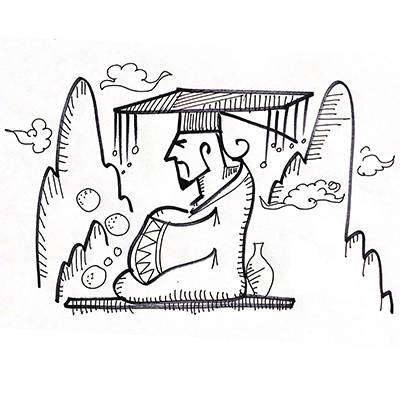
India and China Have Received Many Ideas from Each Other
Published on 26th November, 2022, in Economic Times. Nationalists in India and China love the idea that their culture influenced the world, but hate the idea that their culture was influenced by the world. While the Chinese preferred isolating themselves materially, with walls, Indians preferred isolating themselves psychologically using the caste mindset. Nevertheless, the two…
-
Articles

Bindi: A Homage to the Devadasi
Published on 20th November, 2022, in Mid-day. Devadasis, a crude catch-all word used to describe independent female dancers, musicians, and entertainers of India, have been wiped out of Indian history. She probably invented the bindi, and other female adornments, worn by women in India today. But like her contribution to music and dance, no one…
-
Articles

Why Goan Hinduism Is Unique in India?
Published on 18th November, 2022, in Times of India. Goa is a sliver of land between the Western ghats and the sea, divided by rivers opening up to estuaries, much like Kerala, visited by sea traders for the past 4,000 years. Goan Hinduism is unique in India. The village structure that the Portuguese encountered five…
-
Articles
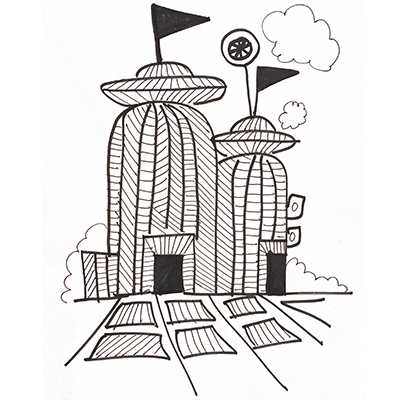
Temples Used to Give Spiritual Benefits to the Market and Get Material Ones in Return.
Published on 15th October, 2022, in Economic Times. Along the banks of the Tungabhadra, the Vijaynagara kings established grand temples in the 14th century. Each temple was attached to a marketplace. There was one temple for the spice market, another for the horse market, and another for the jewellery market. This makes one wonder if…
-
Articles
Why the Hindus Owe Their Tallest Temples To the Cholas
Published on 7th October, 2022, in Times of India. Nobody will admit this, out of respect for the venerable filmmakers, I suspect. But, I found, many non-Tamilians were rather bored with Ponniyin Selvan: I , the new Tamil epic period action drama film directed by Mani Ratnam. People complained it was dull, despite the grandeur…
-
Articles

How Advaita Shapes the Indian Headshake
Published on 17th September, 2022, in Economic Times. The most popular school of Vedanta is called Advaita. Advaita means non-dual. In English it is often translated as monism. But there is a difference between the structure of the two words. Advaita is refuting the existence of two. Monism is acknowledging the existence of only one,…
-
Articles

Pre-Macaulay Models of Teaching
Published on 3rd July, 2022, in Mid-day. Today, anyone can go to a school or an institute, where a set of subjects are taught by experts who follow a fixed timetable, an approved curriculum, a standardised method of teaching and evaluation. That was not the case before. In the old Indian model, your caste determined…
-
Articles

View: The Idea that People Are Driven by Economic Realities Is a Flawed Argument
Published on 14th May, 2022, in Economic Times. A Hindu temple is often called Deul. This is derived from the world Deva-kula, or the divine family. The land attached to the temple was called Deva-bhoga. That produce of this land would be used to provide resources for the temple. This land would include fields, orchards,…
-
Articles

Lion Atop an Elephant
Published on 8th May, 2022, in Mid-day. A very common motif found in Indian art is the lion standing on top of the elephant, defeating it. These images are called the Gaja-Simha images, Gaja meaning the elephant and Simha meaning the lion. Some Orientalist scholars have tried to explain this image as the triumph of…
-
Articles
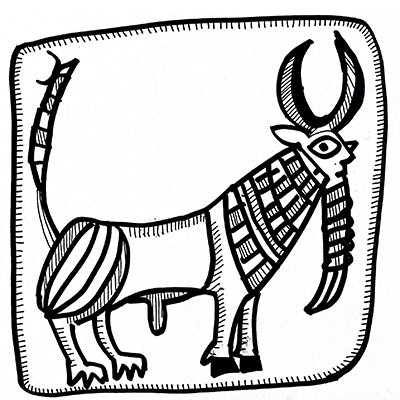
Dogs, Rats, Unicorns and Other Animal Guilds
Published on 30th April, 2022, in Economic Times. Animals have a close relationship with human corporations and guilds. Nearly 4500 years ago, in the Harappan cities of Northwestern India, archeologists have found hundreds of soft stone seals, barely an inch or two long in width that have animal motifs. They are full of marks that…
-
Articles

The Jogi As Seasonal Hermit
Published on 23rd April, 2022, in The Hindu. In North India, especially in the Gangetic plains, in what is now Uttarakhand, Uttar Pradesh and Bihar, we find songs known as Baramasa. It is a 12-month cycle in poetry, expressing the loneliness and longing of a woman in a village, for a husband who is travelling…
-
Articles

How Hindus of Andaman and Nicobar Rejected Religious Bigotry,
Published on 9th April, 2022, in Times of India. Located where the Andaman Sea meets the Bay of Bengal, Andaman and Nicobar is a string of over 500 islands, of which only over 30 are inhabited. The northern islands are called Andaman and its original inhabitants comprise the “Negrito” tribes (Onge, Sentinelese, Jarawa) who came…
-
Articles

No, It’s Neither a Sin Nor Un-Indian to Drink Alchohol
Published on 1st April, 2022, in Times of India. There are two types of alcohol. One produced by fermenting flowers, fruits and grain (Desi Daru). The other produced by distilling (English Daru). The former was produced in kitchens across India for thousands of years, offered to the many villages gods and goddesses, before the rise…
-
Articles
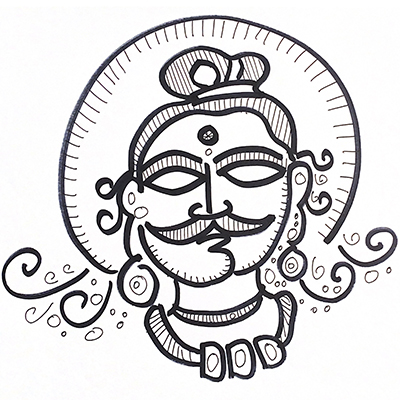
An Eclipsing of History That Frightens Many Hindus
Published on 26th March, 2022, in Times of India. People forget. If you go to Northwest Pakistan today, the region on either side of the Khyber pass, few will remember that in the Bronze Age, 4000 years ago, it connected Harappan cities to settlements in North Afghanistan, which was the source of the much traded…
-
Articles

How Do We Know What We Know?
Published on 20th March, 2022, in Mid-day. How do we know what we know? This subject is called epistemology. Here, we try to understand how knowledge is created. This subject was a part of intellectual discourse in ancient India, under the subject Nyaya. Today, “nyaya” means justice. But in ancient times, it meant rational thinking…
-
Articles

How Trade Blossomed an Exchange of Ideas Between India and Arabia.
Published on 26th February, 2022, in Times of India. Indians had been trading with Arabs for a long time. About 4000 years ago, trade happened with Harappans by ships that travelled along the sea-coast. Birds were used to identify the direction of the shore if the ship went too far into the sea and lost…