
Mythologist | Author | Speaker | Illustrator

-
Articles

Three Aryan Invasions
When people speak of the Aryan invasion, it is important to clarify which Aryan invasion they are talking about. Believe it or not, there are actually THREE…
-
Articles

How Hindu Temples Evolved
We assume that temples were always part of Hindu culture. But historians present a far more complex story. …
-
Articles

The Saint Outside the Temple
There is tension between the social idea of purity and pollution, and the spiritual idea of connection between the deity and the devotee. Here are five such stories drawing attention to the tension…
-
Articles

Are New Reservation Policies Becoming Jagirs?
Now reservation has become a reward for those who serve the democratic process, available to anyone who can legally convince the state that their community is backward, or minority. …
-
Articles

Science Values Doubt Over Faith
Most people confuse science with logic. Anyone can be logical, even analytical, in establishing causality. But science is about stepping outside the human mind, relying on measurement, comparison and evidence. …
-
Articles
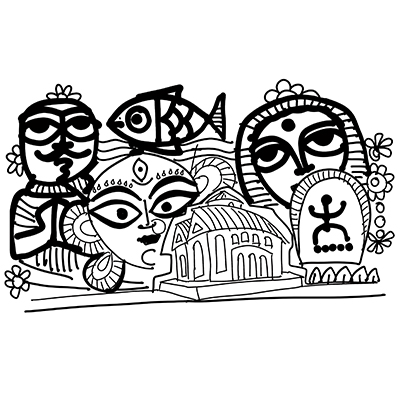
The Hindu History of Bengal
Published on 6th May, 2023, in Times of India. When we talk about Bengal, we speak of its partition. The eastern part became Muslim Bangladesh, the western part became communist West Bengal. It almost seemed as if Hinduism had been wiped out in this eastern corner of India. Yet, this is where Hinduism was defined…
-
Articles

The Ahimsa Seal of the Indus
Published on 29th April, 2023, in Economic Times. The oldest seals depicting ahimsa (non-violence) are found in the Harappan cities of the Indus Valley (2500 BCE to 1900 BCE). These are the M-478B seal from Mohenjo Daro and the K-65 cylinder seal of Kalibangan. Both show women separating two men from fighting. In the Mohenjodaro…
-
Articles
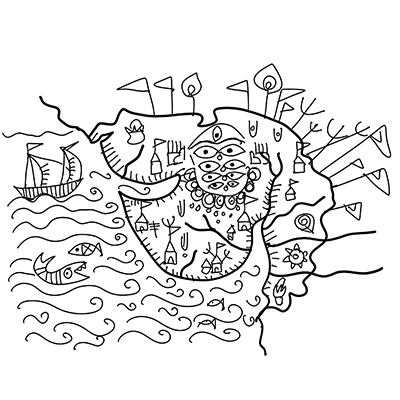
Gujarat’s Violent, Historical Relationship with Muslim Warlords
Published on 22nd April, 2023, in Times of India. Somnath, on the Gujarat coast, is the spot where the moon-god, Soma, prayed to Shiva when he suffered the wasting disease. He was waning and feared he would disappear. But Shiva placed him on his forehead and thus helped him regenerate or wane. This is where…
-
Articles

No Hymns for the Donkey
Published on 21st April, 2023, in The Hindu. In the past 30 years, the donkey population of India has dropped by 90%. It’s sad, considering large donkey fairs have been held annually for centuries in Gujarat, Madhya Pradesh, Punjab and Uttar Pradesh. We rarely think of donkeys as cultural icons. Yet, they are. The wild…
-
Articles
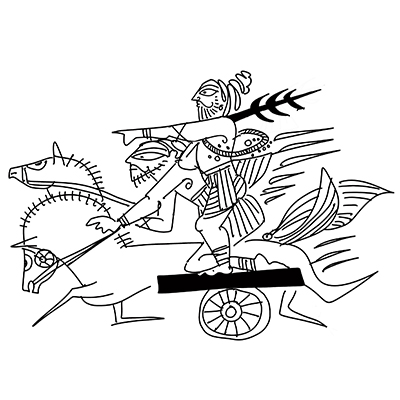
Pre-history of Aryans They Don’t Tell You
Published on 11th March, 2023, in Times of India. Nationalists on social media argue that the Mahabharata war took place 5,000 years ago, in 3,000 BCE, based on verses from 2,000-year-old manuscripts. They believe that Krishna and Arjuna rode a chariot drawn by horses. These ‘textual’ scholars are mostly upper-caste Hindu men, who ignore hard…
-
Articles
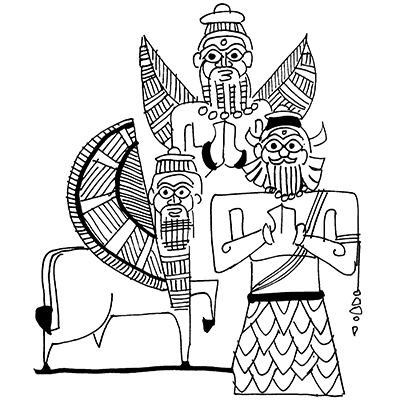
Polytheism Enables Mother of Democracy
Published on 4th March, 2023, in Economic Times. Monotheism propagates the idea of one God. This very easily telescopes into the idea of one all-powerful leader of all people, which enables dictatorship. In polytheism, by contrast, there is no all-powerful God, so no all-powerful king. There are many gods who are constantly competing, collaborating and…
-
Articles

Donation of Courtesans
Published on 17th February, 2023, in Economic Times. Chanakya’s Arthashastra talks about appointing a superintendent for the ganika, variously translated as pleasure women, prostitutes or courtesans. This is done in a matter-of-fact way. No morality is attached. Ganikas were valuable sources of pleasure, income and information for the state. These were not prostitutes, who have…
-
Articles
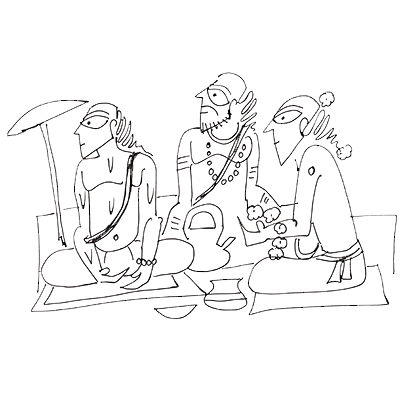
Diversity Amongst Brahmins
Published on 12th February, 2023, in Mid-day. Our textbooks teach us that Hindu society is divided into four groups: Brahmin, Kshatriyas, Vaishya, Shudras, consisting of priests, landed aristocrats, merchants and servants. This is the Vedic varna system. However, this is a highly simplistic division, which doesn’t take into account that there are over 5,000 communities…
-
Articles
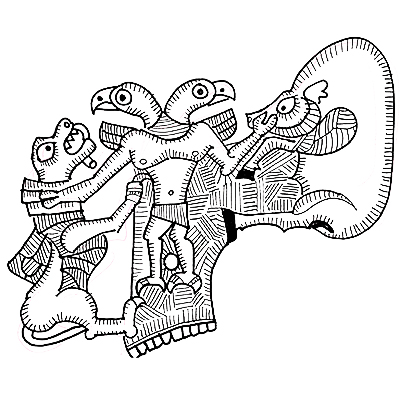
Oxus Between Harappans and Aryans
Published on 5th February, 2023, in Mid-day. No conversation about Harappans and Aryans is now complete without discussing the Oxus civilisation. Cities of the Oxus civilisation, in what is now Turkmenistan, Uzbekistan, Tajikistan, traded with cities of the Harappan civilisation to their south, until Harappan cities ceased to exist by 1900 BCE. They also had…

