Published on 7th May, 2023, in Mid-day.
Gandhi, Draupadi and Chanakya, all stood up to authority. But why? For revenge or justice? Chanakya and Draupadi refused to tie their hair, till they got what they wanted. This sounds so dramatic, but that is how stories are told.
Most popular narrations of Gandhi’s life inform us that he was kicked out of a train in South Africa. He experienced apartheid on account of his Indian birth. The first class compartment of the train was reserved for white people only. Gandhi could not believe that an upper-class Hindu male would be treated no differently from black or low-caste people. We are told that this is what motivated him to take up the cause of justice. Had this incident not happened, would Mohandas Karamchand Gandhi, the lawyer, become the Mahatma, who united a nation against the British Empire through non-violence?
Chanakya’s tale comes primarily from Buddhist and Jain sources, and from Sanskrit plays and folklore. Nanda kings hoarded wealth. One of them decided to change his ways and distribute wealth. So, he invited Brahmins to his kingdom. When Chanakya arrived there, he sat in the seat meant for the foremost of Brahmins. This horrified Nanda, who insulted him and kicked him out of the palace. In some stories we are told that it was the ugliness of Chanakya that disgusted the Nanda king, which is why Chanakya was kicked out of the palace. In the television version, we are told that Chanakya came with the desire to unite all Indian kings under Nanda’s banner, to raise an army against the invading Greeks. This is an idea that is not found in traditional lore at all. In all these three cases, Chanakya takes a decision to destroy the Nanda empire. He plans to create a more suitable king, and he unties his hair, refusing to tie it, till he has taken his revenge. Like Draupadi.
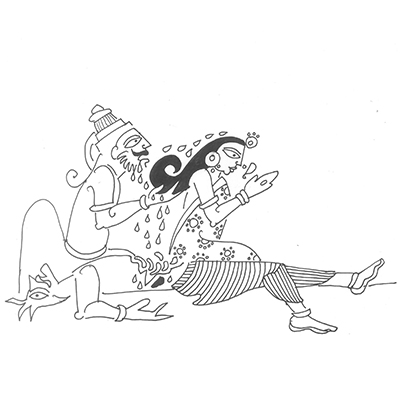
In Draupadi’s story, she is used as a wager in a gambling match by her husbands. They lose her to her brothers-in-law and so, the Kauravas drag her in public by her hair and try to disrobe her. They are unsuccessful in disrobing her. But, Draupadi is so furious that she refuses to tie her hair and says she will tie it only after washing it with their blood.
In all three cases, we see revenge being the primary motivation. We often talk about Draupadi, Chanakya and Gandhi fighting for justice. However, one can’t help but wonder whether these stories were told as they appeal to the human desire for revenge.
In the animal kingdom, there is no concept of revenge or retribution or fairness. A deer, when attacked by a lion, does not take revenge on the lion; it just fights for its life. Revenge is a human phenomenon because humans expect to be treated better. When reality doesn’t match up to our notions of how we are supposed to be treated, we get angry and hurt. We feel wounded and we seek healing. We want retribution and revenge. If you do not like the sound of revenge, then you can say it is an act of justice. Suddenly, it sounds more moral, noble. The human ego is comforted.