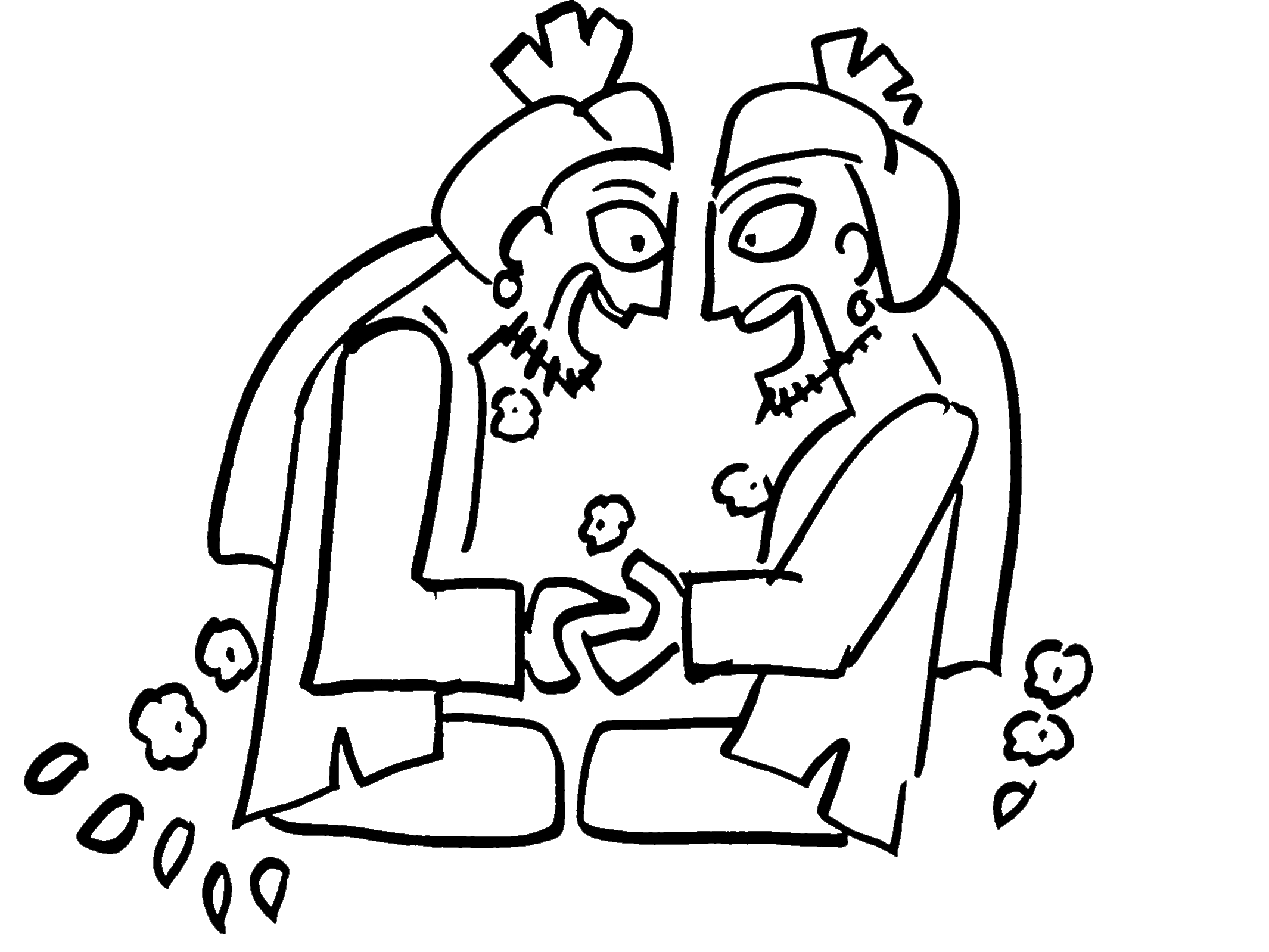
Once upon a time, a landless illiterate woman, with two children, and no husband, felt attraction for the village teacher, a single woman, and found her feelings being reciprocated. This film U for Usha: U Ushacha won the Satyajit Ray Short Film Award in 2019. It was described as “courageous”.
Now, the same filmmaker has made a feature length film Cactus Fruit: Sabar Bonda of two men, one from Mumbai slums, and one from a village in Maharashtra, falling in love, finding family acceptance, and deciding to make a life together. This has won the Sundance Grand Jury prize in 2025. It was described as “tender”.
Neither film has any grand climax or conflict resolution. In one, love and attraction blooms gently and there is hope. In the other, love and attraction moves a step further, hope is realised, with trepidation. Both films refer to class, caste, patriarchy, religion, rituals, literacy, social mobility, female infanticide, which characters negotiate to the best of their abilities.
This may surprise film pundits who have convinced themselves happiness of gays must be a fantasy, and gay films with happy endings are just subversive and unrealistic. Never mind the fact that the filmmaker is himself comfortably gay, surrounded by many gay friends, including many gay couples, has a family that has no issues with his sexuality, a gay partner, who moved to the city for him, and whose family has no issues with their relationship, and there is no conflict with one of the two being “fair skinned” and “upper caste”. Not everyone in India or Bharat views gays as terrifying threats to nature and culture and dharma, to be denied marriage rights. This invisible majority needs a voice.
Many serious storytellers, however, like Buddhas of yore, are convinced life is misery, desire is suffering, and happiness is delusion. A “realistic” gay film must have unhappy endings. That is what Hollywood productions like Call me by Your Name and Brokeback Mountain, and Moonlight won accolades for.
Things get rather patronising when heterosexual filmmakers imagine gay lives. Short film Baai in Modern Love Mumbai equated the coming out of a Muslim gay man to his grandmother’ with Partition of India and Mumbai riots! The same filmmaker had made a full length film Aligarh, that showed a real life incident, how a sting operation ruined a closeted gay professor’s life when he is caught in consensual sex with a rickshaw puller. These are acceptable tropes of victimhood that indulges the saviour complex of revolutionaries. Tragic stories make better art.
Storytelling is fantasy. Even documentaries are fantasy. Critics contextualise and judge these fantasies. They determine how reality has to be performed–with serenity, gloom or humour. Through them we project our impressions of, and hopes for, the world we live in.
One queer filmmaker made a film called Sisak about two gay men in an empty Mumbai train longing for each other from a distance. This drew chuckles from an audience of mostly gay men who had spent much of their lives happily indulging in the temporary joys of physical contact with other consenting gays in terribly crowded trains. The short film won many critical awards nevertheless. Many found the film to be totally believable and authentic. Whose truth is the truth? We all seek the reality, or the fantasy, that validates our self-image ultimately.