Published on 11th December, 2021, in Mid-day.
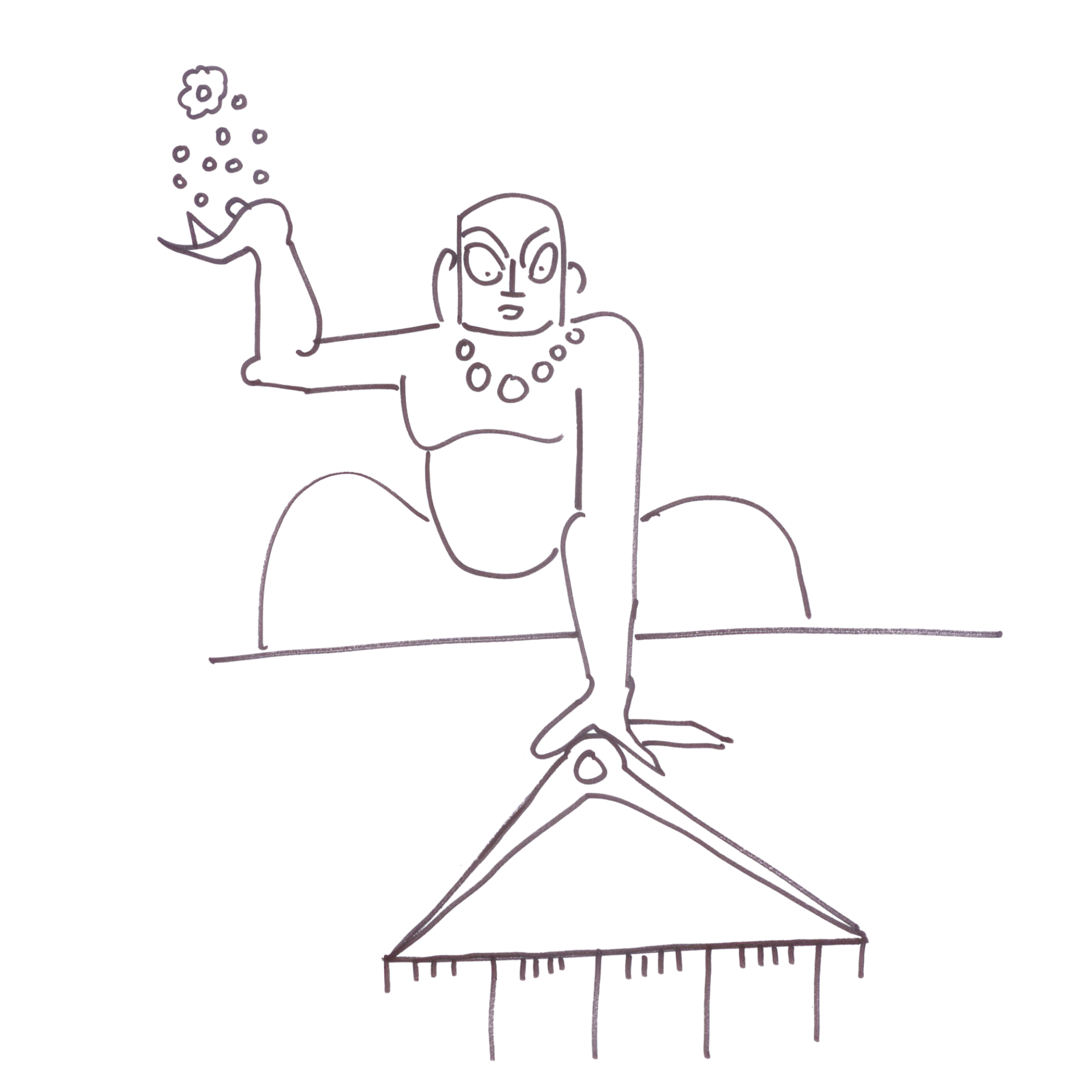
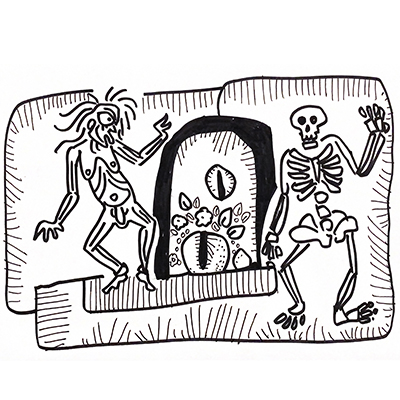
When one visits the many temples of Kathmandu, Bhaktapur and Patan, in Nepal, one notices something very peculiar. All goddess temples have guardians on either side of the door. On one side, the guardian is a skeleton. On the other side of the deity is a hermaphroditic figure. This figure has both male and female genitalia. This is consistently found in all goddess shrines.
The deity is not represented by an image but by a crevice, or gap in the wall or the floor, representing the womb or the vagina of the goddess. She is addressed as Ajima or the great grandmother of all the local goddesses. These shrines are found in almost every neighbourhood of Kathmandu. They are often surrounded by a circle of stones indicating that these practices could perhaps be as old as civilisation itself. But with the progress of time, there were walls built around these temples. With the walls, came doorways. With the doorways, came the door keepers.
Why do Tantrik temples have such unique doorkeepers? In all probability, it is related to the very tantric and ayurvedic beliefs about male and female principles. Traditionally in Tantra, from the father, a child gets bones and nerves, while from the mother he gets flesh and blood. Perhaps, the skeletal image represents the male principle. The hermaphroditic image represents the female principle of flesh and blood. Why is it a hermaphrodite? This is because both male and female genitalia are forms of the flesh. In most places, the male organ predominates the female organ, suggesting male to female transgender. But, in the Annapurna temple, one finds female to male transgenders, where the breasts predominate.
From a tantric point of view, the skeleton reminds us of what is common in all. It is the Purusha, the consciousness that has no gender. It is that which cannot be measured. While the flesh indicates that which distinguishes us. It is what gives us our gender or our sexual identity. It depicts our physical body. When you see a skull of a person, we do not know who it belongs to. We recognise people from the flesh and skin they have. Thus, this reminds us that identity comes from the flesh. But we need not forget that beyond the flesh is the skeleton, the ash that is common to all of us.
The two images draw attention to what is common in all humans. It shows what distinguishes each human from the other, what makes us unique, and what also makes us part of the mass. In ancient traditional practices, symbols were used to communicate profound ideas. If we pay attention to them, we understand the greater meaning. Hence, importance is given to the practice of darshan, or seeing. Visiting Nepal’s many goddess shrines demands that we pay attention to these door keepers of the goddess. They remind us of a Tantric past, which has been forgotten in India but remembered in Nepal.