In a Sikh Langar, we usually find vegetarian food being served. This is not because Sikhism promotes vegetarianism, but because it allows people of all faiths to eat the food without concerns about how the meat has been prepared. In the 15th century, the first guru, Nanakji said, “As long as human beings need water, they will eat all kinds of food, whether from plants or animals, and therefore it doesnʼt matter.” He was aware that since Sikhism was challenging the caste system, it did not want to bring in a new set of rules that would again create division in society.
In the 16th and 17th centuries, with the rise of North Indian Vaishnavism, vegetarian food started to be seen as a counter to the Islamic way of eating, which is based on Halal meat, where a hooved animal is slowly bled to death — a way of eating that is mandatory in the Islamic world. Consequently, vegetarianism became a widespread idea across religious institutions, especially amongst the 10 per cent elite classes of North and South India.
Vegetarian food also became a strong indicator of caste hierarchy. The gods of the elite avoid meat consumption. The old Tantrik ways of offering meat and alcohol to deities was seen at best as a subaltern practice. When Jains and other trading communities took over goddess temples, they told stories of how the goddess gave up meat and chose to eat sweets instead, under the influence of monks. Thus, diet was a marker of civilised conduct, and of identity politics.
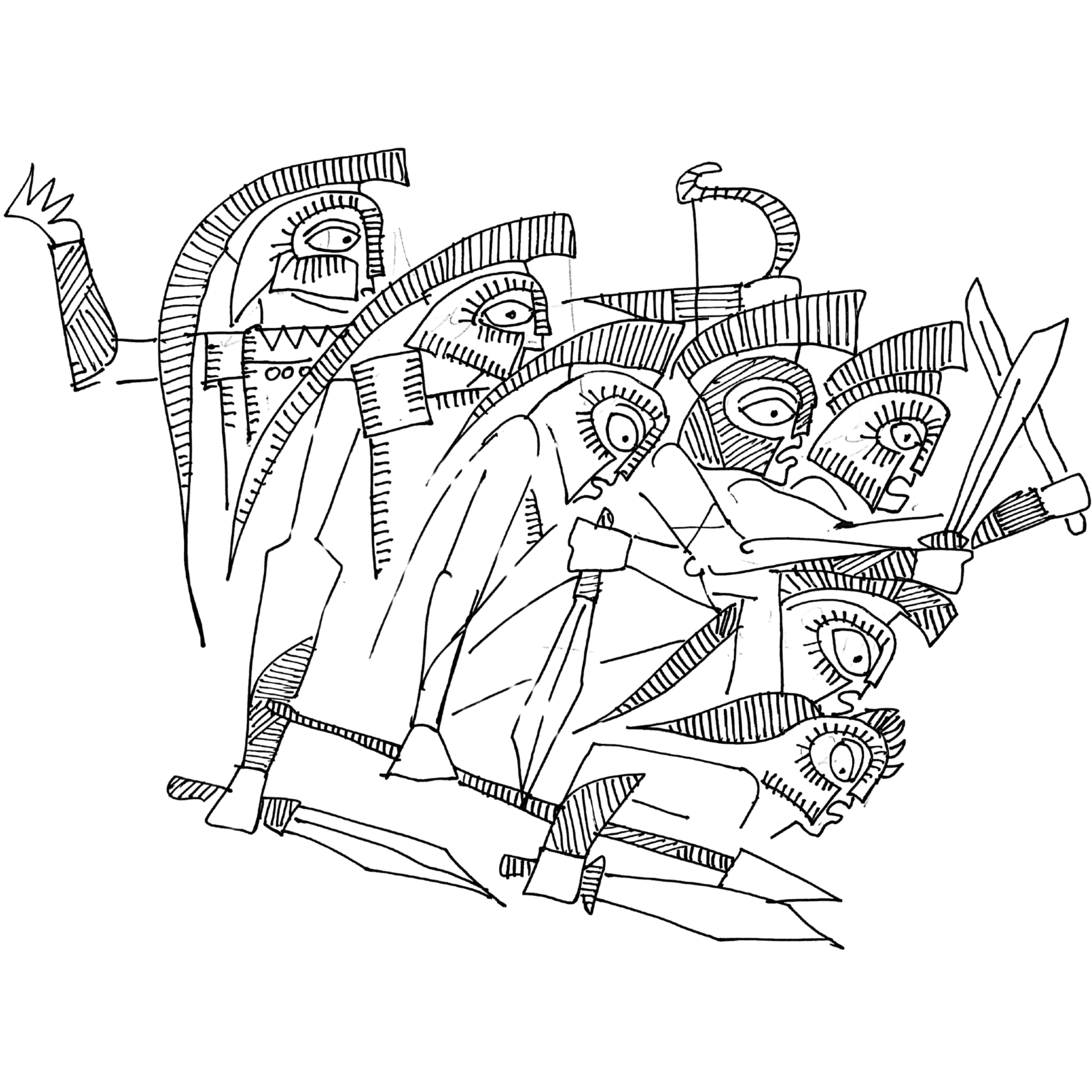
During the World Wars, the British had to take soldiers from India to different parts of the world. This was problematic as traditionally crossing the sea was associated with loss of caste. Allowances were made as people were slowly migrating to Africa and Europe for better life prospects, and therefore soldiers agreed to travel to foreign lands to fight battles for the British Empire. However, they insisted on being given food that was caste-appropriate. Most of the soldiers belonged to the Rajput communities; some identified themselves as Muslims, some as Hindus, and some as Sikhs, all with different eating habits, especially regarding meat.
The Muslims needed to eat meat which was Halal, involving slowly bleeding the animal to death. The Rajputs preferred Jhatka, where the animalʼs head is sliced off in a single stroke, avoiding slow bleeding. The Sikhs were particular that they would not accept food offered as part of a sacrifice, for example, to the Rajputʼs goddess; therefore, it should not be offered to any deity or image. The British, for the first time, realised the importance of diet rules in managing the army, and this is when the whole rationing system became very important.
People who have studied these documents have realised how important these matters were. At one time, facing starvation, the British commander suggested that they eat horse meat, and every Indian across caste and religious lines refused, saying that this would lead to loss of caste when they returned home, should the news travel back.
There are legends of Muslim traders who went to Mongolia and met the Khan there, the Khan invited them to a meal. They refused to eat the meat offered by the Khan because it was not in the Halal style, angering the Khan, who beheaded all these Muslim traders. Thus, we see that matters of food take precedence over matters of human relationships, as one feels one is more answerable to divine authority than to people around each other, and this is usually the cause of conflict.
Vegetarianism in India emerged with monasticism — with the early monks. It was a sign of a simpler life, shunning rich spicy food, avoiding intoxicants and other indulgences of pleasure. But over time, vegetarianism became about purity and holiness. The pure and holy ones shunned meat. So, from ‘simplicityʼ (which lowers the ego) vegetarian food became about ‘purityʼ (which amplifies the ego). Just as vegetarians compete with each other in various ways (shunning garlic, for example), meat-eaters compete with each other on the way that animal has been killed for consumption, or which meat or which part of the animal is consumed.
All this reveals how food becomes a tool of boundaries, hierarchy and identity in politics and religion, even when feeding is performed as an act of generosity and gratitude.