A popular new-age guru once proposed a fanciful explanation for the meaning of the word Bharat, tracing its etymology to raag (melody) and taal (rhythm). Another claimed that Bha means light and Rath means dark, interpreting Bharat as “the movement of light against darkness”.
These kinds of creative etymologies are often used to argue that Bharat is an indigenous name, while India is a western imposition. However, such interpretations are politically motivated. The word India originates from Sindhu, meaning river. In Persian regions, Sindhu was pronounced as Hindu, while the Greeks referred to it as Indu. Thus, Sapta Sindhu, the land of the seven rivers, became Hapta Hindu in Persia and Indica among the Greeks.
Around 500 BC, the Persian king Darius referred to the Indus valley region as Hindush in his inscriptions. Nearly 1,500 years later, the Arabs still referred to the land watered by the Indus as Al Hind.
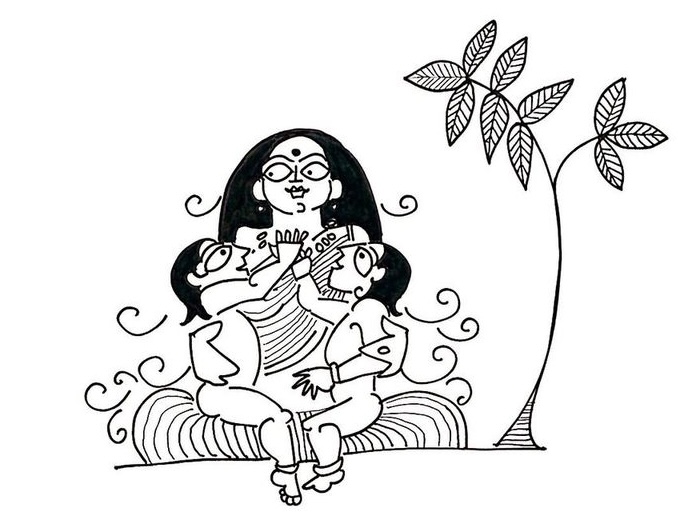
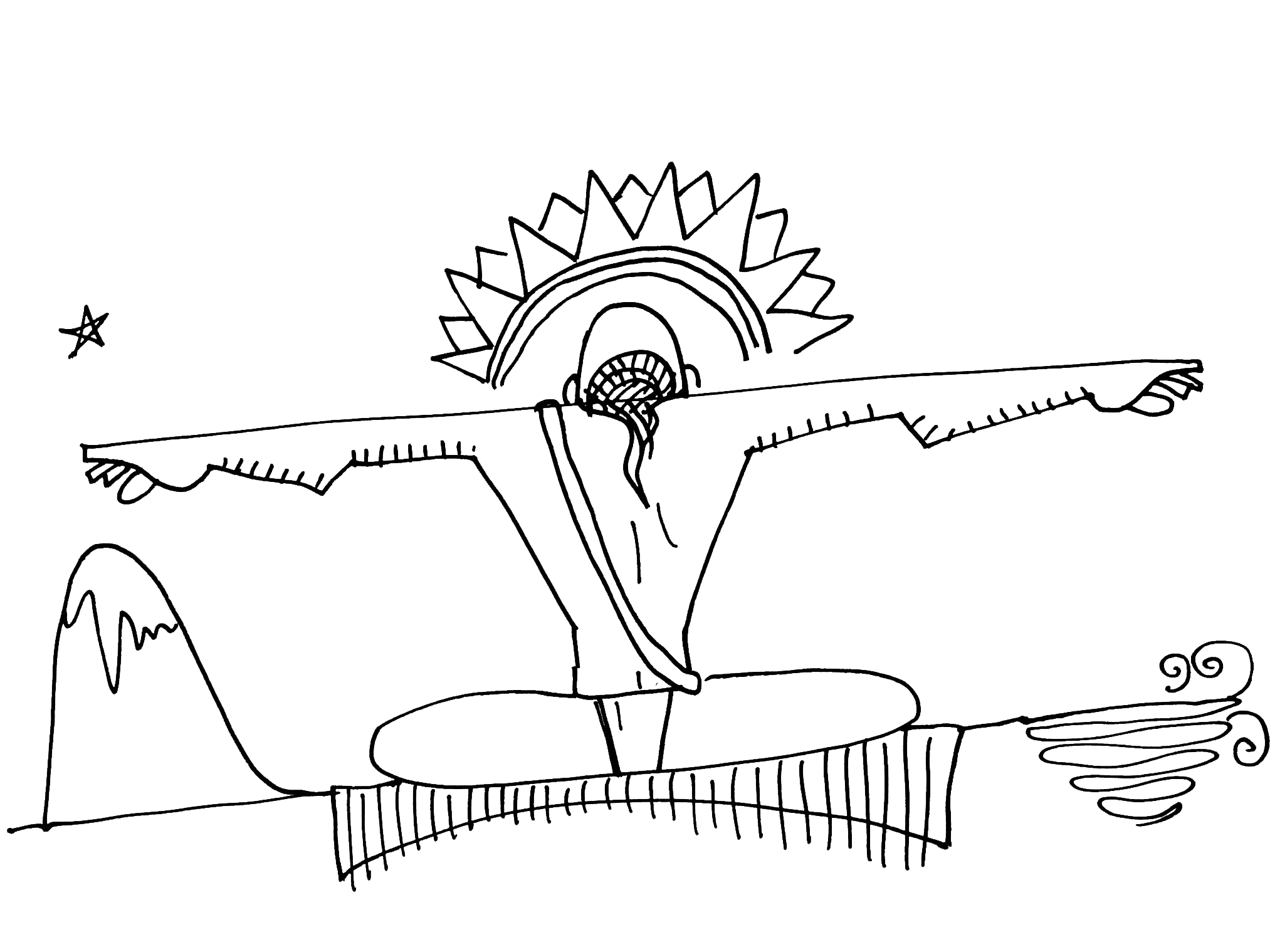
It is as simple as that, yet some prefer to complicate matters. If one wishes to delve into etymology further, one could argue that India derives from Indu, meaning moon. Indumati was the name of Ram’s grandmother, the wife of King Aja of Ayodhya. In contrast, Bharata is linked to Bha, associated with the sun. Thus, India represents the lunar dynasty, whose kings’ stories are told in the ‘Mahabharata’, while Bharata represents the solar dynasty, whose kings’ stories are recounted in the ‘Ramayana’. The moon is linked to water, and therefore to Sindhu (the river), while the sun is linked to fire, and therefore to kingship. From flowing waters emerges the concept of the Apsara, the celestial maiden of delight. From the leaping flames of fire arises the Tapasvi, the ascetic who generates inner heat through austerities. The Apsaras and Tapasvis represent two extremes of Indian thought — the former embodying sensual pleasure and the latter symbolising spiritual discipline. In this sense, India could be seen as the feminine name of the country, while Bharata represents its masculine counterpart.
Etymology can be a tool to unite people, but politicians also find ways to use it for division. It is worth noting that much of the lower part of the Sindhu river flows primarily in present-day Pakistan, which may contribute to some discomfort with the name India.
The earliest epigraphic evidence of the name Bharatvarsha is from the 100 BC Khandagiri caves of Odisha. The king who commissioned this claims that Bharatvarsha was located to the north, in the Gangetic plains. If one were to nitpick, one could argue that both India and Bharat historically represented only parts of northern India and did not encompass the entire subcontinent.
Ashoka, in his inscriptions, described India as Jambudweep, meaning “the land of the Indian blueberry”. It is said both Ram and Krishna had the complexion of this fruit, known as Jambu or the Malabar plum.
The name Aryavarta, or the land of noble folk, is used in the ‘Dharmashastra’ texts. Poetically, it was the land where the black buck roamed. The early texts refer to the region between Yamuna-Ganga as Aryavarta. But the area expanded to include a wider area from Himalayas and Vindhyas, and later from Himalayas to the sea. This happens from 300 BC to 300 AD as more and more Brahmins began migrating southwards as indicated by land grants in the river basins of the Sabarmati in Gujarat, Mahanadi in Odisha and Godavari of Maharashtra, Telangana and Andhra Pradesh.
In the late ‘Bhavishya Purana’, the northern Aryavarta is distinguished from Sindhu-desha of the west and Dravida-desha, the south, all three being part of Bharatvarsha. So these names show a remarkable flexibility as the people who wrote them did not carry burdens of the 21st century nation-state. Ultimately, it depends on how we choose to interpret words. If we seek to use them to unite a nation, we can. If we wish to use them to divide, we can do that too.