When we speak of Indian epics we generally refer to pan-Indian Sanskrit epics such as the Ramayana or Mahabharata that spread across India through pilgrim routes and royal courts via Brahmin storytellers. But India is replete with regional epics that are often overlooked as they are composed in a local language and deal with local issues. So someone in Karnataka may never hear of the stories of Pabuji and Dev Narayanji narrated in Rajasthan. Someone in urban Odisha may never hear the epic of Kotrabaina, known to Odisha’s tribal cattle herding Gaur community. So it is not surprising that people outside Tamil Nadu have never heard the story of Madurai Veeran.
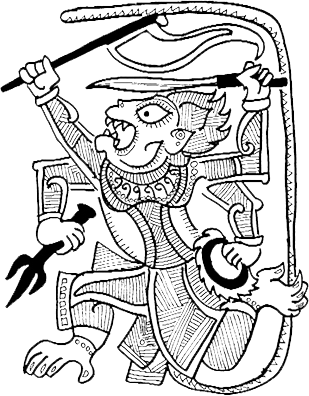
He was an extremely handsome and powerful young man. On one rainy day, his father tells him to guard the palm leaf house of the local chieftain. Here, he encounters the chieftain’s daughter. The two fall in love. Realising the differences in their social status, they decide the only way to be together is to elope. They are naturally chased by the chieftain, the girl’s maternal uncles, and their soldiers. This leads to a battle in which the hero successfully overpowers his opponents, and they escape to the city.
Kings and thieves
Over time, the young man gains the reputation of being a fierce warrior who fights and defeats cattle thieves and raiders. He is invited by many people, including traders, farmers, and herdsmen to protect their wealth. Eventually, the local Nayaka king invites him to get rid of the thieves in his cities.
During his stay in Madurai, Veeran sees the royal dancer and they fall in love. When news of this reaches the king, he becomes jealous. Courtiers tell him that there is a delay in catching thieves because the hero is plotting with them to overthrow the king.
The king is thus convinced to arrest the hero and have him punished. The most brutal punishment is meted out. Veeran’s hands and legs are cut so that he bleeds to death. The two women who love him, the chieftain’s daughter and the royal dancer, rush to his side and are unable to bear his miserable fate. They beg the goddess Meenakshi of Madurai to come to his rescue.
Hearing their pleas, the goddess restores the limbs of the hero, but he uses them to cut his own head as he refuses to die by other people’s hands . The hero is cremated, and the two women leap into the funeral pyre to be with him forever. This is just one of the many versions of the story.
Each retelling of the hero’s tale draws attention to different aspects of his life. The most obvious being caste and class differences. Social mobility is only possible in traditional society through meritorious deeds, consolidated by marriage. The hero’s merit, his ability to catch thieves and protect the village, earns him a lot of respect: but it is only consolidated when he marries a woman of a higher caste.
Fatal jealousy
In some versions, we are told that Veeran is actually a prince. The king was forced to abandon this child and he was adopted by a childless couple of humble means, much like Karna of the Mahabharata. In some versions, he is actually a god. This makes his love for the chieftain’s daughter not an act of transgression, but rather a royal or divine right, within dharmic rules.
The story is told differently to different audiences. When the story is told to women, it is the man who makes the first move. When the story is told to men, the women make the first move.
Finally, we see the story of jealousy. The king is jealous that the royal dancer prefers this virile youth over him. We may speak of meritocracy and choices; but the fact is human culture functions in very different ways.
The narration of the story is a subtle way of getting the community to appreciate hierarchies, boundaries and human behaviour. Images of Madurai Veeran are found across South Indian temples. He has become a guardian god whose images are placed near goddess temples, especially the magnificent Meenakshi temple. He loves offerings of food, and even cigars, to satiate his vast appetite. He is even offered clay horses in exchange for protection and fortune.
Similar offerings are made to folk heroes and guardian gods across India. Golu-devata of Uttarakhand, Dev Narayanji of Rajasthan, Dharma Thakur of Bengal. All these stories invariably deal with strong men who transgress caste and class barriers through violence and love, but usually turn out to be secret sons of gods and kings.