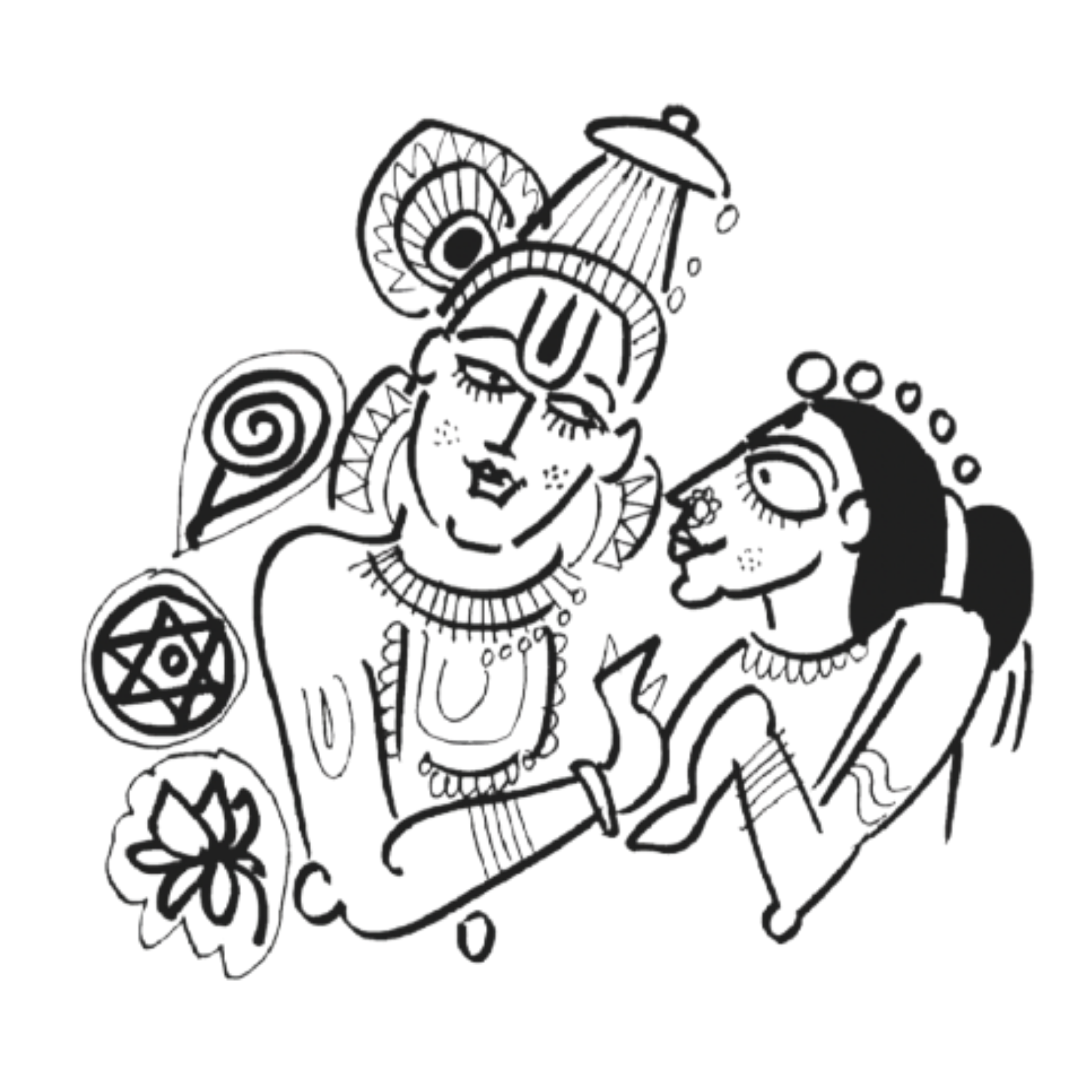
In Indian mythology, Vishnu is described as the beloved of Lakshmi. His names are Sri-vallabha, beloved of fortune, and Sri-nivasa, abode of fortune. In art, the goddess is shown residing in his heart, or seated by his side. When he reclines, she is at his feet. This pairing is a metaphor. It explains why some leaders naturally attract opportunities while others struggle. Lakshmi follows Vishnu because Vishnu embodies the qualities that fortune favours.
The first quality is balance. Vishnu reclines on a serpent and rides an eagle. The snake represents the ground reality, the tactical view, the daily struggle. The eagle represents the strategic view, the big picture, the long horizon. Most leaders fall into one camp — either overly tactical or overly strategic. Vishnu holds both. He can see the forest and the tree. Lakshmi gravitates to those who can manage both detail and vision. The serpent and the eagle are natural enemies. Those who think tactically usually fail to see the strategy and those who think long-term forget short-term goals. Vishnu balances both.
The second quality is adaptability. In different eras, Vishnu appears as Ram or Krishna. Ram is in Treta Yuga and Krishna in Dwapara Yuga. Ram’s era is more stable than Krishna’s. Ram has to deal with enemies who break rules while Krishna has to deal with people who manipulate the system and pretend to follow rules. Ram follows rules, upholds order, and flourishes in a stable market where consistency matters. Krishna bends rules, navigates chaos, and thrives in a volatile market where innovation is essential. Leaders who cling to one style often fail when circumstances shift. Vishnu adapts, and Lakshmi flows towards those who adapt with intelligence rather than panic.
The third quality is integration. Vishnu unites rivals. He gets the Devas and the Asuras to churn the ocean of milk for its treasures. The Devas do not share the treasures and so get trapped in an endless cycle of war. In his imagery, the serpent and eagle — natural enemies — coexist. This symbolises the ability to make competing interests collaborate. In any organisation, departments fight for budgets, teams compete for credit, and egos clash. The leader who can get rivals to work together becomes a magnet for opportunity. Lakshmi follows unity, not conflict. A good leader is able to harness the tension between competing groups, get them to help rather than hurt each other.
The fourth quality rests in Vishnu’s four hands, which represent four leadership actions. The shankh, or conch, stands for communication. A leader must speak clearly and repeatedly so that the team knows what to do. The chakra stands for review — constant monitoring and feedback. The gada stands for discipline — enforcing standards and consequences. The lotus stands for appreciation — recognising good work. Two actions are pleasant, two are painful, but all are necessary. Leaders who practice all four hold Lakshmi close.
The fifth quality is resilience. Vishnu lies on the ocean during pralaya, the cosmic flood. He rests even when the world collapses. This symbolises calm in crisis. Leaders who remain steady, who do not lose their mind when circumstances deteriorate, inspire confidence. Lakshmi prefers calm seas, not choppy waters.
Vishnu does not chase Lakshmi. He attracts her. Through balance, adaptability, integration, discipline, communication and appreciation, he becomes her natural home. In the corporate world, titles and designations do not bring fortune; temperament and behaviour do. A leader who thinks like Vishnu becomes the chosen companion of Lakshmi.