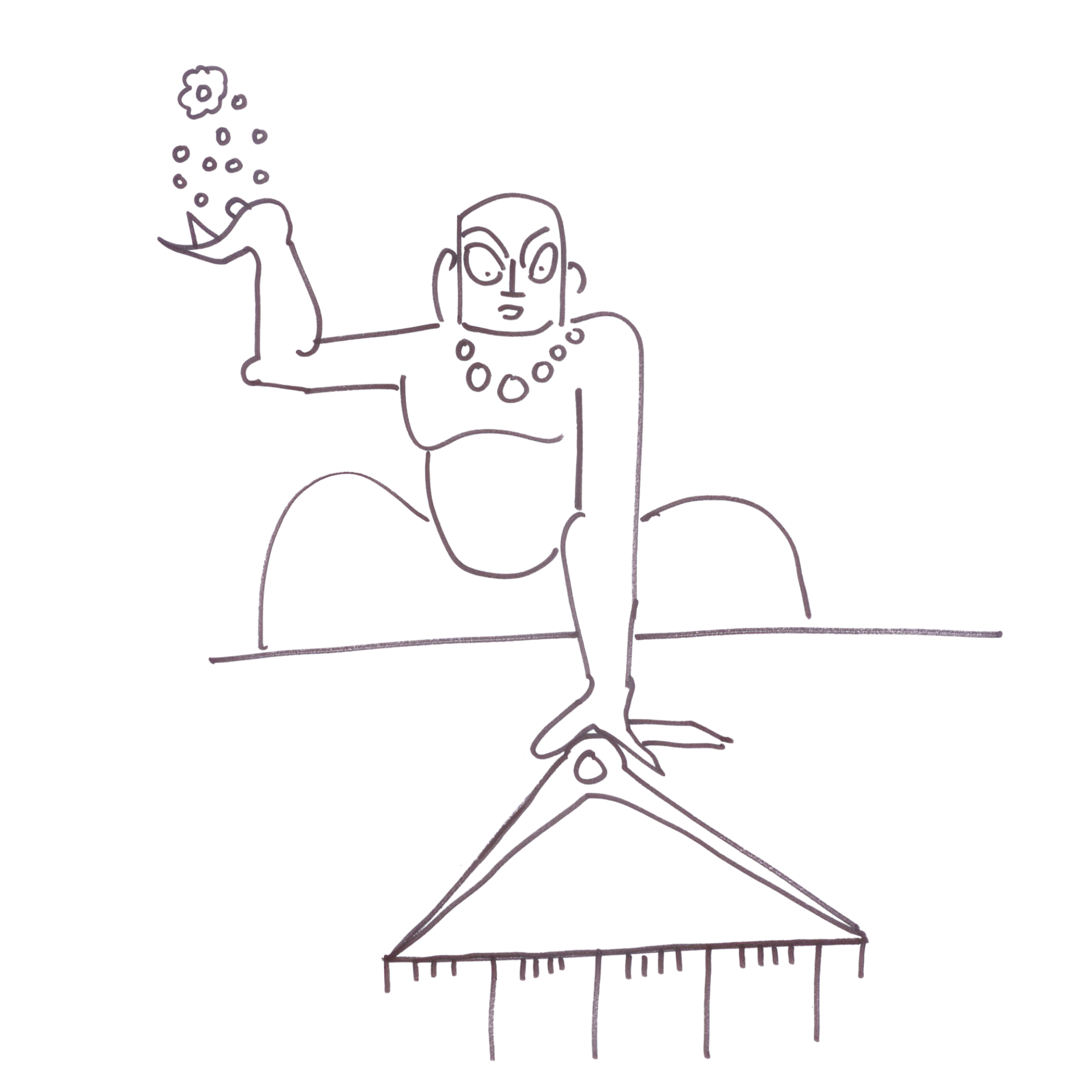
Hanuman wrote Ram’s name on rocks while building a bridge to Lanka. The Mahabharata was written by Ganesha who used his tusk as his stylus. This gave rise to the community of scribes known as Kayastha in North India and Karanam in South India. To save themselves from Parashuram, many warriors became scribes and turned their swords into styluses. That’s another legend on the origin of scribes. But what script did they write in?
Brahmins preferred oral transmission of ideas. So did the Buddhists. Brahmins remembered the hymns composed by Rishis in a complex mode of repetition (patha). Knowledge of various subjects was transmitted as terse sentences (sutra) and rhythmic poetry (shloka). At Buddhist councils, monks would chant all that Buddha had spoken to ensure the transmission was standardised. But while Brahmins managed to keep the fidelity of Vedic hymns, many Buddhist schools emerged with many different ideas.
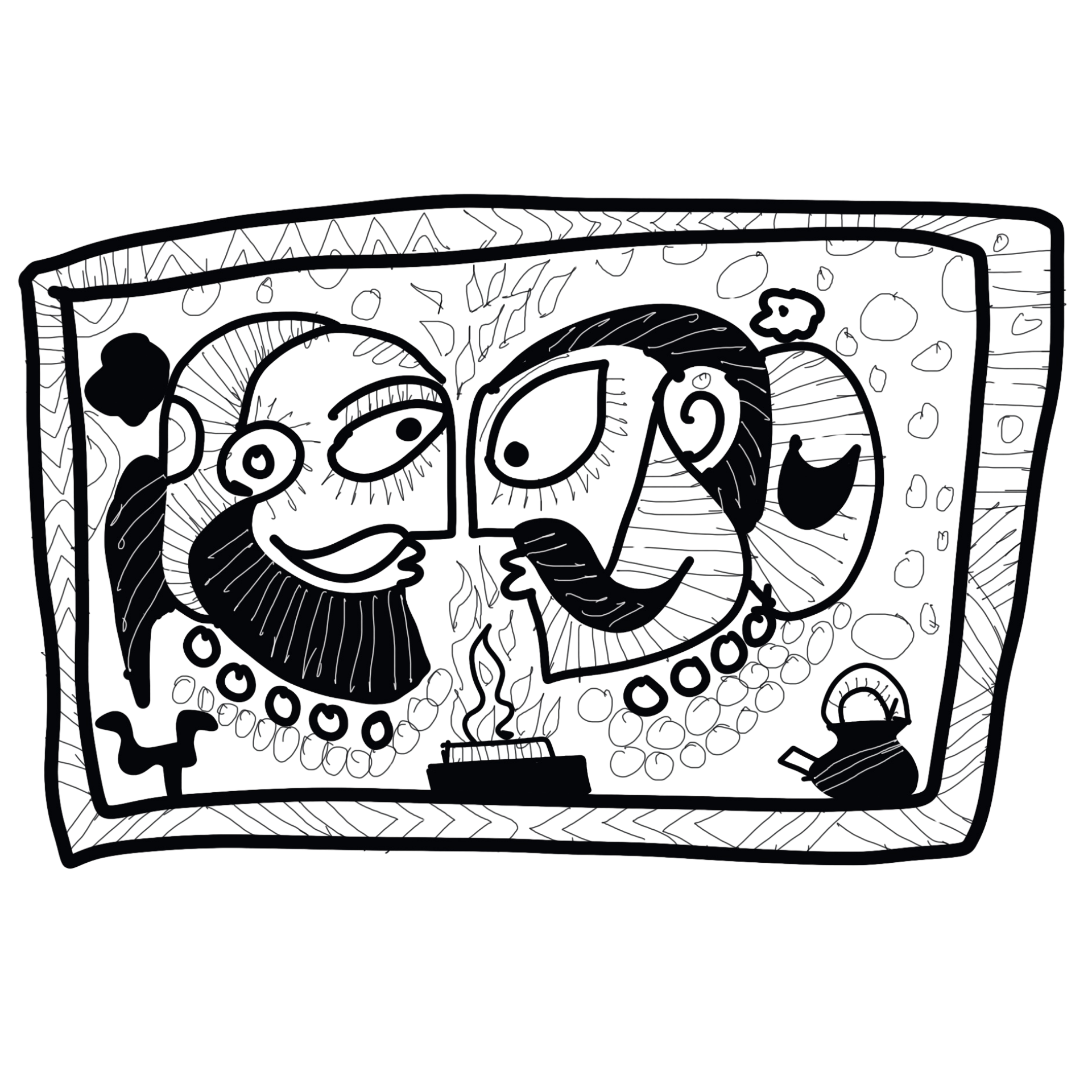
Digambar Jains, who migrated south, argued that all oral transmission of Jain teachings was lost during a famine, and rejected what Shvetambara Jains of Magadha remembered. There was clearly a lot of tension between different monastic and religious schools (pasanda) on what their teachers said and what they did not. This may have prompted Ashoka, the Mauryan king, to adopt writing and prevent loss in transmission.
Brahmi, Semitic and Asian scripts
The Ashokan script is popularly called Brahmi, though we do not know what it was referred to then. It is an abugida script – so there are consonants and vowels. The two are used in a creative way to generate syllables. So, it is also a syllabary script.
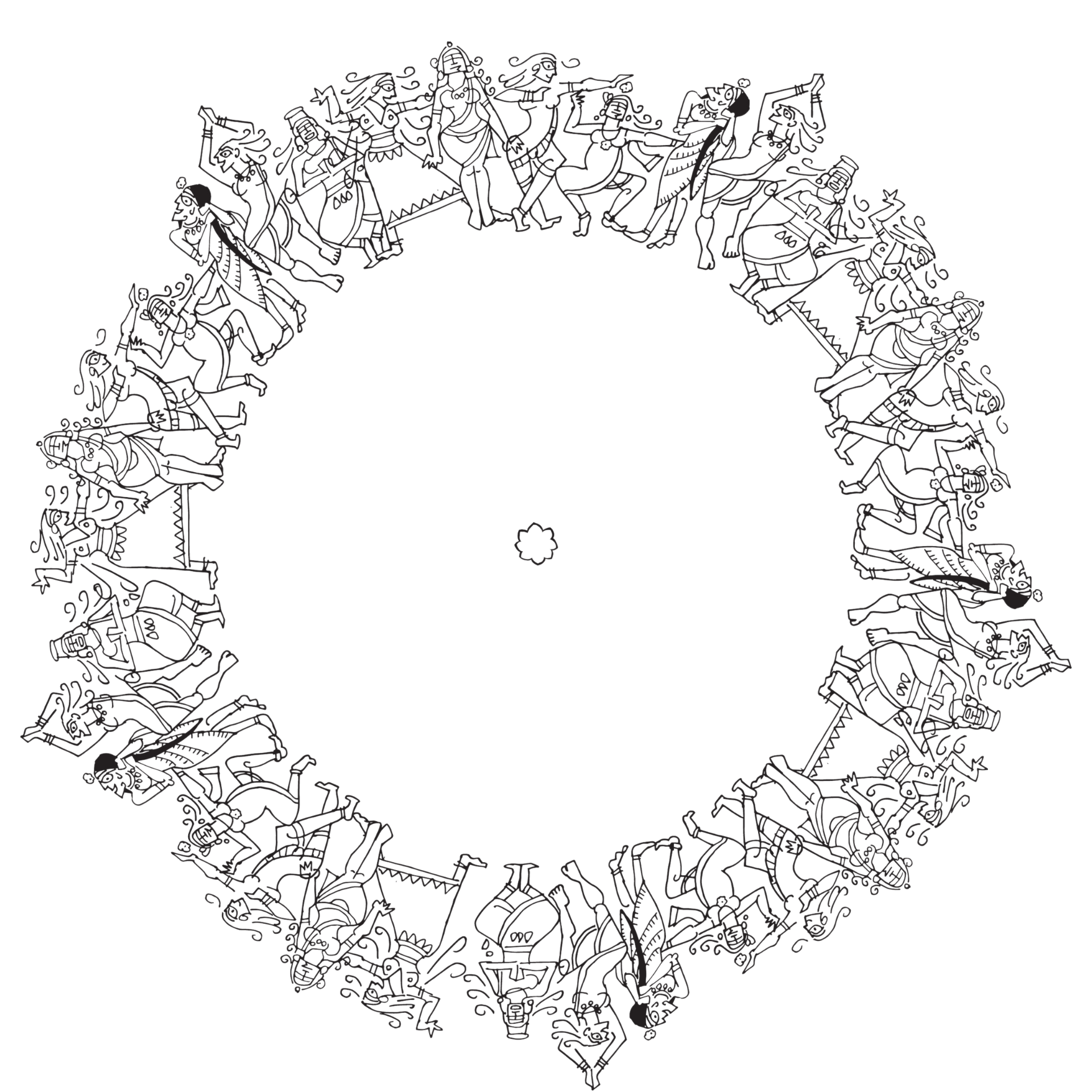
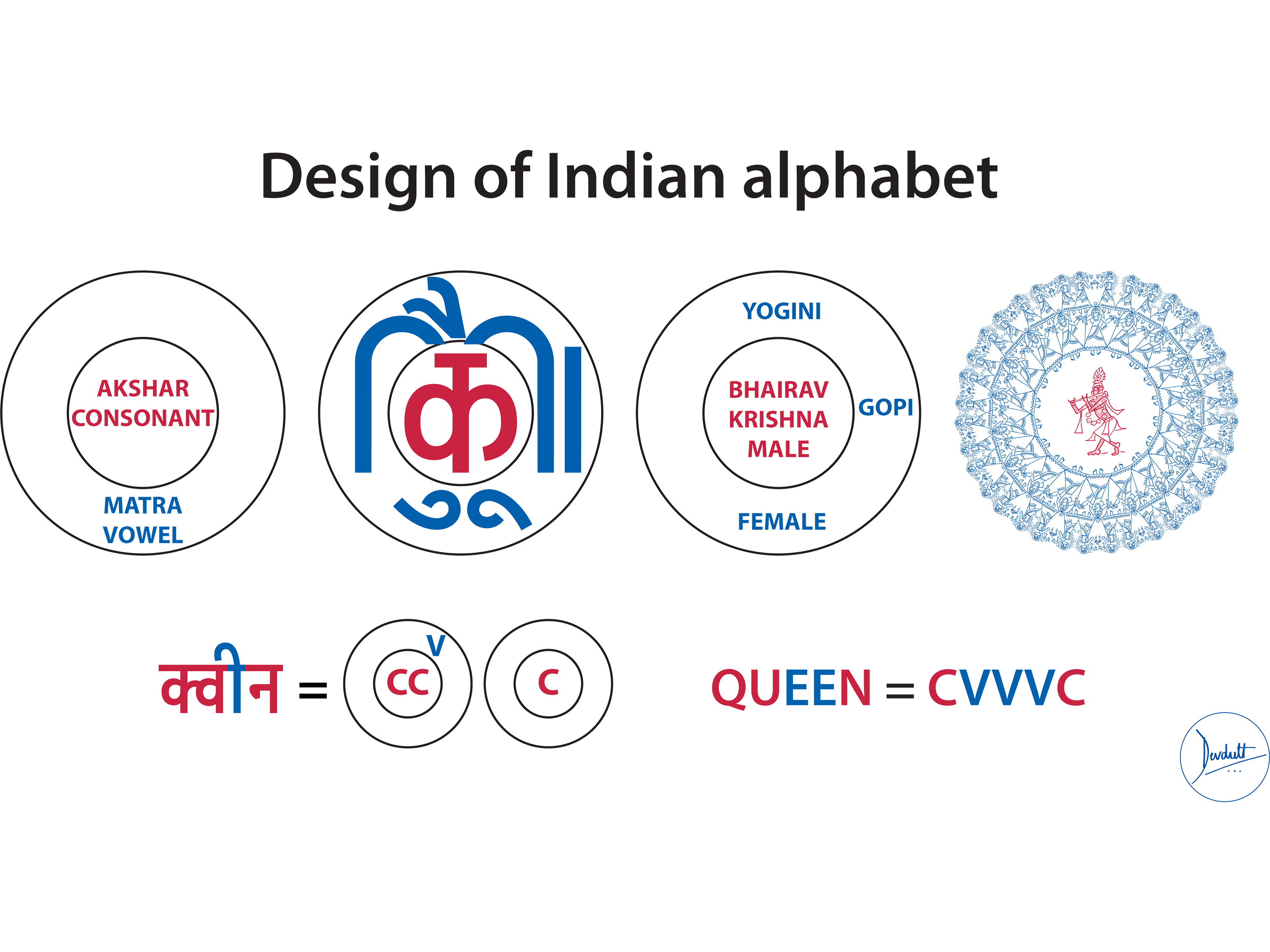
The consonants are known as ‘aksharas’ (eternal sounds) and the vowels are known as ‘matrikas’ (mothers). Typically, the consonant is placed in the center and the vowel markings are made around the center. Interestingly the akshara is considered masculine while the matras are considered feminine. The feminine vowels are located in a circle around the masculine akshara almost like the milkmaids dancing around Krishna or the Yoginis dancing around Bhairava.
This circular design, like beads on a string, is very distinct from the linear Greek script, where consonants and vowels follow one another like ants in a line. Both are written left-to-right, but in Brahmi scripts the vowels are merged with consonants, and not kept separate.
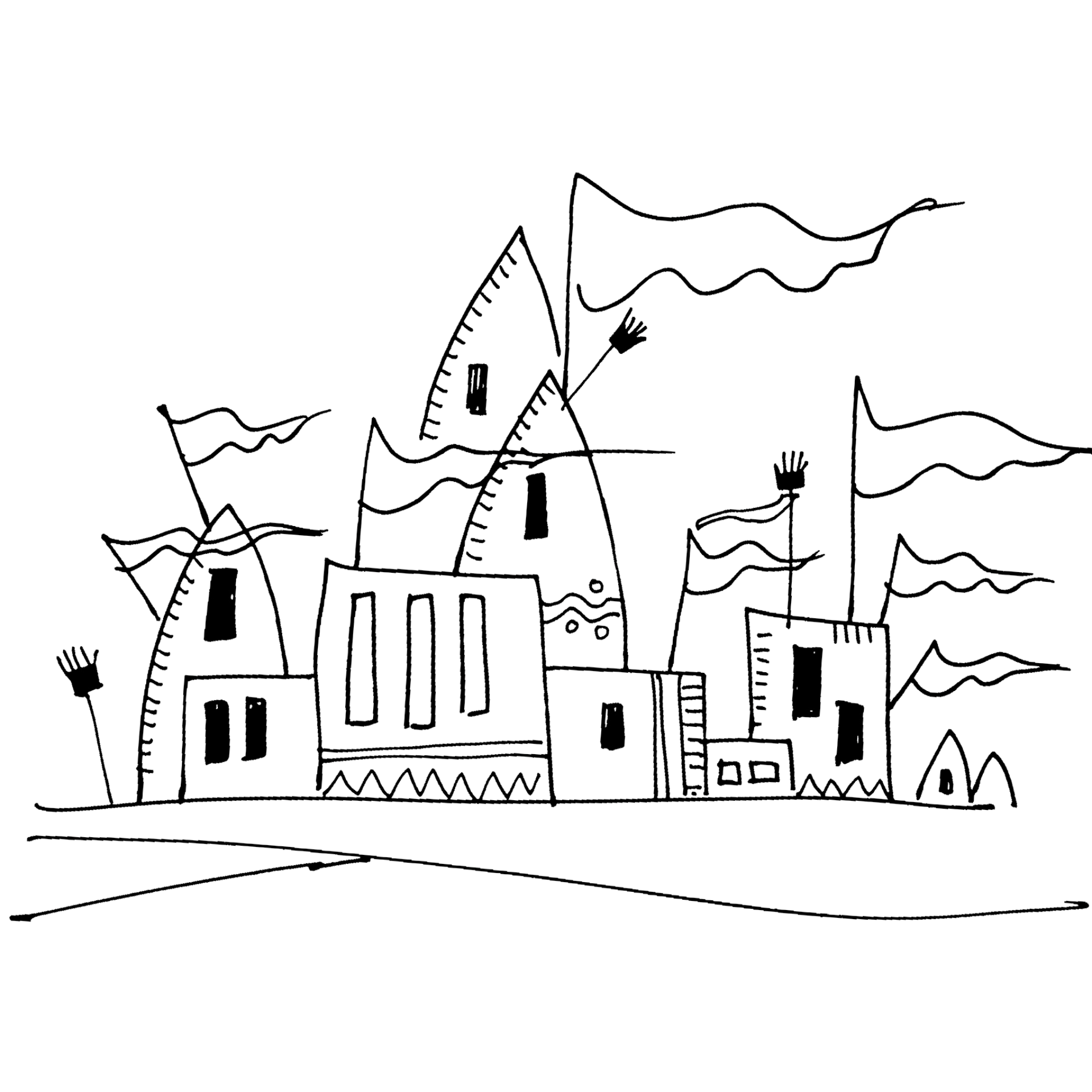
They are distinct from the Semitic script. Not only are Semitic scripts written right-to-left, they are very linear, a series of hooked dashes, with minarets and dots in between, like a silhouette of an Arabian city. The Chinese, Japanese and Korean scripts are also like beads on a string – but the beads are square while the Brahmi beads are round.
Legacy of Brahmi script
North Indian scripts and South Indian scripts have a common origin in Brahmi. But North Indian scripts have sharper lines because it was written using a paint brush on birch bark (Bhoja Patra). South Indian scripts were circular because they were written on palm leaves (Tada Patra) using an iron stylus. Since sharp angles with iron stylus could tear the palm leaves, scribes developed rounded letterforms. Black powder was sprinkled on the leaves to enter the etchings.
In the south, the Vatteluttu (round) script and Grantha (knot) script evolved from Brahmi. Vatteluttu was used to write Tamil while Grantha was used to write Sanskrit. South Indian circular scripts traveled with Buddhist monks and Hindu merchants to Southeast Asia which is why there are local varieties of the Brahmi script, with vowels dancing in circles around consonants, and the design like a set of circular beads on a string.
The Nagari script of the Gupta period split three ways – Siddham script in the east, Sharada in the north and Nagari in the west. Siddham was used in Sanskrit texts found in Tibet and in the Bengali language. The Gurmukhi script today is based on the Sharada script that was once popular in Kashmir and bears the name of the goddess of learning in the Valley. Sharada is also the name of the goddess venerated by Adi Shankaracharya in his institutions. Devanagari spread to the west and is seen in Gujarati, Hindi and Marathi.
Devanagari, which was established by 1000 AD, became very popular in the 19th century. It was used in nearly 100 languages, the most popular among them being Hindi. Sanskrit, which has no script, began to be written using the Devanagari script. But it was written in other scripts too before the 19th century, something that is often forgotten today.
The sister script of Devanagari, developed around 700 AD, is known as Nandinagari. It was used for Sanskrit manuscripts of the Vijayanagara Empire and by Madhva Brahmins for their texts on Dvaita Vedanta. Nandinagari does not have the long line (Shiro-rekha) as in Devanagari and so is related in some way to the south Indian circular scripts. Gujarati also removed the upper line (shiro-rekha) to make it easier to write.
Many scribes created their own scripts, usually cursive (where consonants are connected to each other) for easy writing. Some examples include the Modi script used by scribes in western India, the Kaithi script used by Kayastha scribes in the north, and the Karani or Chatta script used by Karana scribes in Odia/Odisha.