
Mythologist | Author | Speaker | Illustrator

-
Articles

Claiming the Earth as Nation
Published on 22nd May, 2022, in Mid-day. In prehistoric times, people captured a hunting ground or agricultural land or pastures by claiming that is where the ancestor was buried. Burial was an important ritual invented by ancient people to claim rights over lands. Later, they invented stories to claim land. The Maori say that their…
-
Articles

Kashmir Before Islam
Published on 21st May, 2022, in Times of India. The Muslims say that Suleiman (Solomon) came to Kashmir on a flying throne (takht), sat on a hill in Srinagar, and got his djinns to clear the lake, get rid of barbarians and create a land of the true faith. But Islam actually emerged in Arabia…
-
Articles

Out of the Woods
Published on 20th May, 2022, in The Hindu. The word ‘history’ as we know it today, which means the scientific evidence-based understanding of the past, is less than 200 years old. The Sanskrit words ‘itihasa-purana’, both of which are translated as history, are over 2500 years old, and refer to cultural memories. But itihasa is…
-
Articles

Why Scholars Don’t Agree About the Origins of the Shivlinga
Published on 18th May, 2022, in Times of India. Orientalist academicians love describing the Shiva-ling as a ‘phallic symbol’ because it irritates the Hindu who prefer to see the object of their devotion as something spiritual, not sexual. For the Orientalist, i.e. Western and Westernised scholar, such descriptions are, at one level, a way of…
-
Articles
How Nepal Came to Be Once Called ‘Asli Hindustan’
Published on 7th May, 2022, in Times of India. In the 18th century, as many tiny principalities and kingdoms of Nepal were being unified to one mighty kingdom, the king of Nepal saw his land as ‘Asli Hindustan’ and saw India as the land controlled by ‘ulta dharma’ of Mughals. Since then Nepal has been…
-
Articles
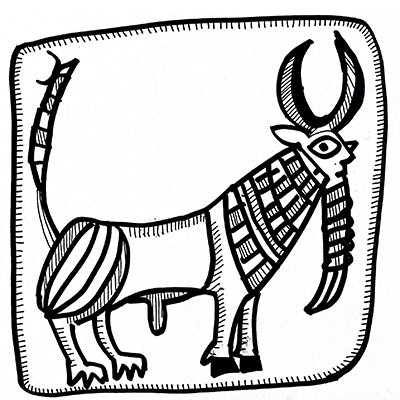
Dogs, Rats, Unicorns and Other Animal Guilds
Published on 30th April, 2022, in Economic Times. Animals have a close relationship with human corporations and guilds. Nearly 4500 years ago, in the Harappan cities of Northwestern India, archeologists have found hundreds of soft stone seals, barely an inch or two long in width that have animal motifs. They are full of marks that…
-
Articles

The Jogi As Seasonal Hermit
Published on 23rd April, 2022, in The Hindu. In North India, especially in the Gangetic plains, in what is now Uttarakhand, Uttar Pradesh and Bihar, we find songs known as Baramasa. It is a 12-month cycle in poetry, expressing the loneliness and longing of a woman in a village, for a husband who is travelling…
-
Articles

Female Voice in Rig Veda
Published on 10th April, 2022, in Mid-day. The Rig Vedic hymns were composed over 3,000 years ago, most probably by children of men who migrated into India with horses from Central Asia, and married local women. The hymns mostly reveal the valours of the fathers, but occasionally the longings of the mother. The marriage hymn…
-
Articles
An Eclipsing of History That Frightens Many Hindus
Published on 26th March, 2022, in Times of India. People forget. If you go to Northwest Pakistan today, the region on either side of the Khyber pass, few will remember that in the Bronze Age, 4000 years ago, it connected Harappan cities to settlements in North Afghanistan, which was the source of the much traded…
-
Articles

How Do We Know What’s History, Myth or Legend?
Published on 12th March, 2022, in Times of India. In ancient times, ‘itihasa’ meant stories ‘witnessed’ by the storytellers. So Ramayana is ‘itihasa’ because it was witnessed by Valmiki who wrote the story. Mahabharata is ‘itihasa’ because it was witnessed by Vyasa who wrote the story. The Brihaddevata is a Vedic text full of such…
-
Articles
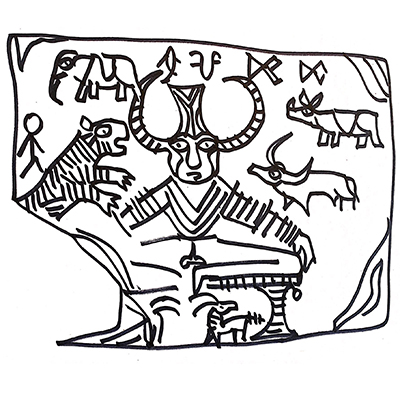
Pashupati and the Harappan Seal.
Published on 25th February, 2022, in The Hindu. We have all heard of the Pashupati seal in Harappa. Scholars are clear that it has nothing to do with Shiva, even though it is still labelled as proto-Shiva in popular books. The Pashupati described in the Veda is the guardian of cattle, animals that have been…
-
Articles
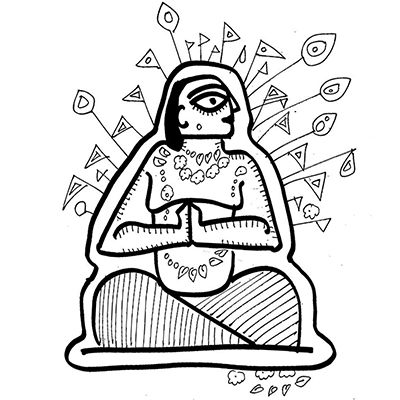
‘Are We Seeking Cultural Unity By Denying History?’
Published on 12th February, 2022, in Times of India. Tall statues of men, using Indian money and Chinese technology, are being built across India to unite India. There is the Statue of Unity of Sardar Patel in Gujarat, the Statue of Equality of Ramanuja-acharya built near Hyderabad, and soon there will be the Statue of…
-
Articles

Ramayana in Jataka
Published on 17th January, 2022, in Mid-day. The Ramayana story reveals the Vedic world that thrived in the Gangetic plains between 1,000 CE and 500 CE, though the story itself came to be written between 200 BCE and 200 CE. Buddhist Jataka tales also written at the same time tell stories that are curiously similar…
-
Books

Bengali: How to Become Rich
Translated version of How to Become Rich: 12 Lessons I Learnt from Vedic and Puranic Stories …
-
Articles

There Is No Yagna Without Yoga
Published on 25th December, 2021, in Economic Times. In the Vedic world, to practice dharma meant performing yagna. Yagna was translated by European Orientalists as sacrifice. But in sacrifice, you give something to appease a deity who needs nothing from you but your loyalty and obedience. In yagna, you exchange. You give in order to…
-
Articles
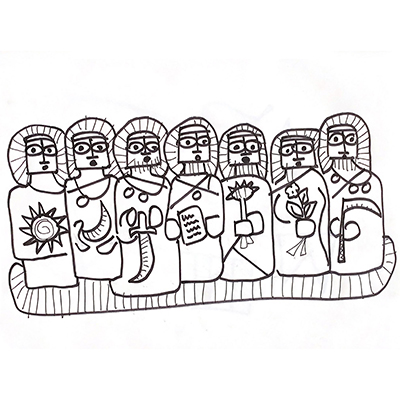
Gods of the Week
Published on 5th December, 2021, in Mid-day. The seven-day-week is not based on any natural phenomena. The ancient Mesopotamians decided that the 7th, 14th, 21st and 28th days after the new moon were days of rest and that is how the concept of the week began. Sumerians believed that the gods flooded the earth for…