
Mythologist | Author | Speaker | Illustrator

-
Articles

‘Dharma’ Always Comes With ‘Dharma-sankat’
Published on 4th December, 2021, in The Hindu. In a crime, the victim accuses the villain. But when the villain counter-accuses the victim, and insists the victim is villain too, we call it ‘whataboutery.’ This word is a neologism, first used in the 1970s in the context of violence in Northern Ireland. Whataboutery creates a…
-
Articles

Was the Harappan Civilisation Hindu?
Published on 28th November, 2021, in Mid-day. We often trace the origin of Hinduism to Rig Veda, dated to 1,500 BCE. But the Rig Veda contains ideas that we can trace to Harappan civilisation. For example, Rig Veda mantra 8.47.17 refers to a measurement system based on increase by a factor of two (1, 2,…
-
Books

Marathi: How to Become Rich
Translated version of How to Become Rich: 12 Lessons I Learnt from Vedic and Puranic Stories Lakshmi is worshipped as the goddess of wealth. Her arrival is considered auspicious, while her departure is bad and inauspicious. In temples, gods are bedecked with jewels; during festivals, our houses are decorated with flowers, lamps and lakshmi’s footprints.…
-
Articles

Hindu vs Hindutva: A Mythic Dissonance
Published on 24th November, 2021, in India Today. Hindus are at odds with the world in terms of its underlying mythic structure. By contrast, Hindutva is very much aligned to the dominant global discourse. We realise this if we meditate on two myths: the myth of equality and the myth of the wound. Myth here…
-
Articles

How Did Hinduism Come to Dominate India?
Published on 20th November, 2021, in Times of India. Nearly 2,000 years ago, there were Buddhist stupas across India. Nearly 1,500 years ago, there were Buddhist caves in the Deccan. But 1,000 years ago, Buddhist structures were overshadowed by Hindu temples. Jain art, which was as popular as Buddhist art, became a relatively minor force.…
-
Articles

How Many Types Of Sanyasis Are There?
Published on 6th November, 2021. in Times of India. The idea of hermits, or the wandering ascetic, unwed, and nomadic, was an idea elaborated in post-Vedic literature, dated to 2,500 years ago, when we started hearing about shramanas India is the land of sanyasis (or hermits) but the hermits are of different types. Harappan seals…
-
Articles
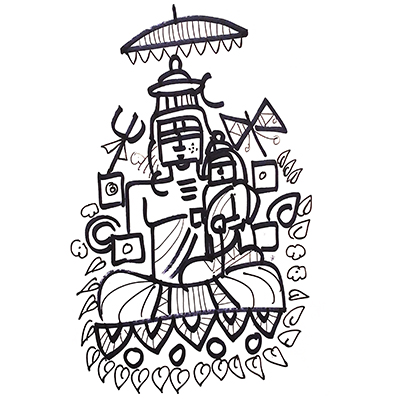
Brief History of Hindu Mythology
Published on 31st October, 2021, in Mid-day. Hindu mythology is not static. It has changed over history. In the Rig Veda (1,500 BCE), we are introduced to Indra. He is a powerful celestial being who rides chariots and who defeats enemies like Vritra, Pani and Vala to secure stolen cows and release water. We don’t…
-
Articles

Activism, Monotheism and Intolerance
Published on 17th October, 2021, in Mid-day. Have you noticed that academicians who say Hinduism is casteist, and promotes inequality, rarely talk about intolerance of monotheistic faiths like Christianity and Islam which dominate the world? Monotheist religions endorse the worship of ‘true’ God and oppose worship of ‘false’ gods, especially idolatry. What is a false…
-
Articles
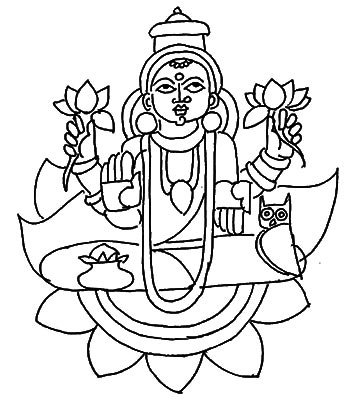
Should a Deity Have Two Arms or More?
Published on 9th October, 2021, in The Hindu. In Kushan coins, minted over 1,800 years ago, we come across images of a woman holding the horn of plenty. She is identified with the Roman Goddess Fortuna, the Greek goddess Tyche, the Central Asian Ardochsho, the Buddhist Hariti, and the Hindu goddess Lakshmi. Images of Lakshmi…
-
Articles

Is Shiva the Destroyer of Evil?
Published on 26th September, 2021, in Mid-day. In popular understanding of the mythology, Brahma is called the creator, Vishnu, the preserver and Shiva, the destroyer. When you ask people why Shiva is called the destroyer, they will answer, it is because he is the destroyer of evil. But if Shiva is the destroyer of evil,…
-
Articles

View: Understanding Economies and Their Role In Rendering Old Models Of Caste Irrelevant
Published on 18th September, 2021, in Economic Times. Caste (jati) is how resources and respect was inherited and distributed in traditional Indian society. The distribution pattern varied across India. The thousands of jatis were classified neatly into a four-fold varna framework found in the Vedas. The four varnas are brahmins, kshatriyas, vaishyas and shudras. The…
-
Articles

Tying the Knot
Published on 22nd August, 2021, in Mid-day. In Hindu metaphysics, yoga is the practice of untying mental knots. Bhoga is the experience of life that creates these mental knots. When we consume life, we experience hunger, fear, delight, jealousy, attachment, rage, greed, frustration, hatred, joy, and these various emotions and stimulations cause our mind to…
-
Articles

A Brahmin in Kerala
Published on 21st August, 2021, in Economic Times. The Puranas tell the story of an asura king called Mahabali who gave people whatever they desired. Mahabali had thrown out Indra, king of devas, who ruled the skies, and now controlled the three worlds: the sky, the earth and everything in between. Mahabali was a generous…
-
Articles

How Did Tantra Spread from India to Tibet?
Published on 14th August, 2021, in Times of India. Tibetan Buddhism is called Vajrayana Buddhism, which is sometimes also called Tantrik Buddhism. Here, women play an important role, which is why the symbols of Vajrayana Buddhism are a double-sided dagger (vajra) and the bell (ghanta), representing male and female principles, which in turn represent the…
-
Articles

From Vedas to Puranas
Published on 8th August, 2021, in Mid-day. Vedas were composed 3,000 years ago, while the Puranas were composed 1,500 years ago. In between, came the great epics, Ramayana and Mahabharata, after the Vedas, but before the Puranas. The two reflect dramatically different world views. Vedas do not factor in monastic ideals; the Puranas do, as…
-
Articles

What Was Hinduism Like Before Temples?
Published on 16th July, 2021, in Times of India. Harappan seals indicate that its residents worshipped trees, and holy men who lived in forests. There are were no temples in Harappan cities. The oldest of the Vedic scriptures, the Rig Veda, was composed 500 years after the collapse of the Harappan cities. It also does…