
Mythologist | Author | Speaker | Illustrator

-
Articles

Krishna’s Sister and the Varying Interpretations Of Her Image
One of the oldest caves (number 27) in Ellora in Maharashtra, has the image of a goddess holding a lotus flower, flanked by two gods…
-
Articles

Who are the power-broking landlord monks of Tamil Nadu?
Sengol is a staff of royal authority. We can call the symbol of justice in the spirit of wordplay, when a symbol of monarchy is made the symbol of democracy. …
-
Articles

Jain Vaman and Jain Parashuram
Published on 23rd April, 2023, in Mid-day. Jainism thrived in the western part of India, along Gujarat coast, around 10th century CE. While Jains thrived amongst merchants, Hindus thrived amongst kings who controlled the agricultural economy. This avoided conflict. However, over time the two became rivals, competing for positions in the royal courts. Both offered…
-
Articles

Forgotten Ballads Of Indian Merchants
Published on 1st April, 2023, in Economic Times. India was famous for trading with Southeast Asia and the Middle East since ancient times. However, Hindu scriptures shunned mercantile economy and focussed on agricultural economy. Value was placed on land tax, not on toll tax. By contrast, Buddhism and Jainism greatly value merchants. This is why…
-
Articles

Why the Location of Shiva’s Pillars Has Become So Controversial
Published on 25th February, 2023, in Times of India. The Assam government’s claim that the Bhimashankar Jyotirlinga is located in the northeastern state has spawned yet another religious flashpoint. This is what happens when mythology is assumed to be history Until recently, most people believed that Bhimashankar Jyotirlinga is located in Maharashtra. But then the…
-
Articles

Veda, Vedanga, Vedanta
Published on 19th February, 2023, in Mid-day. Hinduism can be divided into three major eras. Veda dominated 3,000 years ago, Vedanga dominated 2,000 years ago, and Vedanta became central 1,000 years ago. These are approximations of course, but a good rule-of-thumb to remember Hindu history. The Veda refers to a set of mantras that dominated…
-
ArticlesFeatured

The Forgotten Women Who Helped Shape Jainism
Jainism follows the path revealed by 24 sages known as Tirthankara, who appear in every era of the human age. In the Shwetambar school of Jainism, popular in western India, Parsvanatha and Mahavira, the 23rd and 24th Tirthankaras were married before they became monks. But in Digambara tradition, popular in Gangetic plains and South India,…
-
Articles
How Jainism Spread From North to South In India
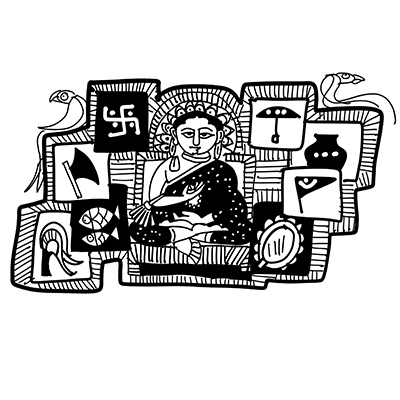
Published on 11th January, 2023, in The Times of India. We are inclined to see religion from a historical point of view, through the lens of time. But we rarely see religion from the perspective of geography. We are told Jainism is an Indian religion but which part of India did it originate from, where…
-
Articles
The Meaning of Contentment
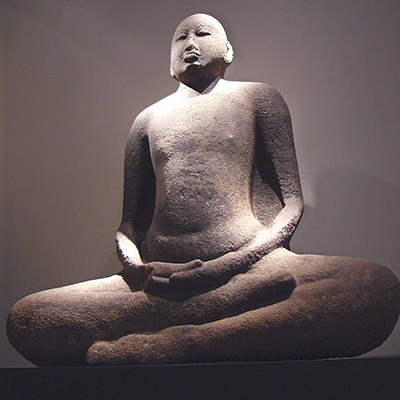
Published on 30th December, 2022, in The Hindu. At the start of anything new, like New Year, Hindus look towards Ganesha. We want him to remove obstacles from our lives, and usher in prosperity. We have been conditioned to see his big belly or lambodara as a symbol of wealth. We have forgotten that this…
-
Articles
How Did Jainism Survive In India?
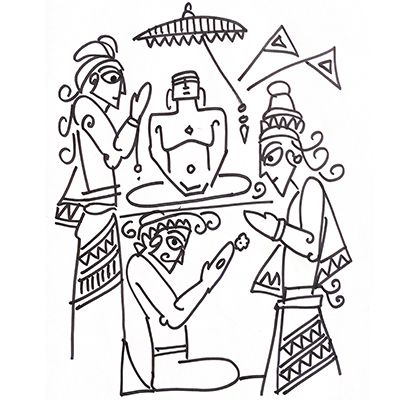
Published on 3rd December, 2023, in The Times of India. Until its revival in the 20th century by Babasaheb Ambedkar — as part of the Navayana movement for Dalit upliftment — Buddhism had all but been forgotten in the land of its birth. By contrast, Jainism maintained a tenacious hold in mainland India. This despite…
-
Articles
American Snakes in Hindu Ganga
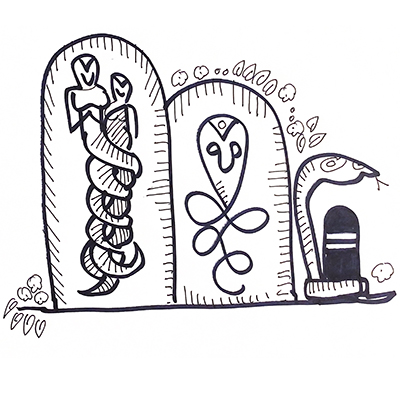
Published on 27th November, 2022, in Mid-day. A section of American Hindus are trying to turn the phrase “snakes in the Ganga” into a neo-Hindutva metaphor for Hinduphobia. This is highly disrespectful to revered Naga-devata or snake deities of Indian rivers and water bodies, including Ganga. This is another case of American Hindu IT engineer…
-
Articles

Why Some Gods Dance and Some Don’t
Published on 6th November, 2022, in the Times of India. One of the things we take for granted in Hinduism is dancing. Hindu gods dance. Shiva dances his Tandava as Nataraja surrounded by ganas and yoginis. Vishnu dances in the form of Krishna as Natwara on the hood of a serpent, or in the Ras…
-
Articles

Again and Again and Again
Published on 6th November, 2022, in Mid-day. In Greek mythology, we hear the story of Sisyphus. The gods condemn him to roll a rock up the mountain all day, only to find the rock rolling down at night. Thus, he is doomed for all eternity, to repeat the task again and again and again. This…
-
Articles
Temples Used to Give Spiritual Benefits to the Market and Get Material Ones in Return.
Published on 15th October, 2022, in Economic Times. Along the banks of the Tungabhadra, the Vijaynagara kings established grand temples in the 14th century. Each temple was attached to a marketplace. There was one temple for the spice market, another for the horse market, and another for the jewellery market. This makes one wonder if…
-
Articles

Why East India’s Contribution to Hinduism Remains Forgotten
Published on 24th September, 2022, in Times of India. Whenever we talk about Hinduism of India, most of the attention is taken over by talk of North India, with Rajput lands to its west and Gangetic plains to its east. Attention then shifts to South India, followed by talk of the Aryan-Dravidian divide. Hardly any…
-
Articles
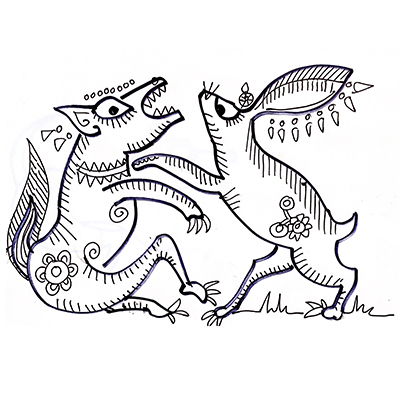
How a ‘Ram Rajya’ Was Established In South
Published on 27th August, 2022, in Times of India. About 700 years ago, on the banks of Tungabhadra, in Karnataka, as per legend, two brothers known as Harihara and Bukka, saw hares turning around and attacking hunting hounds. They realised that land was special – a place of resistance. So they decided to build a…