
Mythologist | Author | Speaker | Illustrator

-
Articles

On Diwali, understanding the nature of wealth through the mythology connected with goddess Lakshmi
Editor’s note: “The living (sajiva, in Sanskrit) seek food, the lifeless (ajiva) and the dead (nirjiva) don’t. This makes food the fundamental target (laksh) of life. From laksh comes Lakshmi. Lakshmi is food (anna) in nature and wealth (dhana) in culture,” writes Devdutt Pattanaik in his book 7 Secrets of the Goddess (published by Westland).…
-
Articles

Acknowledging Islam’s Diversity
At the time of the World Wars, beyond the traditional Shia-Sunni divide, Islam had many regional forms: there was an Arabic form, there was a Persian form, there was the Indian form, there was an Indonesian form…
-
Articles

Who is a Hindu? The temple as saviour
Our monumental temples, such as Puri’s Jagannatha temple, were a reaction to the arrival of a foreign faith, and a sign of resistance to it…
-
Articles
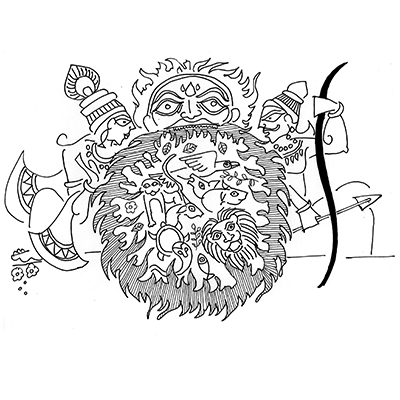
Both Rahul Gandhi & Narendra Modi subscribe to a western, Christian reading of Mahabharata
The villain in Hindu narratives is not evil but is just someone frightened and clinging to wealth, power and throne…
-
Interviews
Maya and Myth
First City Magazine, New Delhi, July 2001. “Sex and violence are fundamentals of life. They rotate the cycle of life. Without sex, there is no life. There is violence every time we eat-when a fruit is plucked, a crop is harvested, an animal is killed. The Upanishads states that made up of the eaters and…
-
Articles

Descendants of Chitragupta
In one story, popular in the Gangetic plains, the god of death, Yama, wanted a scribe to help him keep a record of people’s karma. And so Brahma created Chitragupta (he who knows the secrets of diagrams i.e. scripts), who held in his hand a pen and inkpot…
-
Articles
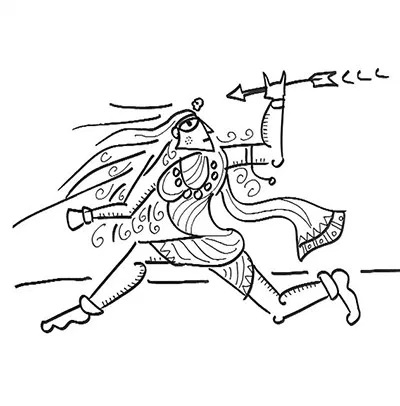
Even the Gods played sport
We can safely say that sport in India began in both agricultural communities as well as martial communities…
-
Articles
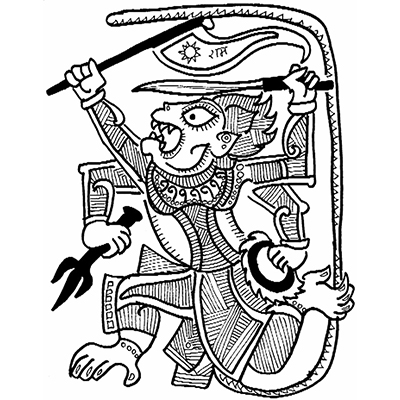
Using Puranas for politics
Politics may change but there is always a political enemy, and so the Puranas lend themselves to serve as communication and even propaganda tools to whip up popular sentiment…
-
Articles

Why are Brahmin and Kshatriya aspirational for most Hindus and not Vaishya and Shudra?
The chatur-varna system or the four-fold division of society was the hallmark of Vedic society. But it is completely theoretical, probably based on “aptitude” rather than “birth” but one is not entirely sure…
-
Articles

Did arrival of Muslim invaders a thousand years ago destroy Hindu culture?
Published on 31st May, 2017, on www.dailyo.in . The arrival of Muslim invaders a thousand years ago dramatically transformed the Hindu culture. Like in any invasion, there was destruction, mayhem and trauma. Hindu Kush in Afghanistan literally means ‘killer of Hindu (slaves)’ during early phase of this invasion and the ruins of Vijayanagara by a…
-
Articles

Is Hinduism the same as Hindutva?
A crude, but useful way to understand the relationship between Hinduism and Hindutva is to study Hindu history…
-
Articles

What exactly is the Manusmriti?
Many assume Mansumriti to be the law book of Hindus. It is not…
-
Articles
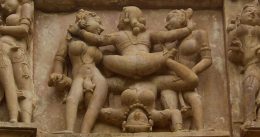
How to spot a lesbian in sacred Indian art
Is it our discomfort with homosexuality that makes us believe that it cannot be part of the sacred?…
-
Articles
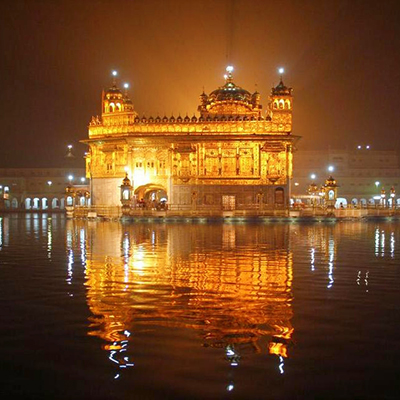
Amritsar: The Lake of Nectar
The Golden Temple is located in the middle of a water body considered to be an elixir of eternal life…
-
Articles

The faces of Mahalakshmi
While the word Mahalakshmi evokes images of the Hindu goddess of wealth seated on a lotus, the deity in Kolhapur, referred to as Amba-bai by locals, evokes Durga, the goddess of war…
-
Articles
Nathdwara God in the Haveli
To devotees, Shrinathji at Nathdwara is the swayambhu (self-created) and swarupa (self-image, not representation) of the seven-year old Krishna…