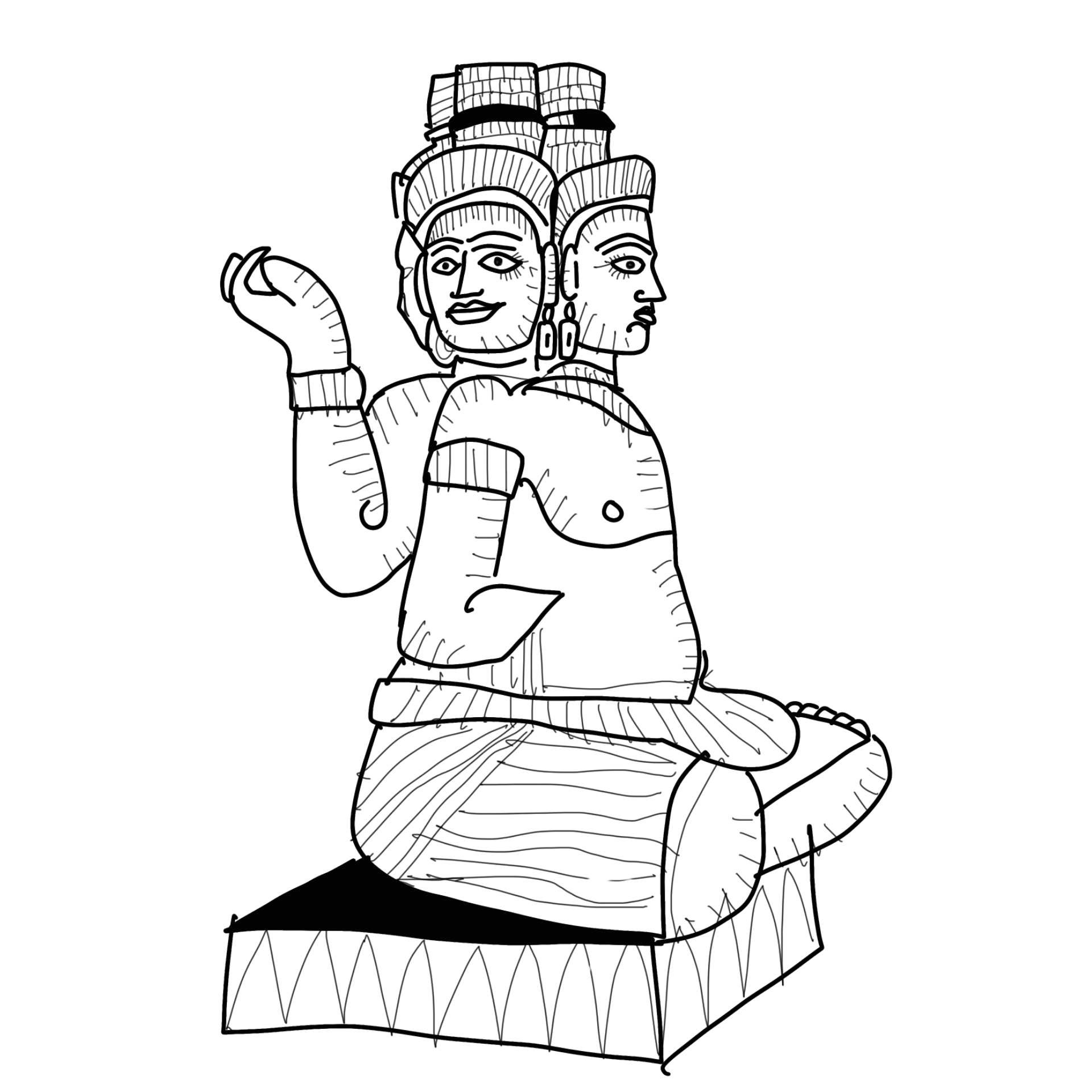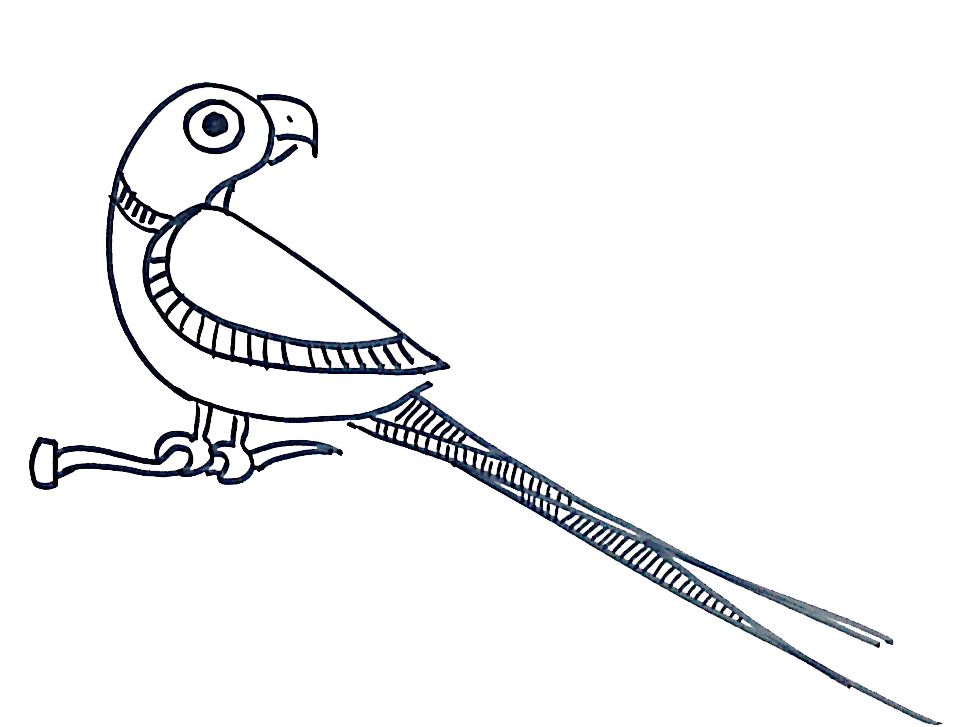
The Tamil poet-saint Andal is identified by the parrot in her hand. The bird is the symbol of Kama, the god of love, lust and sensuality. The same god who in Buddhist works is called Mara, the enemy of Buddha. The same god who is burnt alive by a glance of Shiva’s third eye, earning him the epithet Kamantaka.
Andal’s love for her divine lord is expressed in her songs, which are highly erotic. There was no shame in expressing desire so overtly. At least, when Andal lived, 1,200 years ago. This was the time when celibacy was not linked to purity or piety.
The parrot is also depicted in the hand of Kamakshi, the goddess whose eyes are filled with desire, who enlivens the corpse (shava) and transforms him into Shiva (the auspicious one), who then, inspired by her presence, becomes Kameshwara, the lord of desire, who composes the Kama-sutra, the manual of lovemaking. Through Andal, the parrot is linked to Vishnu. Through Kamakshi, the parrot is linked to Shiva. The women challenge the Buddhist rejection of desire, the Buddha’s abandonment of Yashodhara.
On Kama’s trail
Vishnu’s Garuda, a ferocious eagle with snakes in his talons, came to be depicted in later paintings, after 1600 AD, more as a chirping parrot — as Vishnu came to be increasingly equated with Kama in his Krishna avatar. In art, baby Krishna is often shown playing with parrots. This romantic Krishna-Vishnu is not found in Southeast Asia, where eagle art is popular.
In Krishna, Kama’s lust is tamed with affection and romance. Krishna’s son Pradyumna is described as Kama reborn. Pradyumna’s foster mother Mayavati raises him, falls in love with him and marries him. We are told she is actually Rati, Kama’s consort, awaiting the resurrection of her beloved.
Pradyumna’s son, Aniruddha, is also linked to Kama. Usha, the demon’s daughter, abducts him, unable to resist his beauty. The father, a worshipper of Shiva, tries to stop them from marrying. Krishna and Pradyumna attack Bana’s city, riding on the parrot-like Garuda, to unite the lovers. Thus, through Krishna, his son and grandson, Vishnu attained the status of Ranganatha, the lord of material beauty. Radha, with her Tantrik roots, is described as Raseshwari, a romantic and artistic transformation of the old erotic Rati.
Colour of beauty and corruption
The parrot green colour indicated the beauty of the man as per Natyashastra, which is why Kathakali actors in Kerala, portraying Ram and Krishna, paint their faces green. Tanjore, Mysuru, Bengal and Odisha’s miniature paintings also use green to identify the erotic hero, who was irresistible to women.
It was the colour of the mango leaf and the betel leaf, offered to householder gods, a reminder of conjugal bliss. Temples of Andal make parrot dolls using leaves, and place it on her image.
Then came Islam, which preferred the formless God, and isolated desire in the inner harems of aristocrats. And the Victorians, who equated puritanism with holiness. The playful and auspicious eroticism of Hindu temples was misread as moral corruption. It had to be satisfied.
Today, Krishna is no longer connected with his parrot. It is all about cows. And the women are mothers, sisters, daughters, devotees — not pining lovers, wandering miserably in dark groves.
In new retellings of Andal, she is whitewashed and sanitised. It is emotional, not erotic. She is made a subservient and submissive devotee, the symbol of jiva-atma, pining for Krishna, the param-atma. Holiness is confused with purity and purity with celibacy.
A forgotten erotic past
Victorian colonisers convinced India’s Nationalist leaders that its erotic past was an indicator of degeneration. For regeneration, attention was given to Buddha’s wheel and Ashoka’s lion. Even posters of those who claim to be reviving Hinduism never show Kama’s parrot, his sugarcane bow, his bowstring made of bees, and his arrows decorated with fragrant flowers.
Feminists who wonder about the morality of Surpanakha are unfamiliar with the erotic tales of Śukasaptati, the 70 tales of the parrot told in Sanskrit, meant to distract housewives who sought company of other men while their husbands were away on business.
India’s erotic heritage, with love songs written in Tamil, Sanskrit and Prakrit, are not part of gender studies or the culture curriculum. Jain poems in Kannada once spoke of queens who secretly left the palace to have fun with the elephant keeper, because they found the king boring in bed. Such queens have been depicted on temple walls with parrots in their hands. But no one recognises what parrots mean anymore.